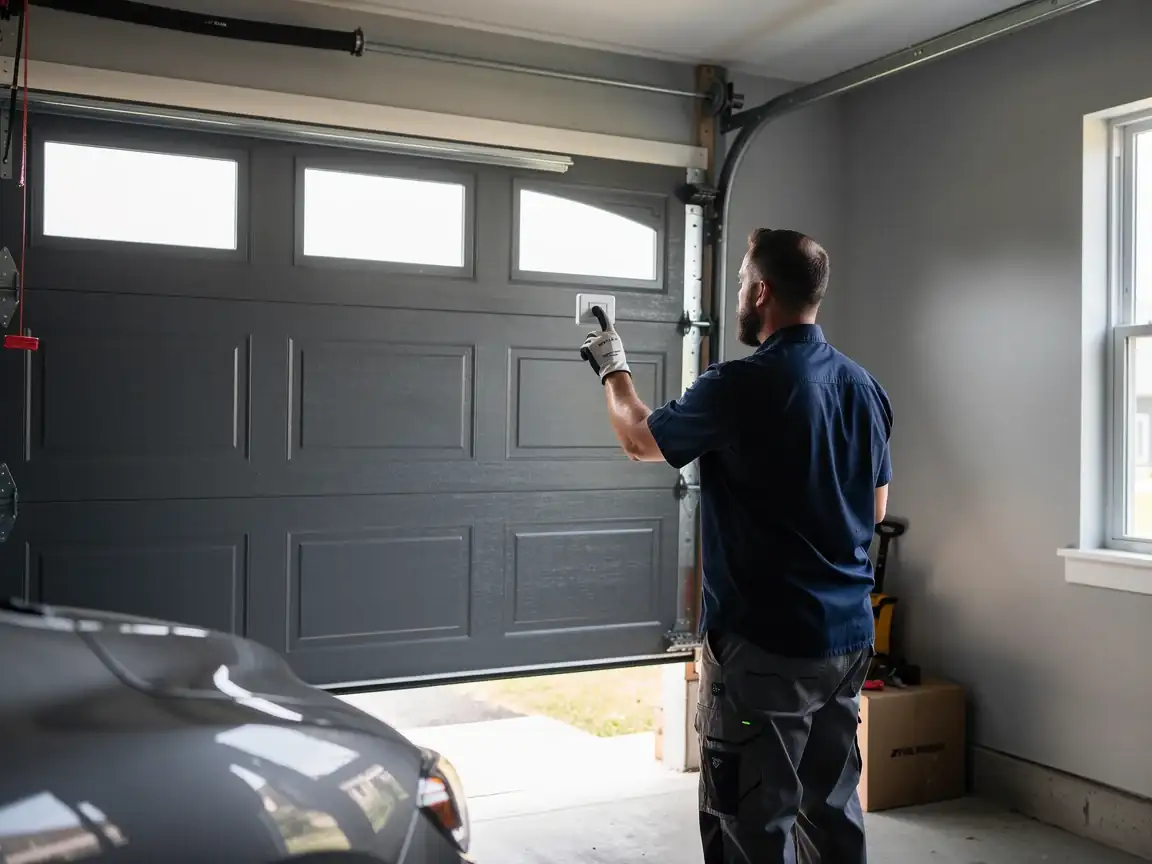
Most of the housing in this service area went up between 1969 and 2006, with the heaviest run in the 1980s and 90s across the 16 named neighborhoods we cover. That's a specific problem for garage doors, because a door installed in 1988 is running original springs, original rollers, and in a lot of cases an opener that predates the safety-reversal rules most homeowners assume are standard. A "garage door tune-up" on a house like that isn't generic maintenance - it's checking parts that are thirty-plus years old against hardware that's changed twice since they were made. We don't sell a one-size visit. What we check depends on whether your house is a 1987-era build with a single torsion spring on a steel door, or one of the newer builds closer to 2006 with dual springs and a belt-drive opener. The call starts with figuring out which era we're actually working on, because the fix for one is often the wrong fix for the other. If your door was installed before the mid-90s, we tell you that up front - it changes what we recommend.
When to Get Help
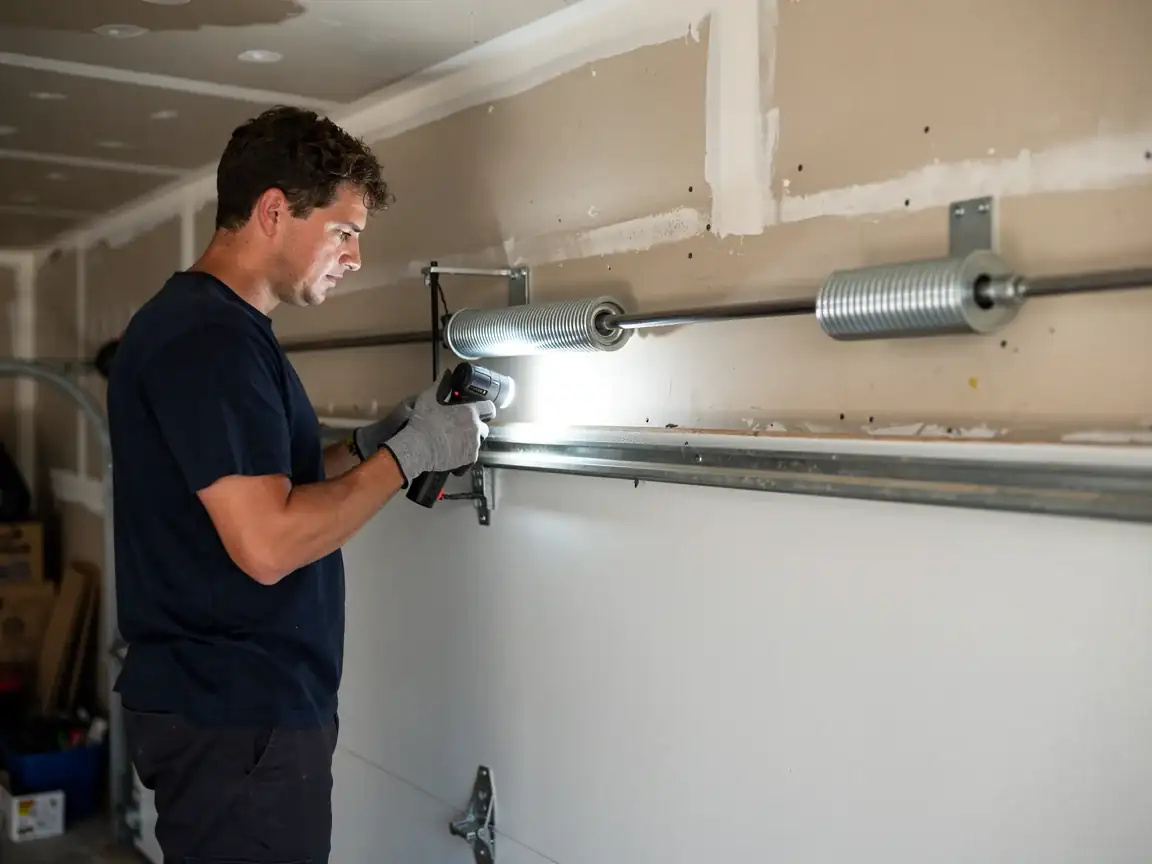
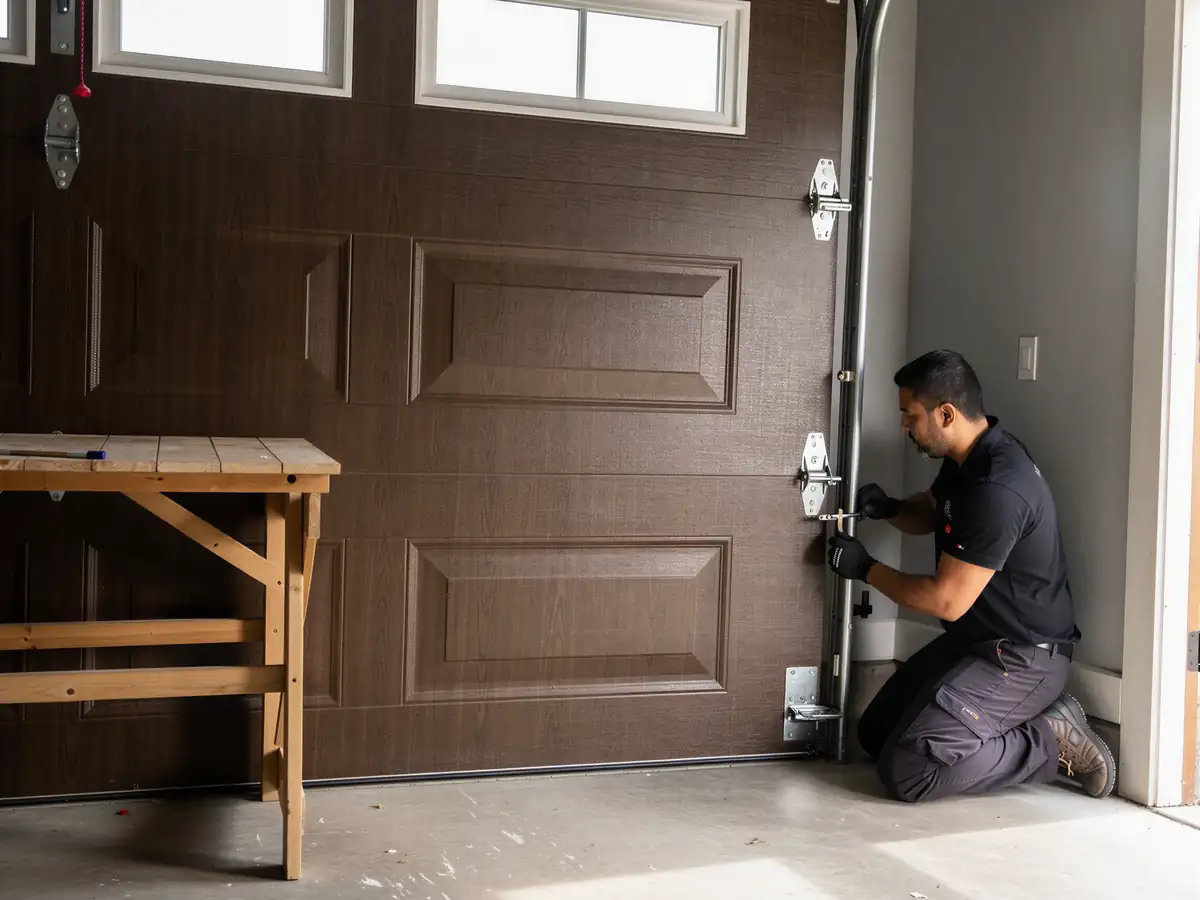
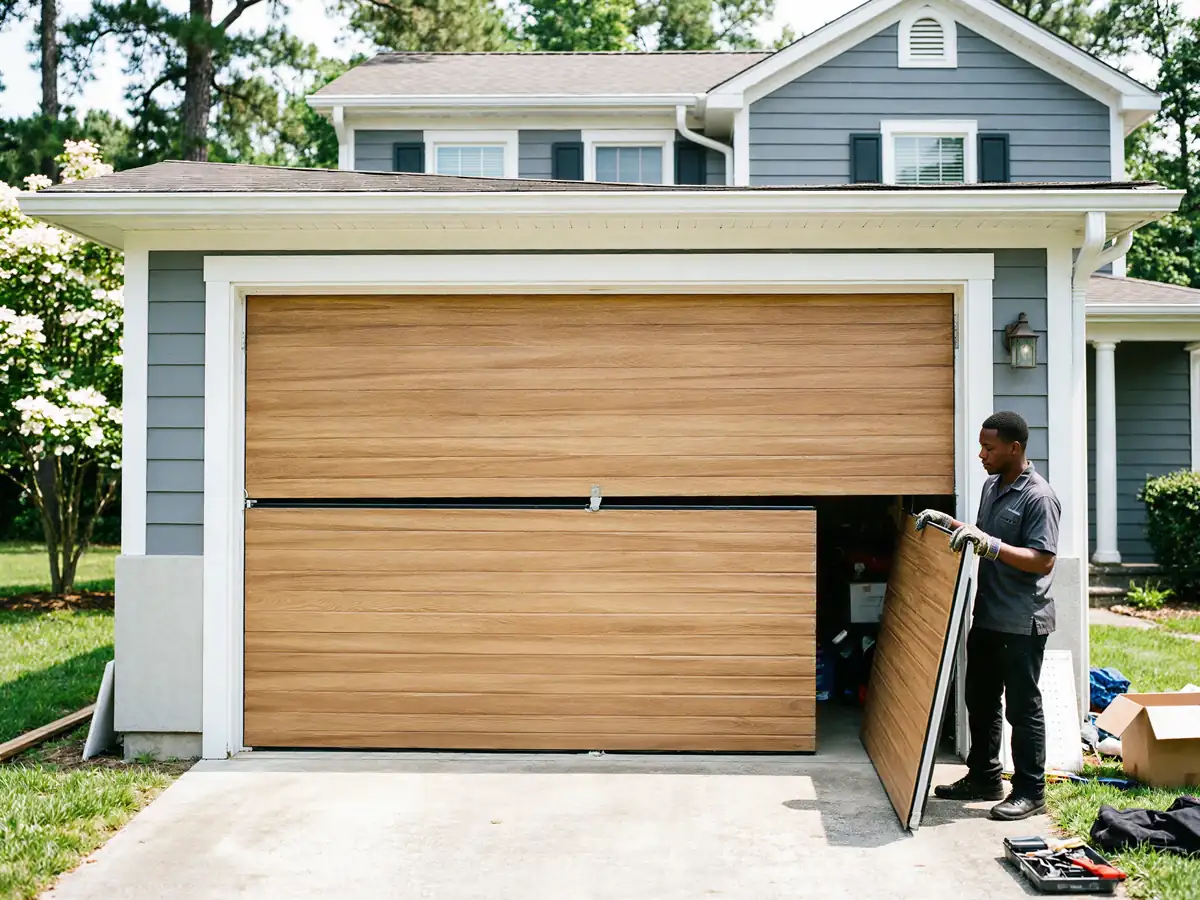
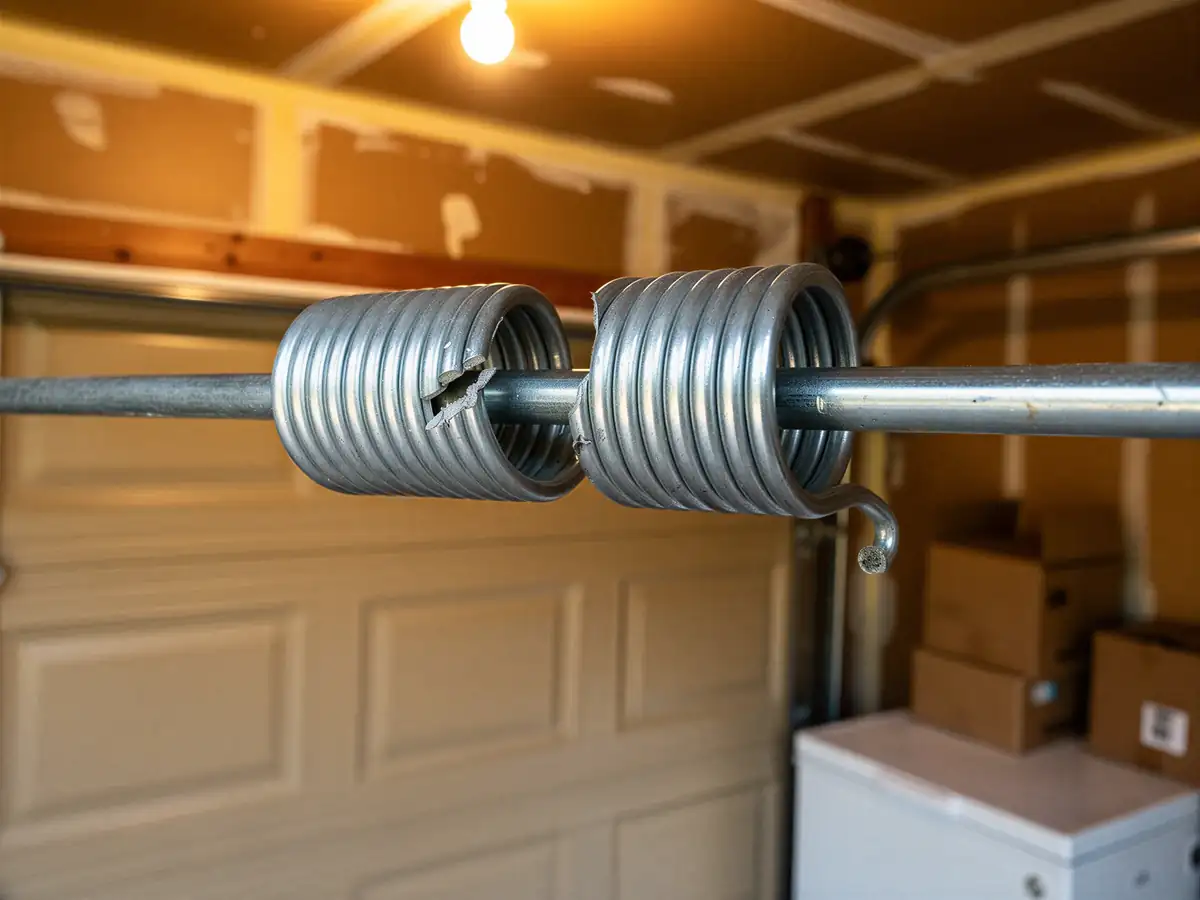
Call when the door is noticeably off-balance - it won't stay halfway up on its own, or one side drops faster than the other when you disconnect the opener. That's a spring problem, not an opener problem, and running the opener against it burns out the motor faster. Call when you hear a bang from the spring area; that's usually a torsion spring that's already broken, and the door is now relying entirely on the opener to lift dead weight it wasn't built to handle. Call when cables look frayed at the drum, or a roller has visibly split - both get worse with every cycle, not better. One honest limit: if a panel is dented but the door still tracks and balances fine, that's cosmetic, and we'll say so rather than push a replacement. With 41,230 owner-occupied houses among the roughly 61,059 households in this area, we see a wide range of ages on the same street, so we don't assume - we look at what's actually in your opener and in your spring before we quote anything.
How Local Conditions Play In
Concord sits in a cold-moderate climate band, which matters more to a garage door than most homeowners expect. Steel contracts in cold weather, which tightens spring coils and changes how much torque a spring delivers compared to a warm July afternoon. On a house built before the 1990s - common across this area given the 1969-2006 build range - that spring has already lost tension through age, and a cold snap can be the difference between a door that lifts and one that doesn't. Tracks matter too: on older builds with steel jamb mounts, the cold makes bolts and brackets settle differently than they do on newer, better-sealed installs closer to 2006. A service call here checks spring tension against the season, not just against a manufacturer's chart, because the chart doesn't know what decade your door is from or what the weather did to it last winter.
What Changes With the Season
Spring tension is the main thing that shifts with the cold-moderate swing this area gets. A spring that held a door steady in August can feel noticeably heavier in January, and on older torsion setups - the kind still common on 1980s and 90s builds here - that extra strain is what finally snaps a spring that was already near the end of its life. We check tension differently depending on the time of year a call comes in, not because the spring itself changed shape, but because the load on it did. The other seasonal item is lubrication: cold thickens old grease on rollers and hinges, which is why a door that ran quiet in summer sometimes starts grinding once temperatures drop. That's a five-minute fix on a service call, not a reason to replace anything. What we won't do is sell a full opener swap for a noise that's actually just stiff grease in cold weather - that's the kind of upsell that gives this trade a bad name.
How it works
From “it’s stuck” to “it’s fixed”
01
Tell us what’s wrong
Describe the symptom - won’t open, loud bang, opener runs but the door won’t move.
02
On-site diagnosis
A technician tests the door under power and by hand and finds what actually failed.
03
Clear, up-front plan
You get the fix that’s needed and what drives the cost - before any work starts.
04
Repaired & tested
The repair is done, the door is set true and tested, and the work area left clean.
Not sure which repair your door needs in Concord, NC? Describe what it’s doing - every job starts with a diagnosis.
How do you know if my garage door is from the older part of the housing stock here?
We look at the spring type, the opener model, and the track mounting - single torsion springs and chain-drive openers without modern safety reversal point to the 1980s-90s range common across this area's 1969-2006 housing stock. We'll tell you what we find before recommending anything.
Does the cold around here actually affect my garage door spring?
Yes. Concord's cold-moderate climate band means steel springs tighten and lose some lift capacity in winter compared to summer. On an older spring that's already fatigued, a cold snap is often what finally causes a break, which is why winter is when we get the most spring calls.
Do you serve areas outside Concord itself?
We cover the surrounding service area, including Harrisburg and Kannapolis about 6 miles out, and farther communities like Midland, Mount Pleasant, and Davidson around 12 miles. If you're unsure whether you're in range, ask when you call.
Ready to get your garage door sorted?
Tell us what it’s doing and where you are in Concord - we’ll take it from there.