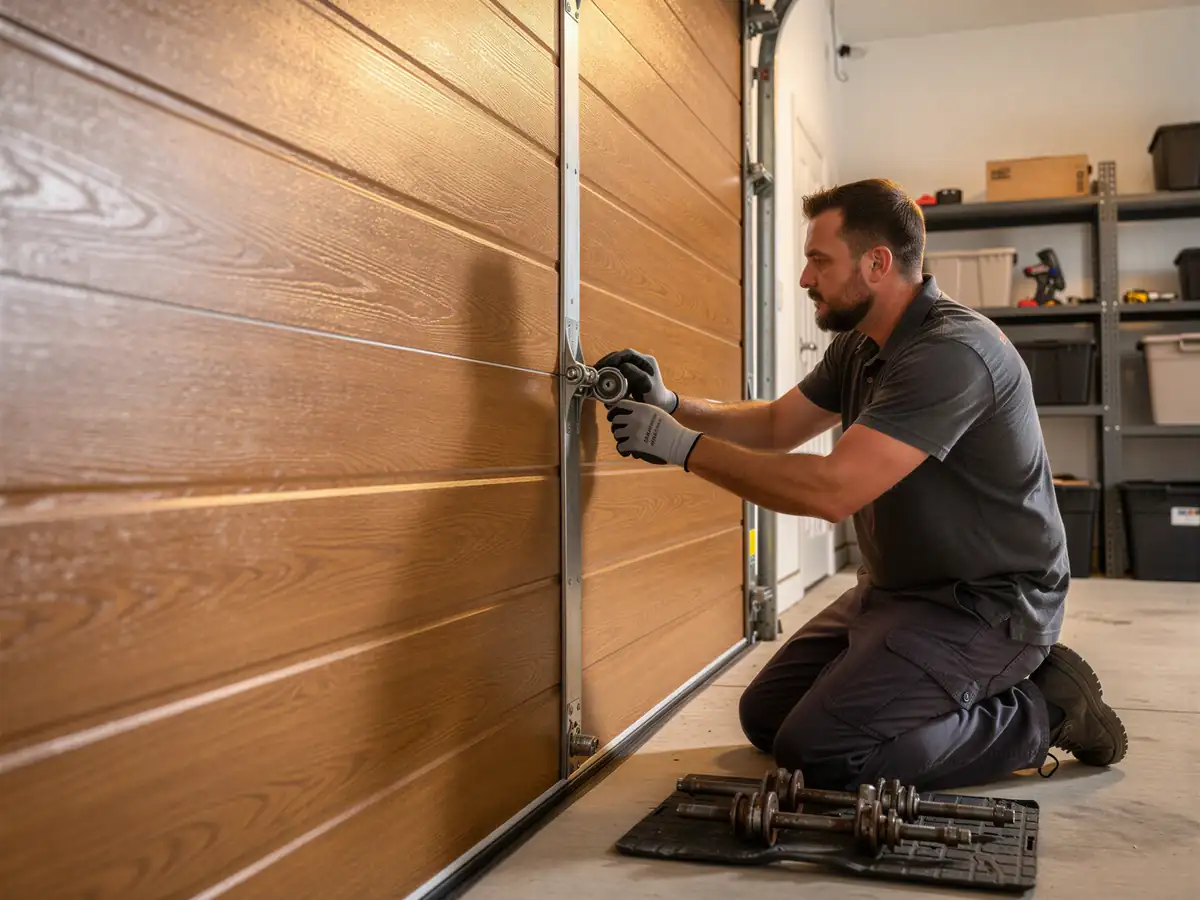
Concord's 1980s-90s housing stock and cold-moderate winters both play into off-track doors. Here's what actually causes it and when to call Concord Garage Door Pros.
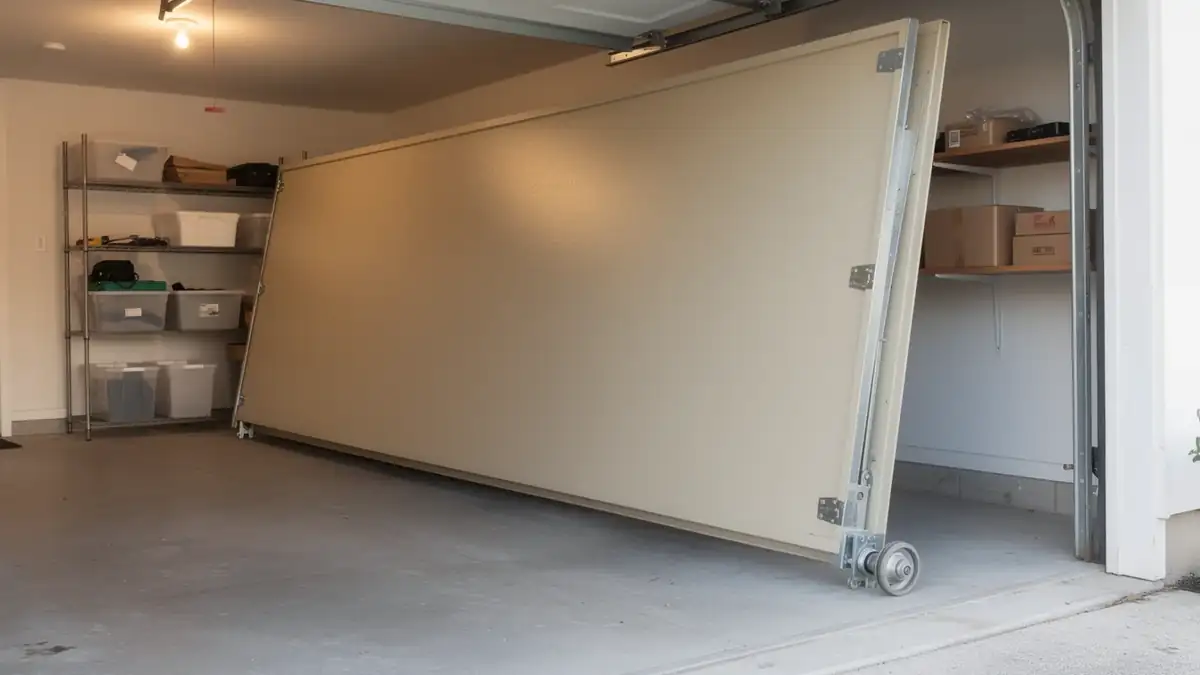
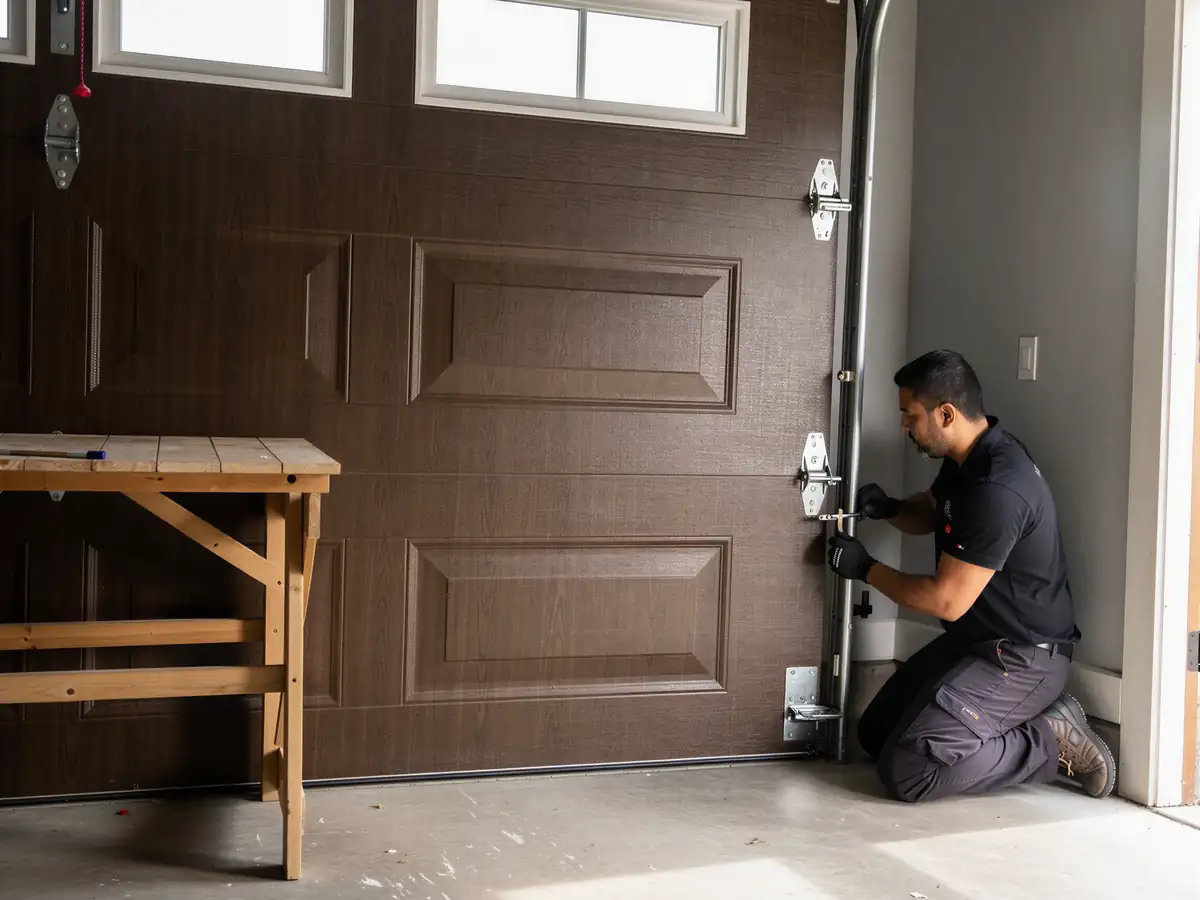
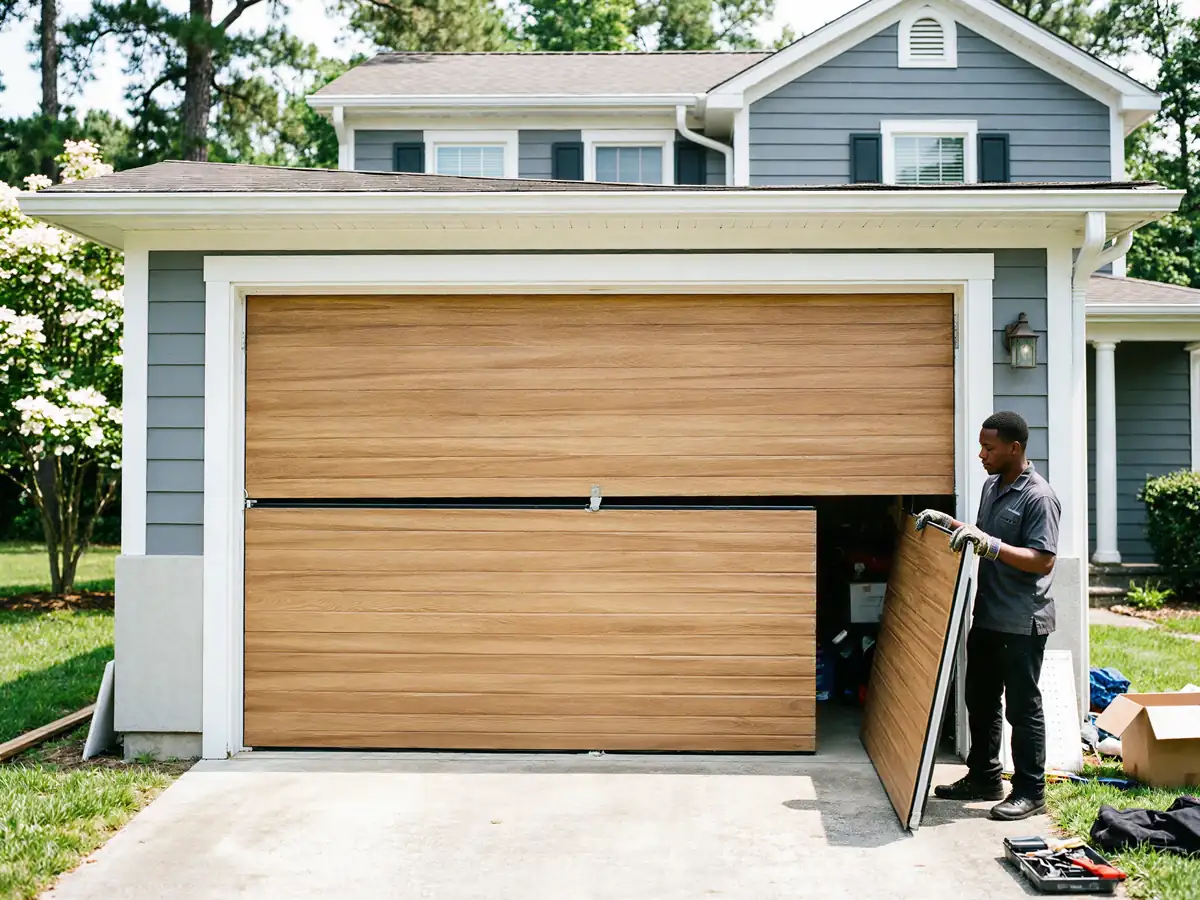
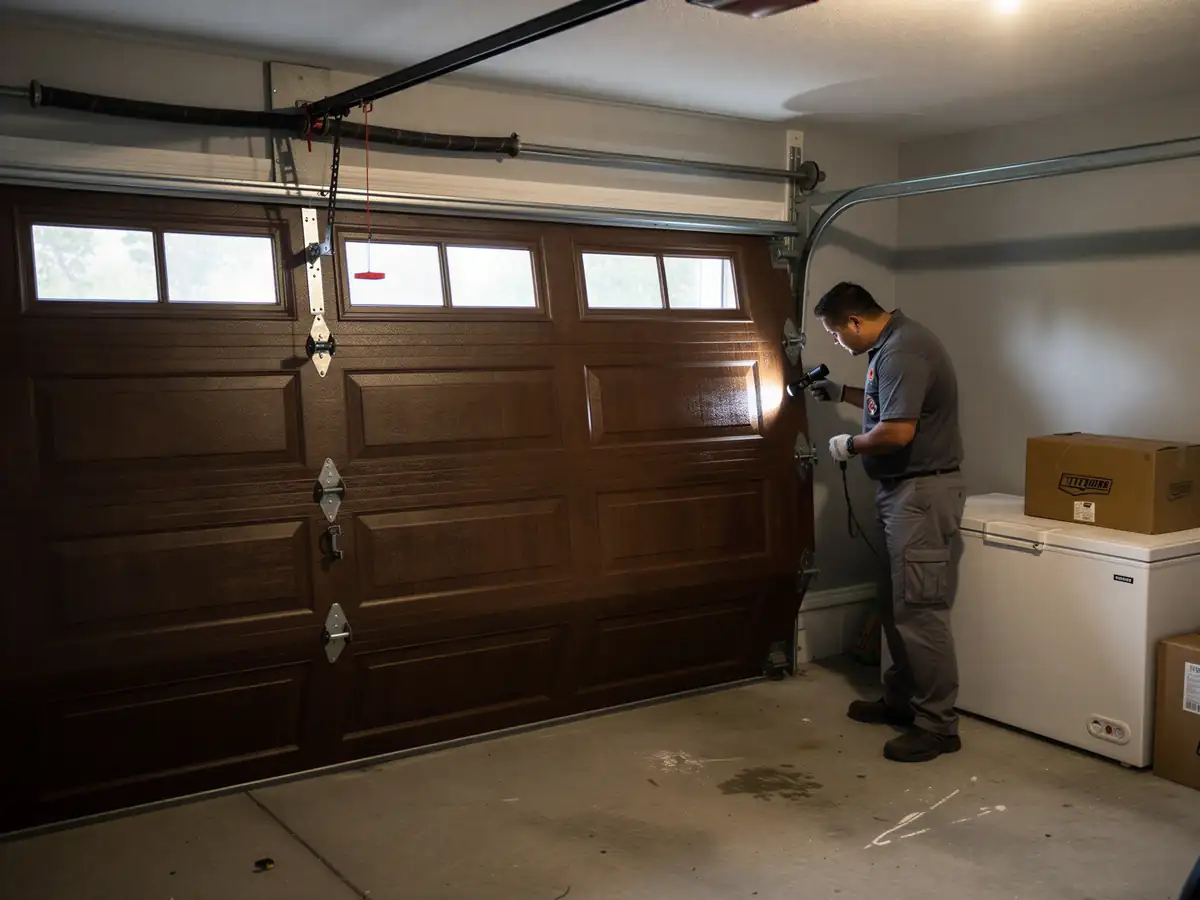
A door off its track doesn't happen in one dramatic moment, usually. It happens because a roller wore down, a bracket loosened, or the track itself bent slightly out of line, and the door kept running on it anyway until one day it didn't. In a lot of the houses we work on around Concord, built between 1969 and 2006 with a heavy concentration from the 1980s and 90s, the original track hardware is still in place. That's 25 to 45 years of steel rollers wearing grooves into galvanized track, of lag screws backing out a sixteenth of a turn at a time, of brackets flexing under a door that's a little heavier than the hardware was ever sized for after a panel swap or added insulation. None of that shows up as a sudden failure. It shows up as the door starting to rub, then binding on one side, then finally skipping the track entirely on a cold morning when everything is stiffer than it was the day before. The fix is rarely just pushing the door back onto the track. If the track is bent, bending it back usually buys you a few more weeks before it happens again.
When to Get Help
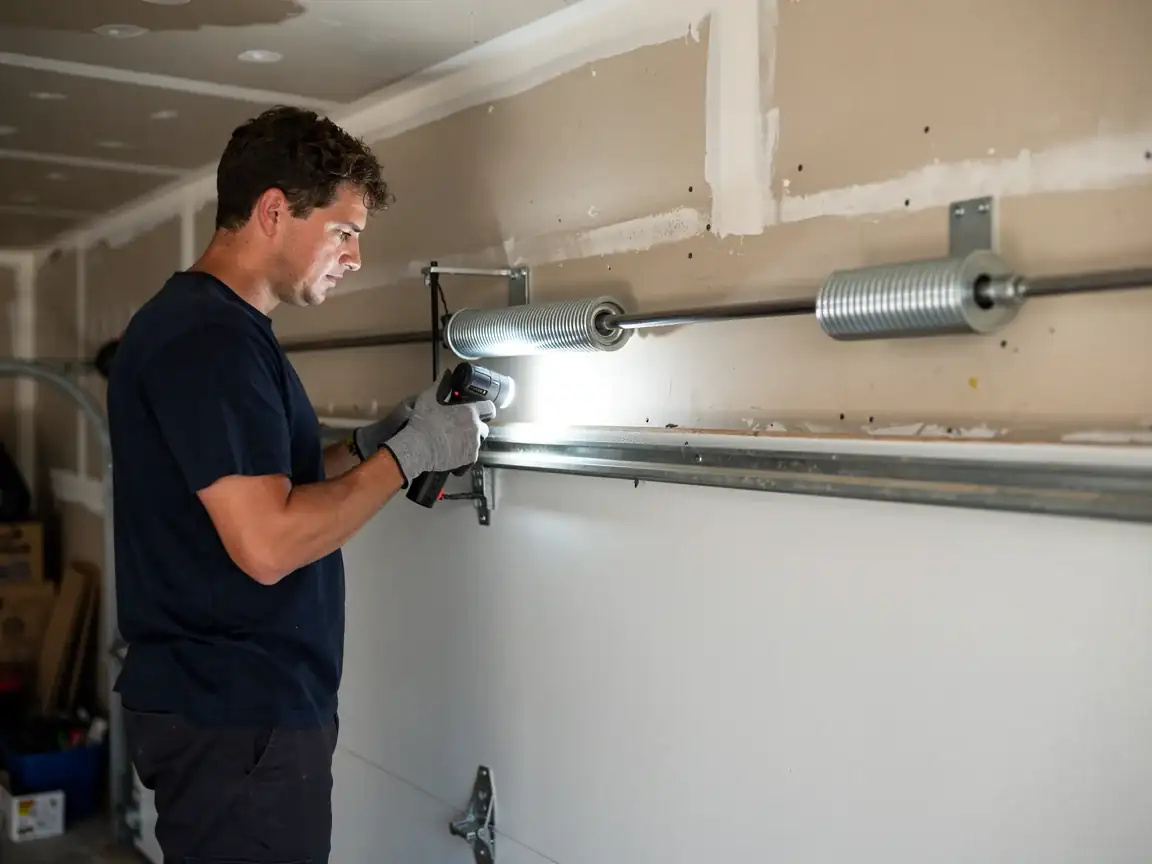
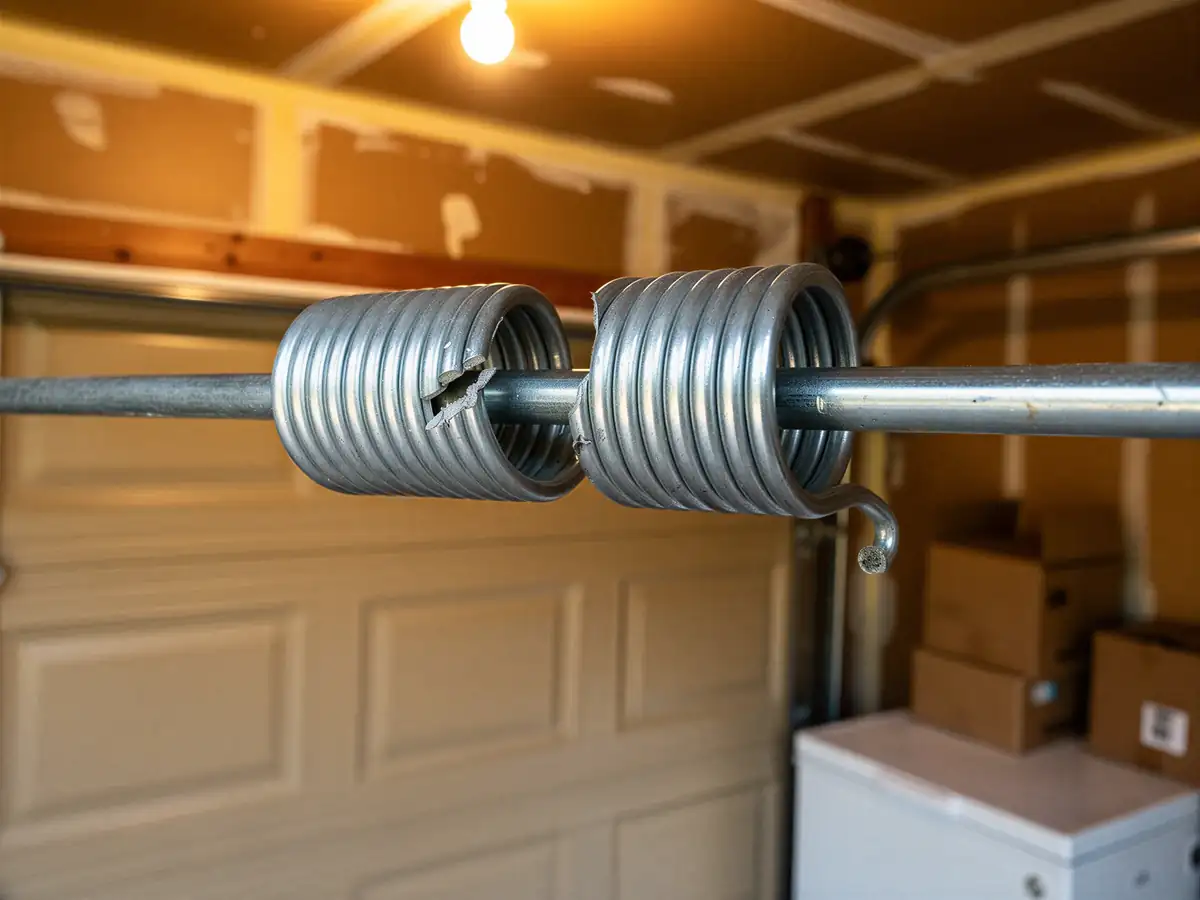
Call before the door comes off the track, not after, if you can. Warning signs: the door travels crooked, one side reaches the top before the other, you hear a scrape or a pop partway through the cycle, or a cable looks loose at the bottom bracket. If the door has already jumped the track, don't run the opener again. Forcing it can bend the track further or pull a roller bracket off the jamb, turning a half-hour fix into a full track-and-hardware replacement. We don't recommend trying to re-seat a door yourself if a spring is under tension - that's the one repair on a garage door that can genuinely hurt someone, and we'd rather lose the job to a competitor than have you find that out firsthand. If the opener motor is straining, reversing, or grinding before the derailment, that's usually the first sign, not the door itself.
How Local Conditions Play In
Concord sits in a cold-moderate climate band, which means the hardware on your door goes through real seasonal cycling without the extreme freeze-thaw swings you'd get further north. That's actually part of the problem: steel track and rollers expand and contract enough, year after year, to work screws loose and let brackets drift out of square, but the swings are gradual enough that homeowners don't notice until the door is already misbehaving. Across the roughly 41,230 owner-occupied houses in this service area, most built in that 1969-2006 window, the track hardware has quietly gone through three or four decades of that cycling. Add humidity swings common to this part of the Piedmont and you get surface rust on tracks that were never lubricated, which adds friction, which adds wobble, which eventually lets a roller walk out of the channel.
What Changes With the Season
Cold mornings are when off-track problems actually announce themselves, even though the groundwork was laid months earlier. Grease inside rollers and hinges thickens in the cold, the door moves slower and less evenly, and a track that was already a quarter-inch out of alignment finally lets a roller slip free. We see this pattern most in the older sections of 1980s and 90s construction, where the original rollers are still steel rather than nylon and haven't been serviced. It's worth a five-minute check before the first hard cold snap each year: open and close the door by hand with the opener disconnected, and feel for binding or uneven resistance. If one side drags, that's your early warning, and it's a far cheaper call to make in October than after the door is already hanging off the track in January.
How it works
From “it’s stuck” to “it’s fixed”
01
Tell us what’s wrong
Describe the symptom - won’t open, loud bang, opener runs but the door won’t move.
02
On-site diagnosis
A technician tests the door under power and by hand and finds what actually failed.
03
Clear, up-front plan
You get the fix that’s needed and what drives the cost - before any work starts.
04
Repaired & tested
The repair is done, the door is set true and tested, and the work area left clean.
Not sure which repair your door needs in Concord, NC? Describe what it’s doing - every job starts with a diagnosis.
Why did my garage door suddenly come off the track?
It's rarely sudden. A roller or bracket usually wears down gradually over years until the door finally skips the channel, often on a cold morning when hardware is stiffer. If your house was built in the 1980s or 90s, which describes a lot of Concord's housing stock, the original track hardware may simply be at the end of its life.
Can I push the door back onto the track myself?
If the track is bent or a spring is under tension, no. Forcing a door back on can bend the track further or snap a cable. If the door is only slightly off and the opener is disconnected, you can sometimes guide it back by hand, but if there's any resistance, stop and call.
Does cold weather really affect garage door tracks?
Yes. Concord's cold-moderate climate means hardware expands and contracts across the seasons enough, over decades, to loosen screws and shift brackets out of square. It's gradual, which is why most homeowners don't notice until the door actually jumps the track on a cold day.
Ready to get your garage door sorted?
Tell us what it’s doing and where you are in Concord - we’ll take it from there.