Doing It Yourself
A torsion spring holds a lot of stored energy
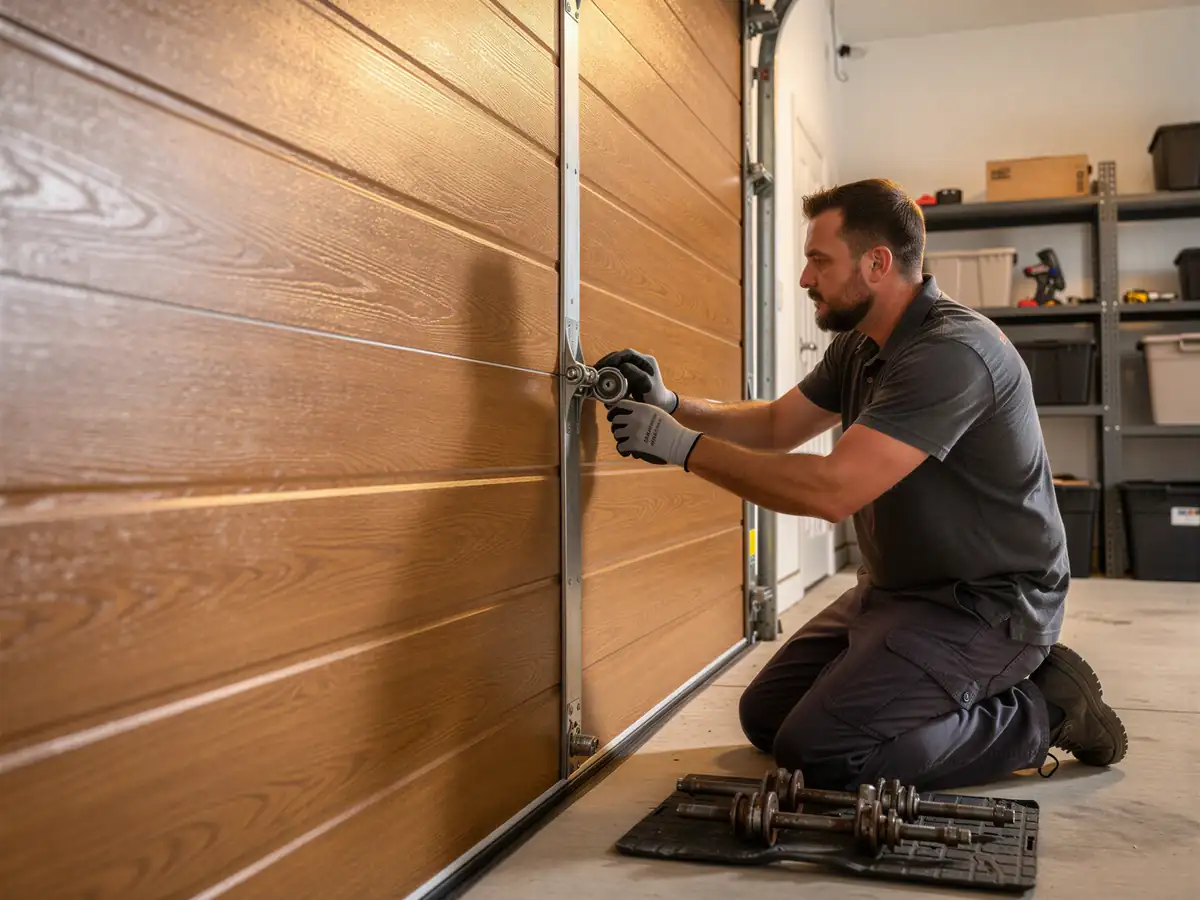
And the tools to wind it safely aren't something most homeowners keep in the garage. We'll say it plainly: this is the one repair on a garage door we don't recommend as a DIY project, even for people who are handy with everything else on the house. The winding bars, the clamps, the correct wire gauge for your door's weight - getting any of it wrong can put you in the ER or wreck the door's track in the process.
What you can safely do yourself is diagnose
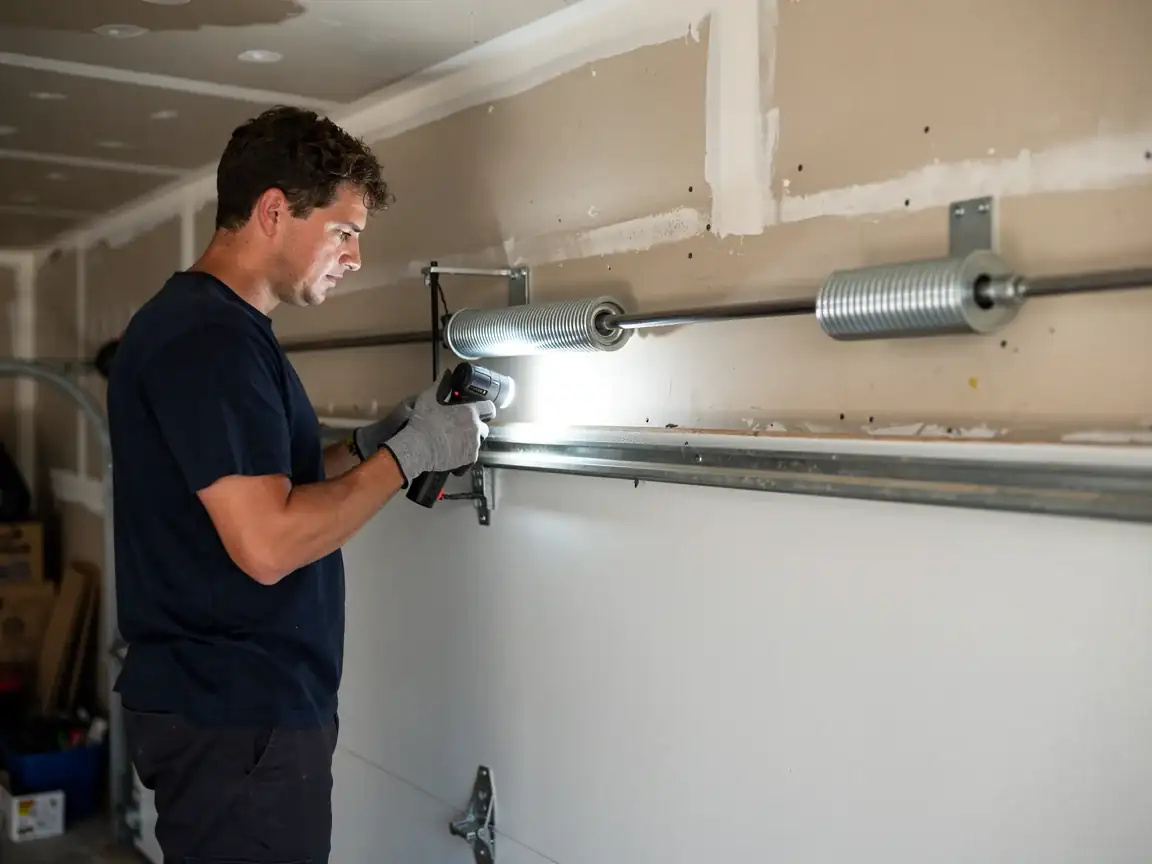
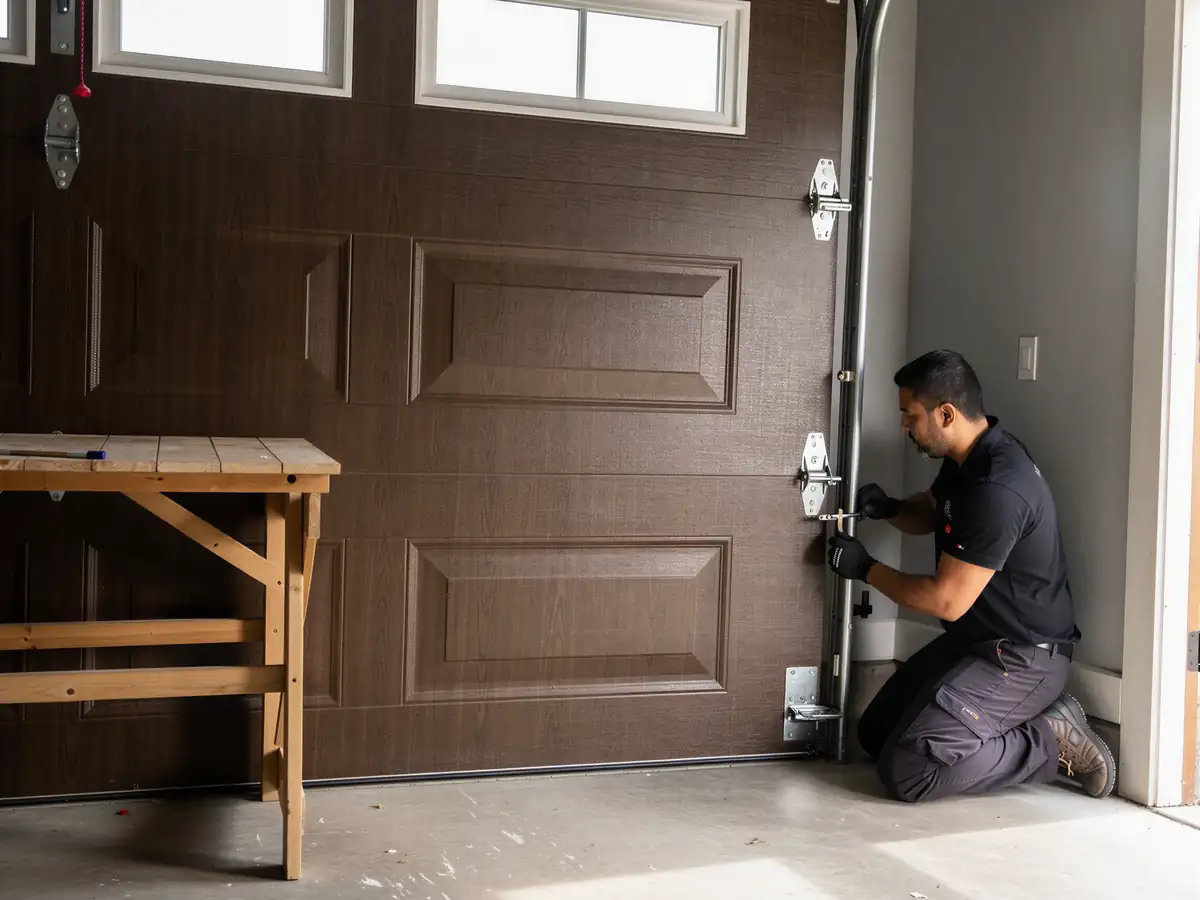
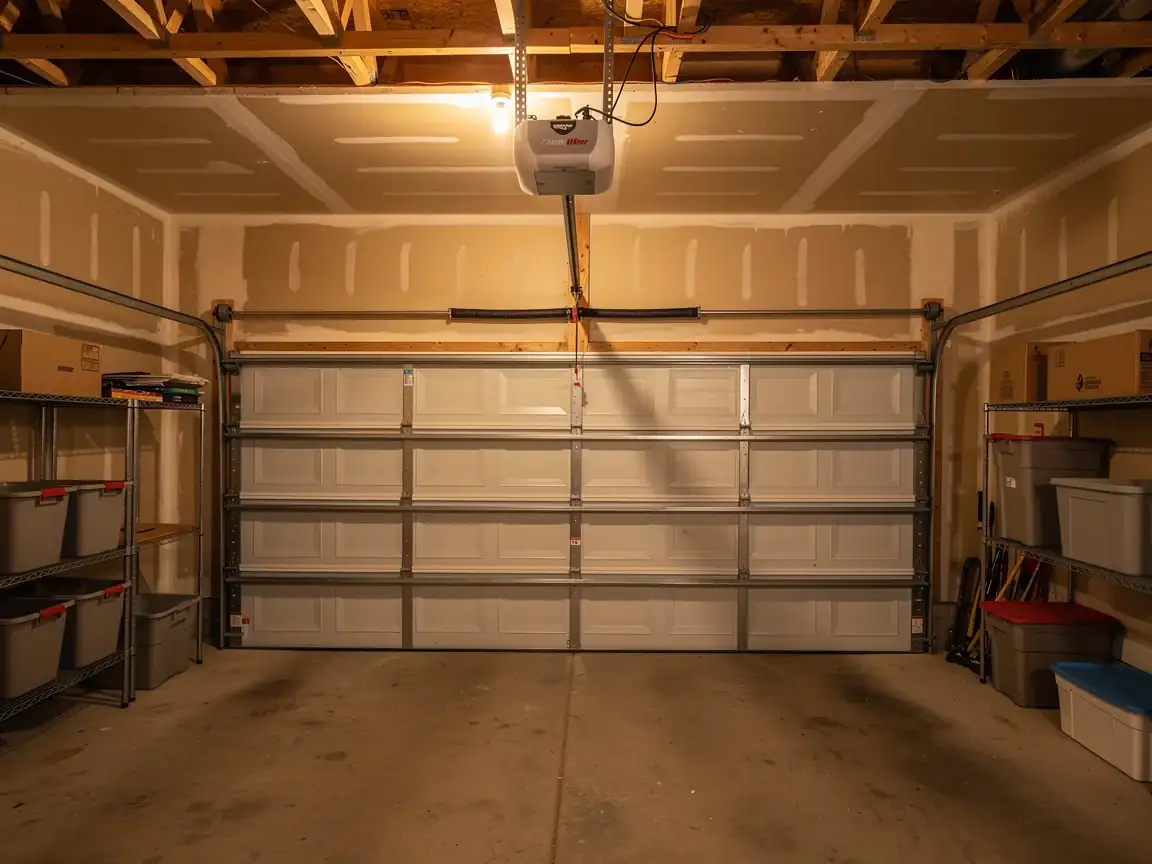
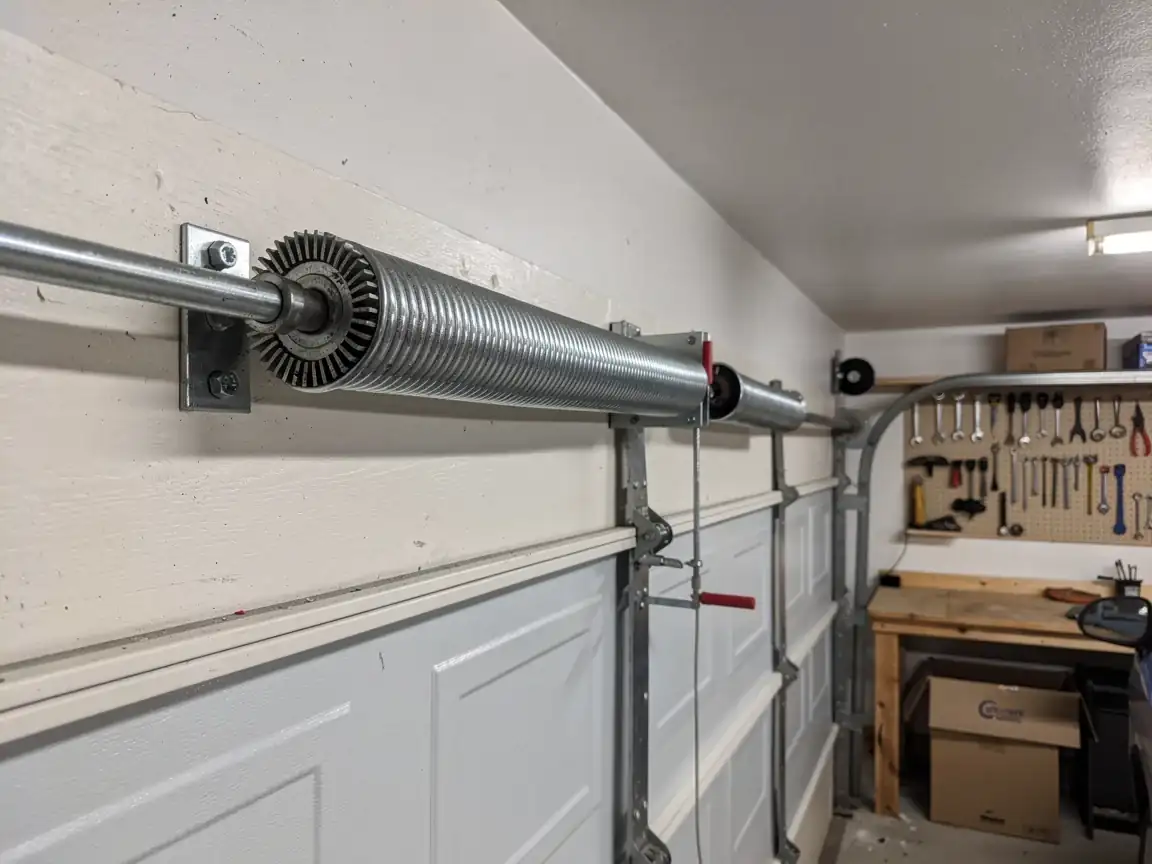
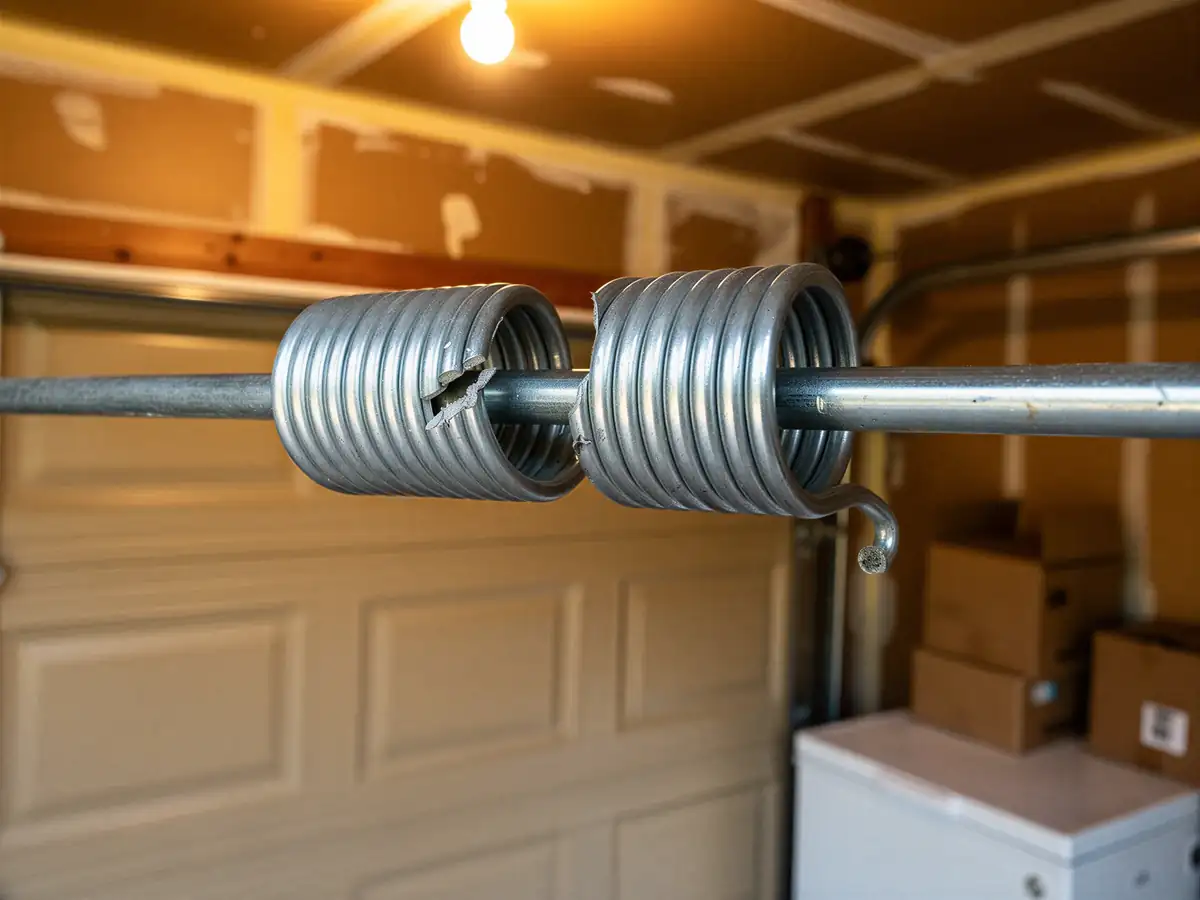
If the door won't lift, or the opener strains and reverses, or you see a visible gap in the coil above the door, that's a spring. You can also check whether it's a torsion spring (horizontal bar above the door) or extension springs (stretched along the upper tracks on each side) - that tells whoever you call what parts to bring, which saves a second trip.
Lubricating hinges and rollers, tightening loose bolts on the track
And keeping the door balanced by not overloading it with heavy storage hung off the frame - those are real maintenance jobs that extend spring life. Beyond that, call it in. A same-day spring swap from someone who carries the right size on the truck is faster and cheaper than a bent track from a DIY attempt gone wrong.
How It Shows Up
Most of the time it's sudden. The door was fine yesterday, and today it won't budge, or it opens a few inches and stops, or the opener motor runs but the door doesn't move. That's a snapped torsion spring - the sound is usually a loud bang, often mistaken for something falling in the garage or a car backfiring outside.
Extension spring failure is quieter. The door gets heavy to lift by hand, sags unevenly on one side, or the opener starts taking two or three tries to get it up. Either way, once a spring goes, the door's full weight - often well over a hundred pounds on a standard double door - transfers to the opener, the cables, and your arms. Running the opener repeatedly on a dead spring is how you turn one repair into three.
Across the households we work in - Concord's service area includes 61,059 households and 41,230 owner-occupied homes - this is one of the most common single-part failures we get called for. It's not exotic. It's wear, cycles, and age catching up with a part that was never meant to last the life of the house.
Where This Job Goes Sideways
The repair itself is routine. Where it goes wrong is when a homeowner replaces one spring on a two-spring system and leaves the other, original spring in place. Springs are rated by cycle count, and if one failed from age, its matched pair is right behind it - usually within months. We replace both, every time, on a torsion setup.
The other place it goes sideways is mismatched parts. A spring that's the wrong wire diameter or length will either burn out the opener trying to compensate, or over-tension the door so it slams down instead of closing smooth. This happens more on older doors in our area's housing stock, where the original spring size may not match what's sold off the shelf today.
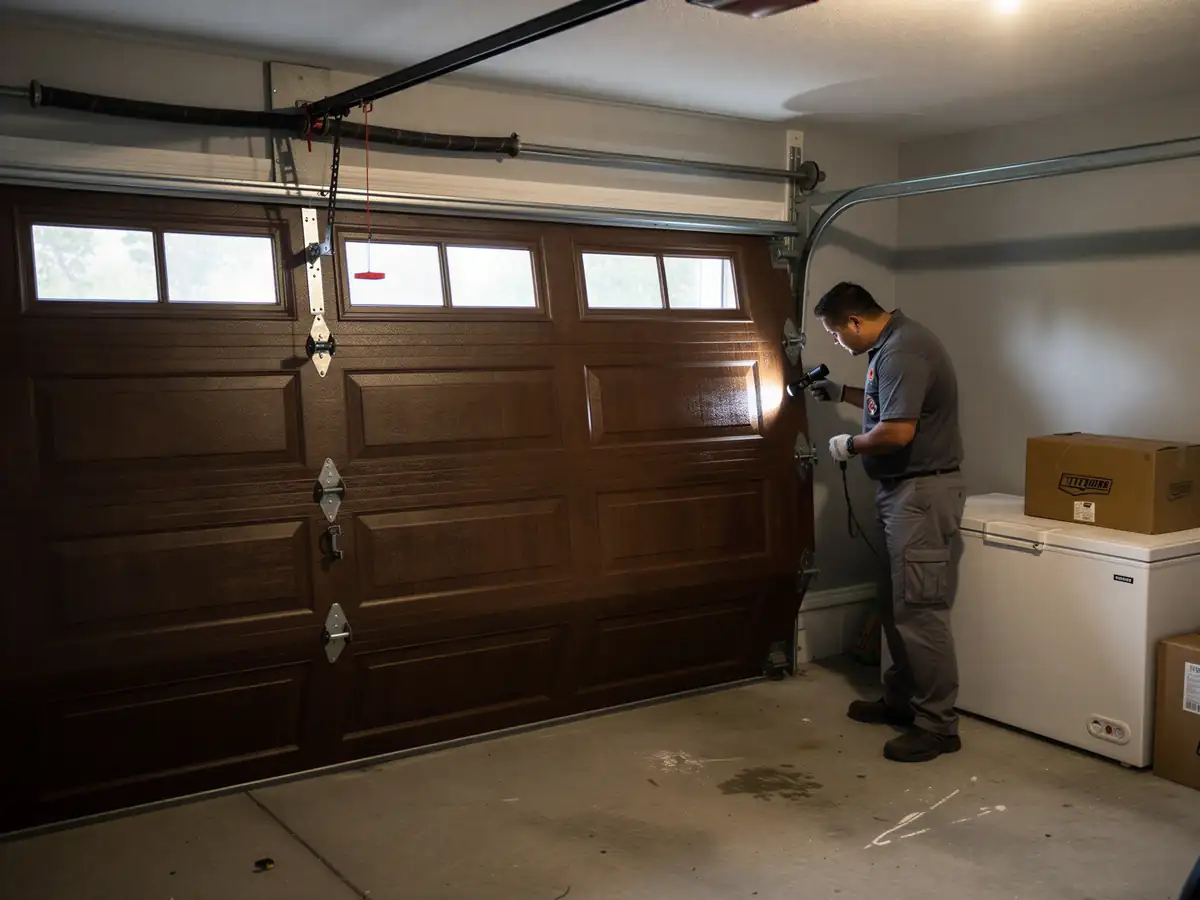
One limitation worth naming: if the drum, cable, or track took damage when the spring let go - bent track, frayed cable, cracked drum - that's a separate repair on top of the spring, and we'll tell you before we start, not after. We don't pad a job, but we also won't reinstall a door on hardware that's going to fail again in a month.
What Causes It Around Here
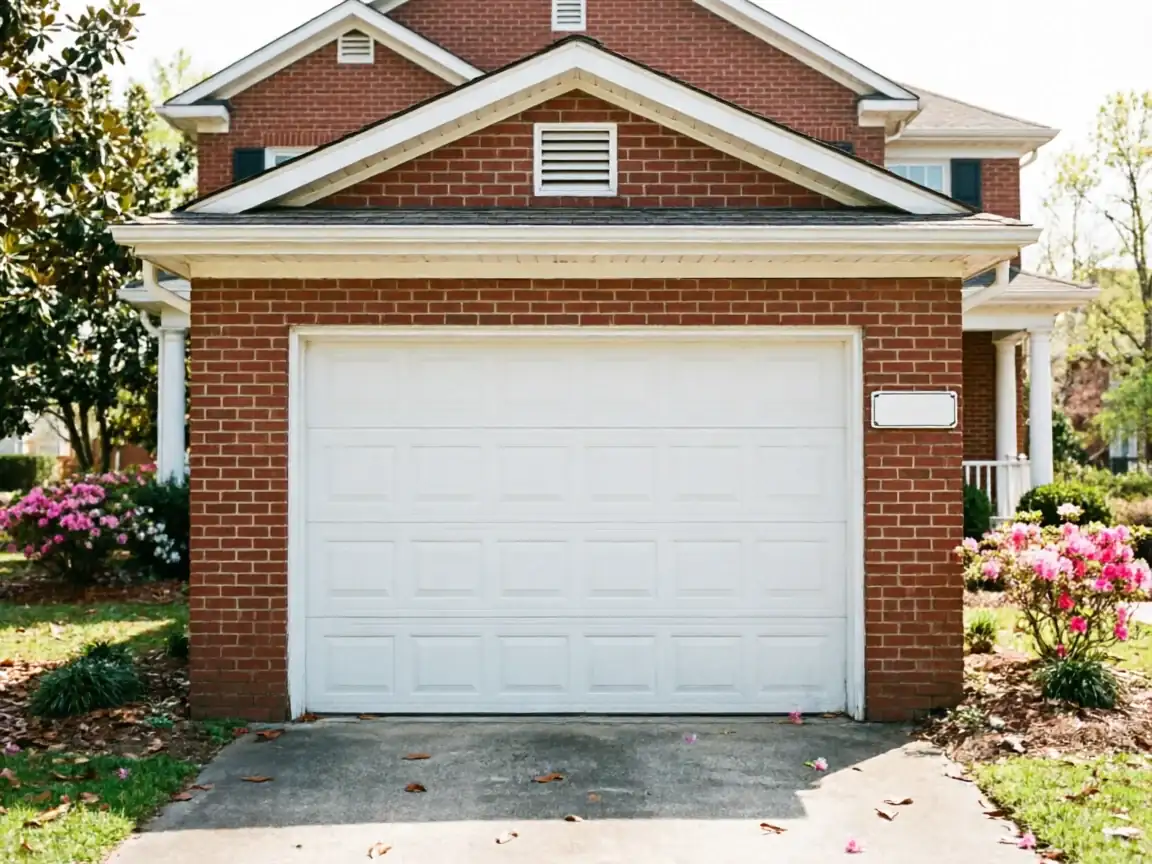
Housing in this service area was mostly built between 1969 and 2006
With the median landing around 1987 and the bulk of it dating to the 1980s and 90s across the sixteen named communities we cover. A door spring rated for a fixed number of open-close cycles doesn't care what decade it was installed - it cares about time and use, and a spring installed when a house was built in the late 80s has had three-plus decades of daily cycles to wear through its coil.
The cold-moderate climate here adds to it
Steel contracts in cold snaps and expands in summer heat, and that cycling fatigues the metal faster than a mild, steady climate would. It's not dramatic weather - just the ordinary swing of a four-season climate working on a part that's under constant tension to begin with.
Put those two things together
A housing stock that's now mostly 25 to 55 years old, and a climate that stresses metal through temperature swings - and you get a service area where spring failure is one of the most predictable calls we take, not a random one.
- 55 years