Doing It Yourself
There's a short list of things you can safely check before you call anyone
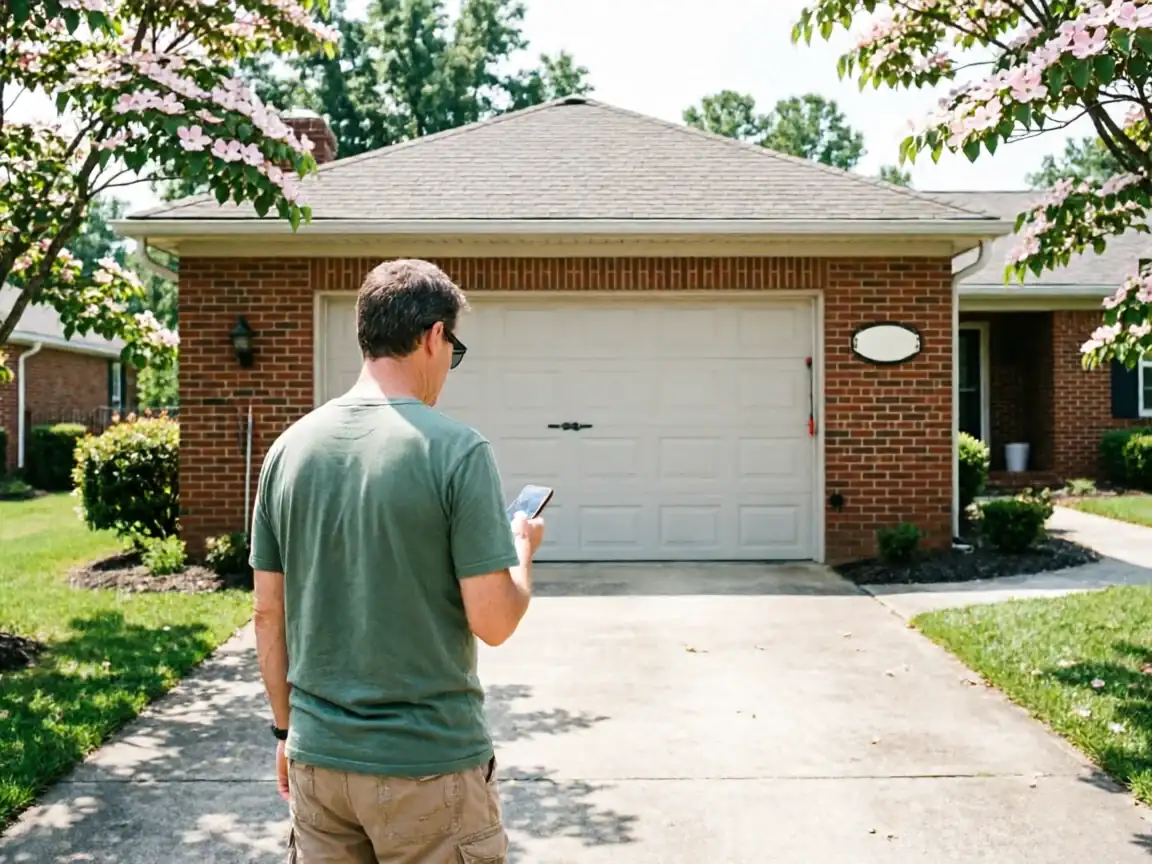
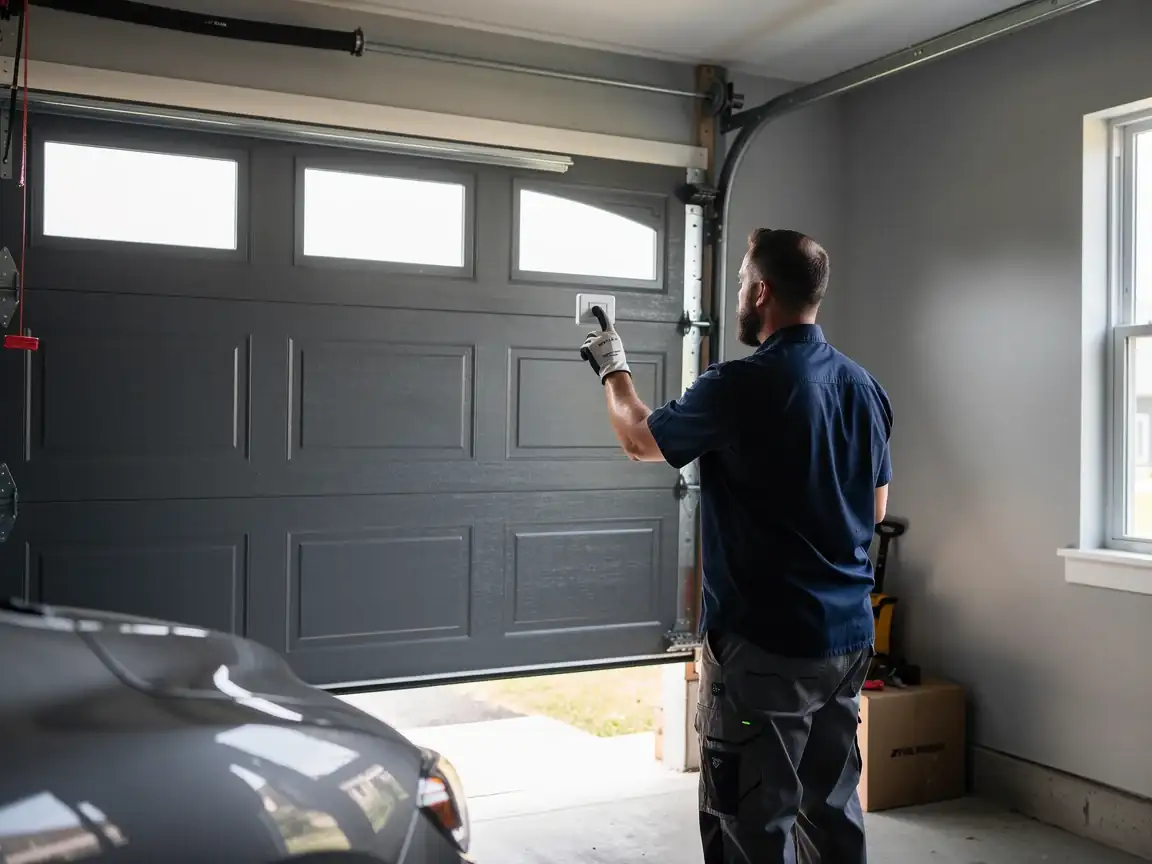
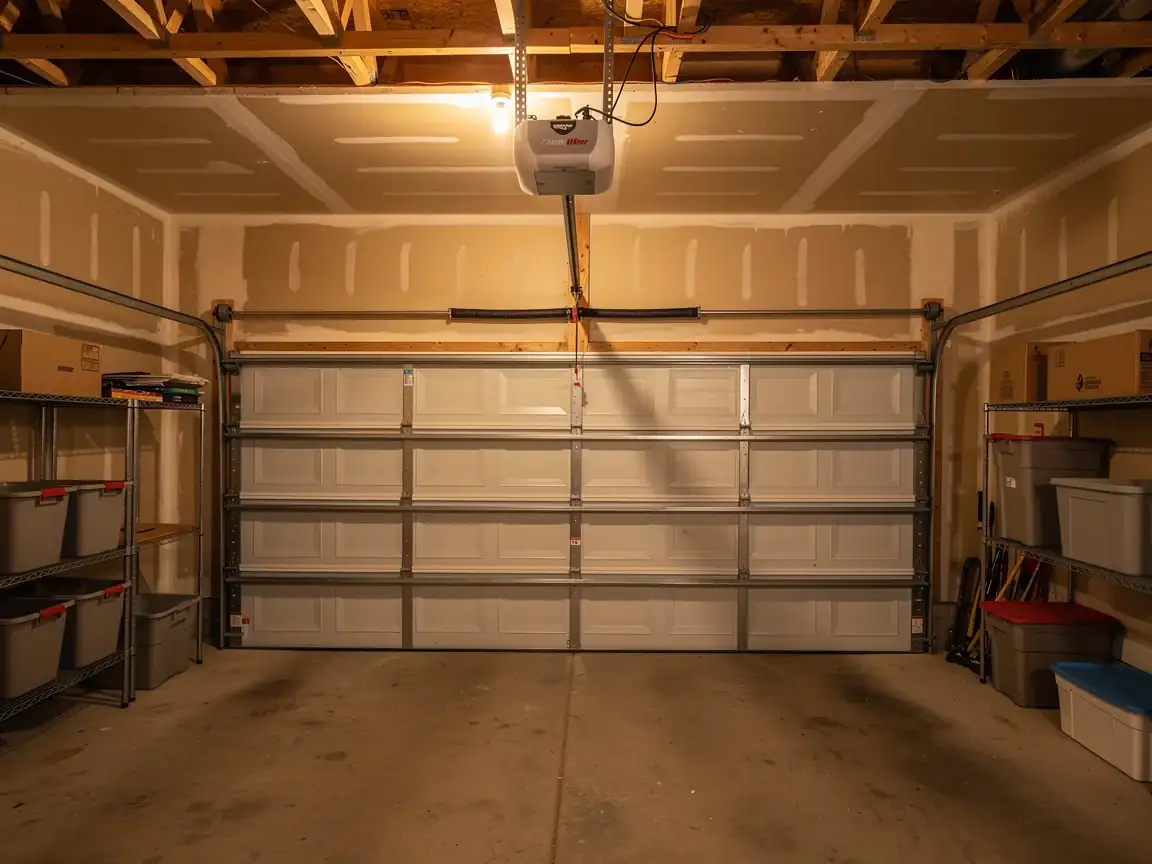
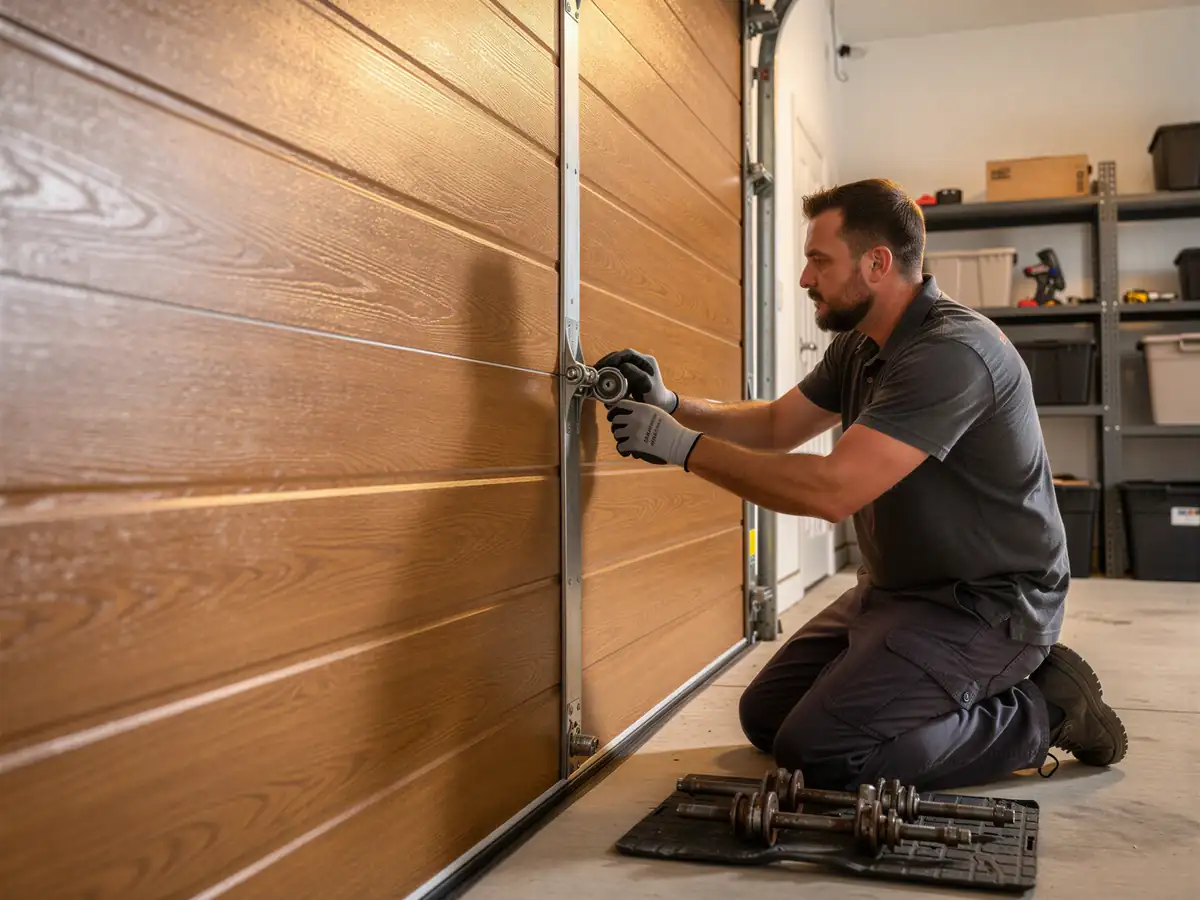
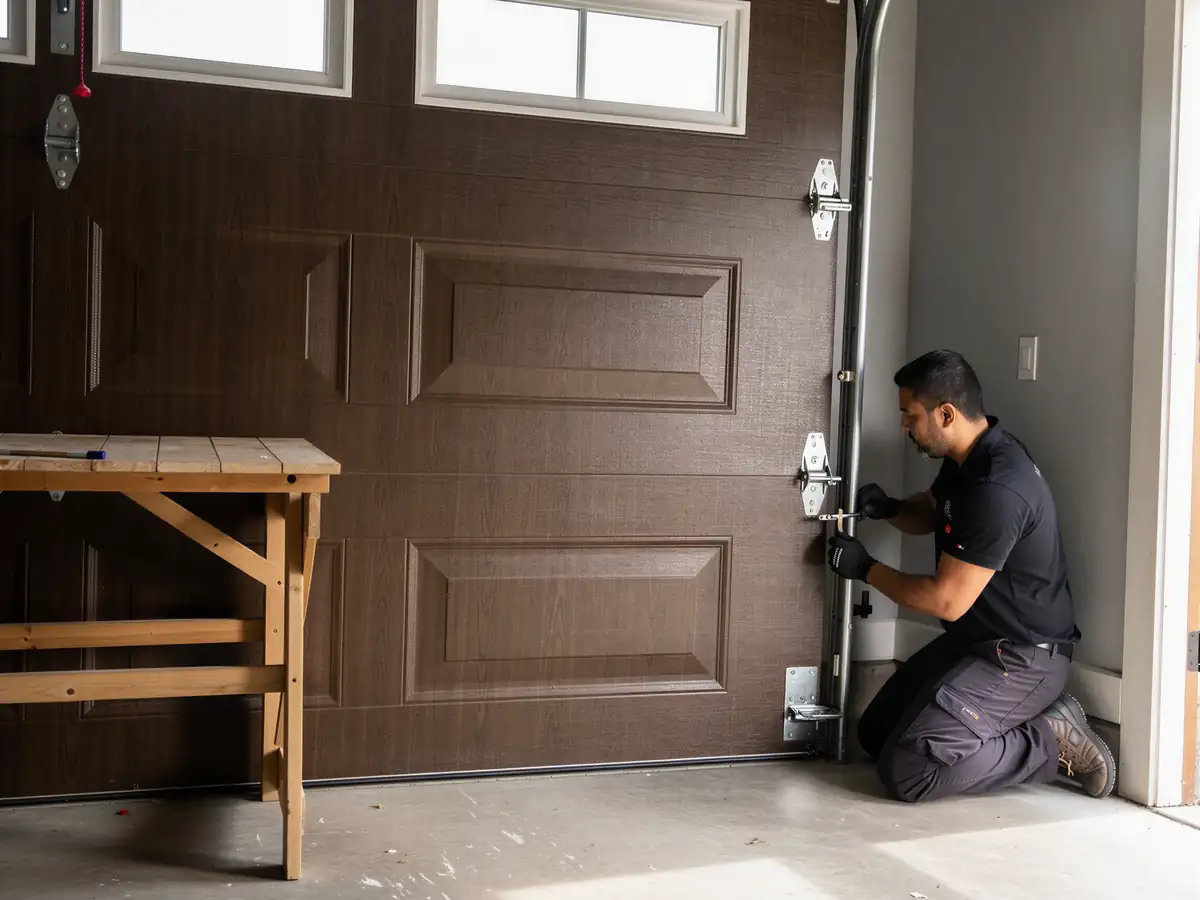
Pull the emergency release cord and see if the door moves freely by hand - if it's heavy or binds halfway up, that's spring or track, not the opener. Check the photo-eye sensors near the floor on each side of the track; a knocked-out alignment is the single most common reason a door won't close and it costs nothing to fix if that's all it is. You can also tighten loose roller brackets and lubricate hinges with a silicone-based product, not WD-40, which washes out over time.
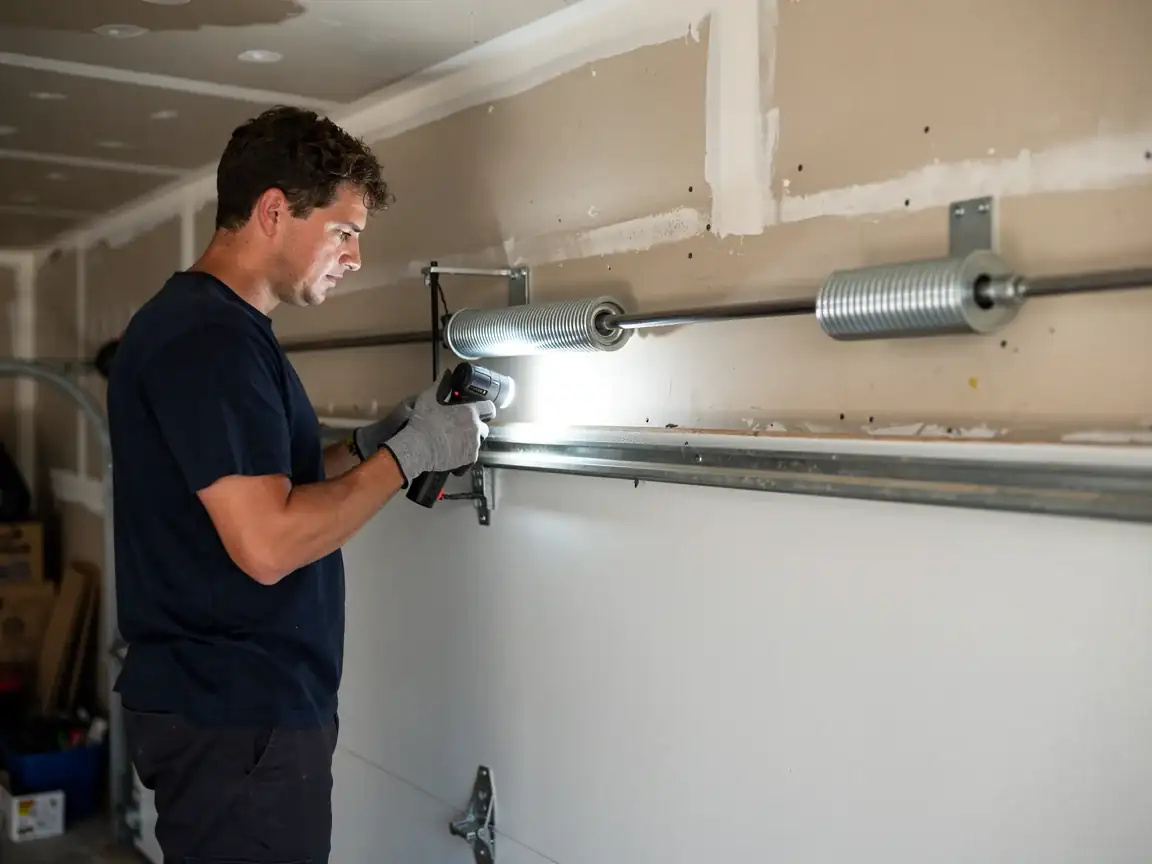
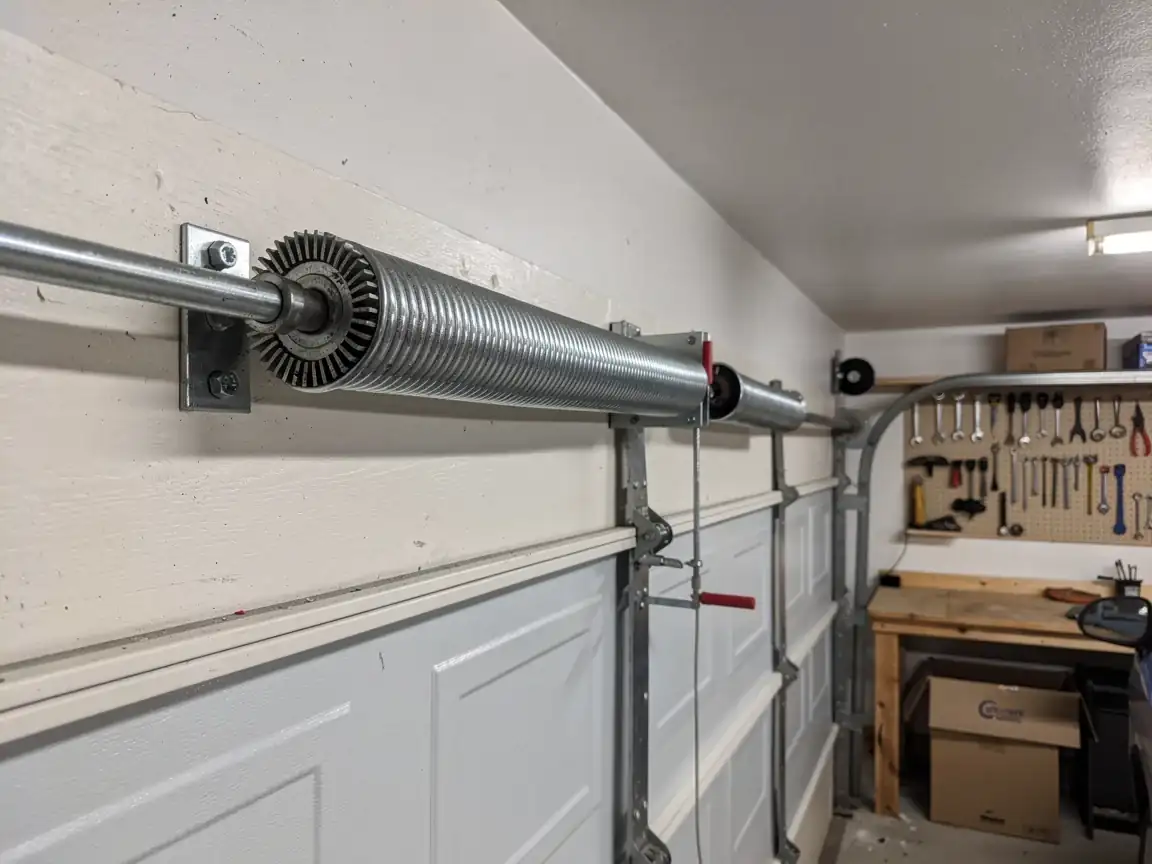
What you shouldn't touch: the torsion spring itself
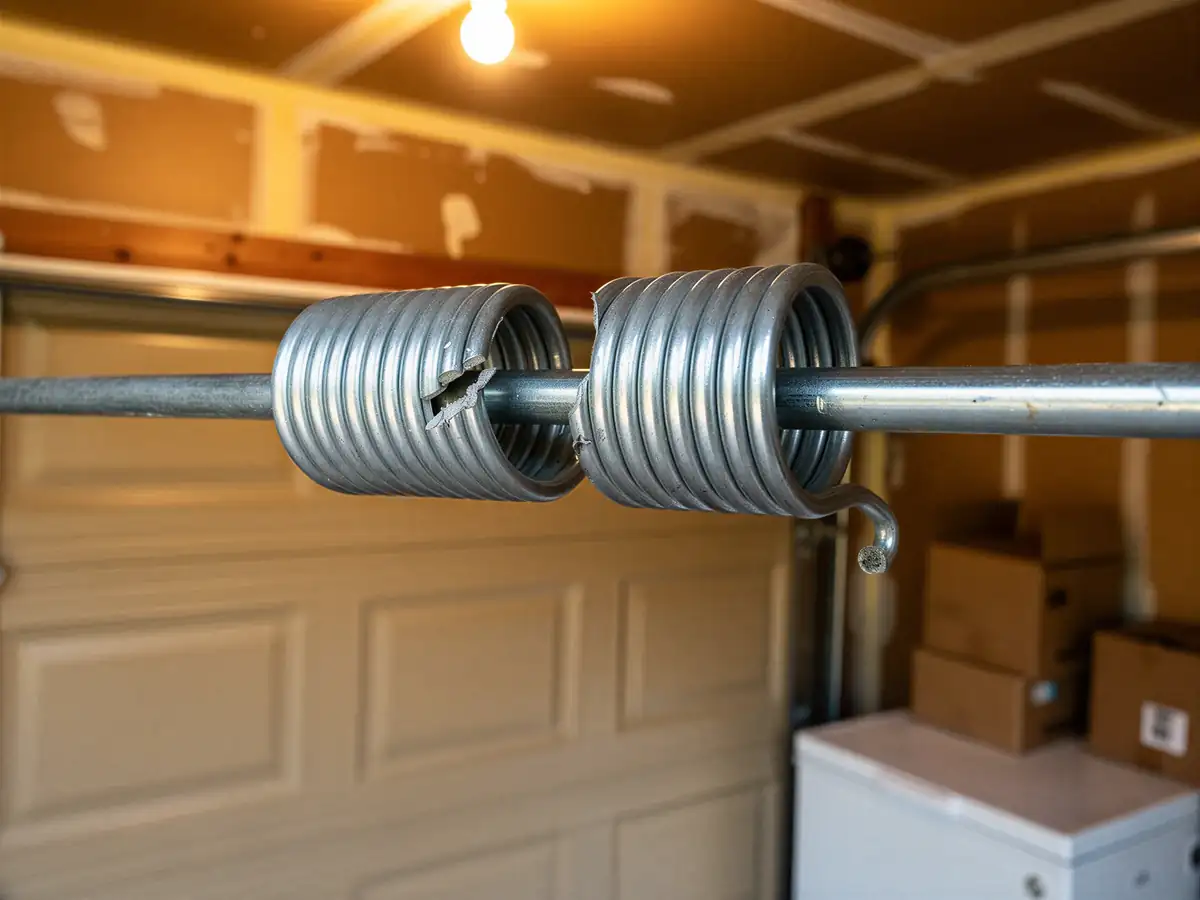
A standard torsion spring on a double door is wound under enough tension to break bones if it lets go while you're working on it, and Concord's housing stock (median build year 1987, per F1) means a lot of these springs are original or on their second cycle. If the door won't budge, if a cable has jumped the drum, or if the spring is visibly separated, that's a call, not a weekend project. We won't talk you out of the easy stuff, but we also won't pretend the spring job is a DIY afternoon.
How It Shows Up
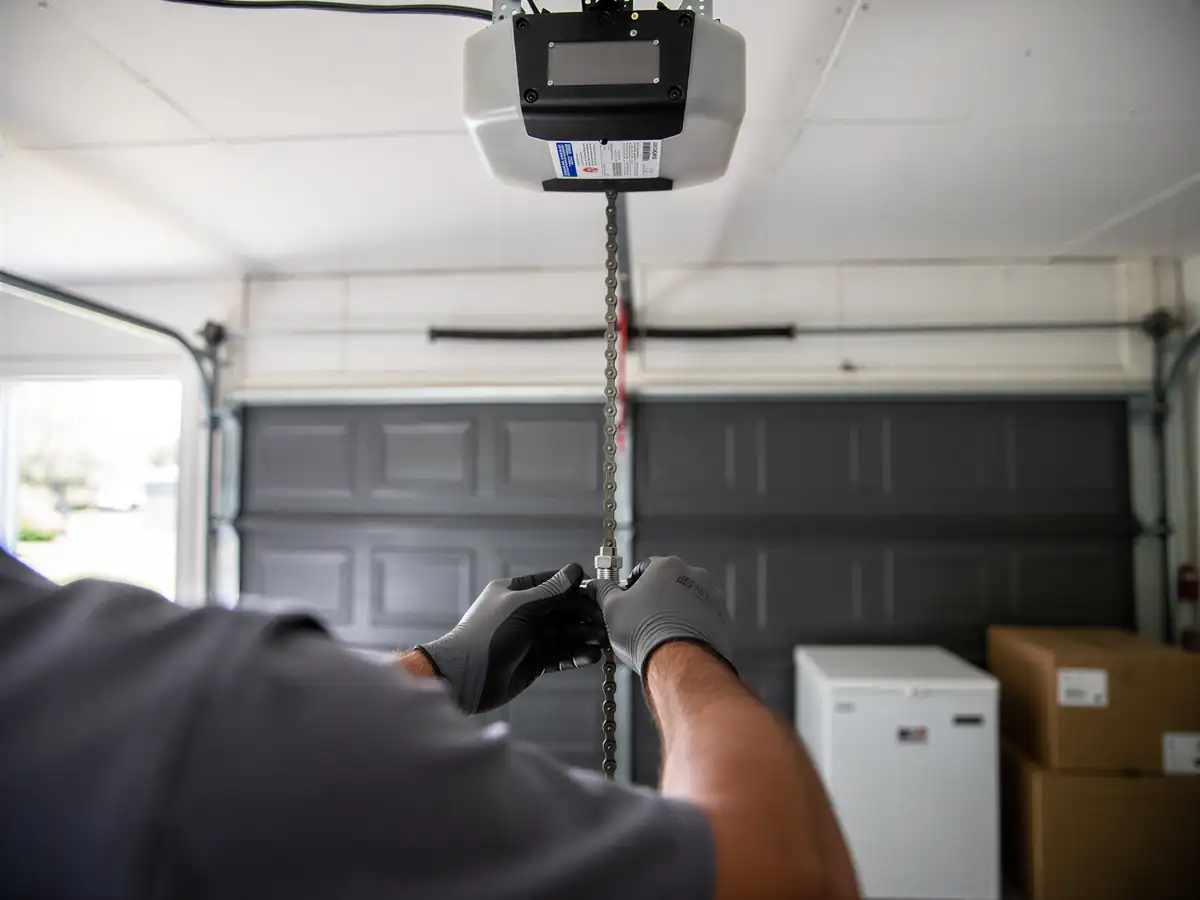
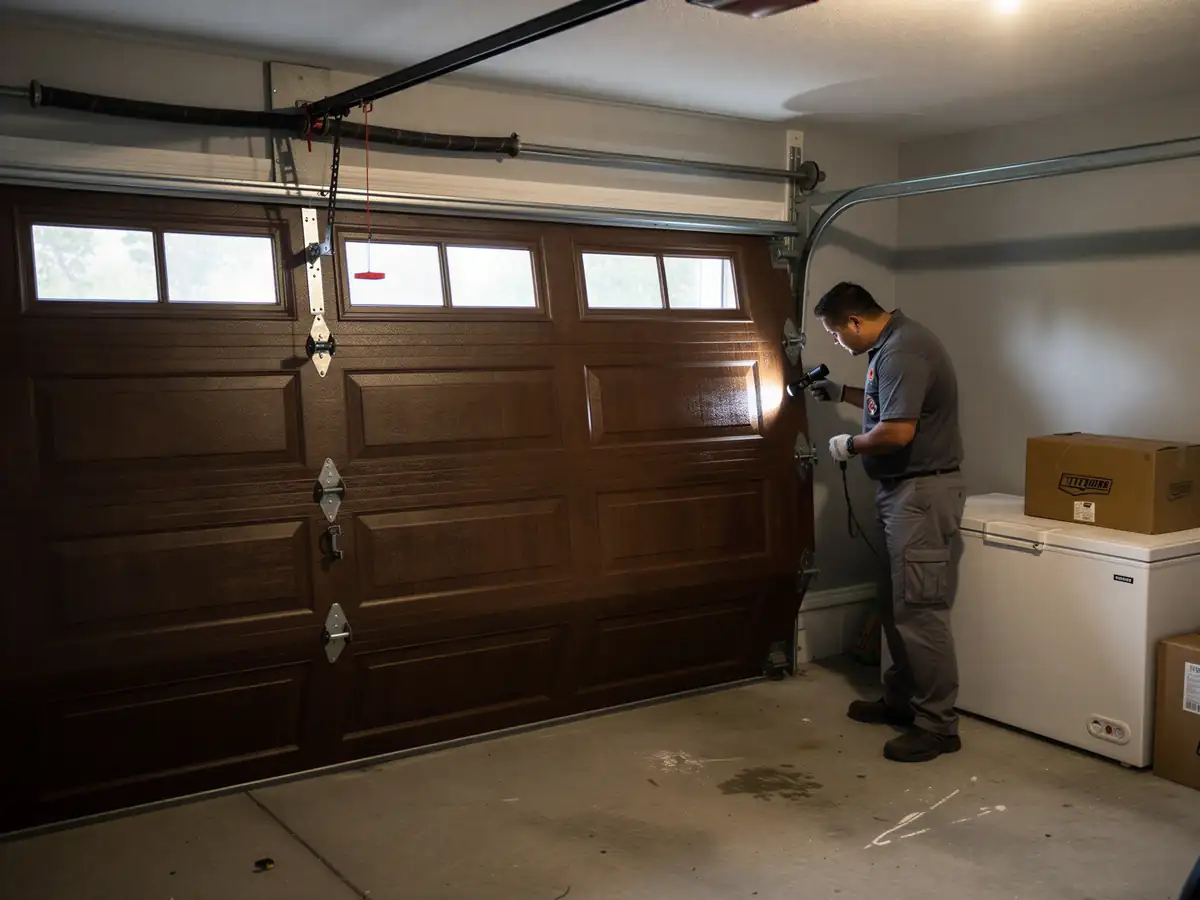
The door that used to open in one smooth pull now jerks, stalls partway, or reverses right after it starts closing. Sometimes it's a loud bang from the garage - that's usually the spring letting go, not something structural failing. Other times it's quieter: the opener motor runs but the door doesn't move, which usually means a stripped gear or a disconnected trolley, not the spring at all.
In homes built through the run from 1969 to 2006 that makes up most of Concord's 16 named areas, the failure usually tracks the age of the original hardware rather than how the house looks. A house that's had one owner and one door opener since 1991 is further along than a 2004 build with a newer unit, even if they look the same from the street. Cold snaps make it worse - steel contracts, lubricant thickens, and a spring that was already fatigued finishes failing on the first hard freeze of the season.
Where This Job Goes Sideways
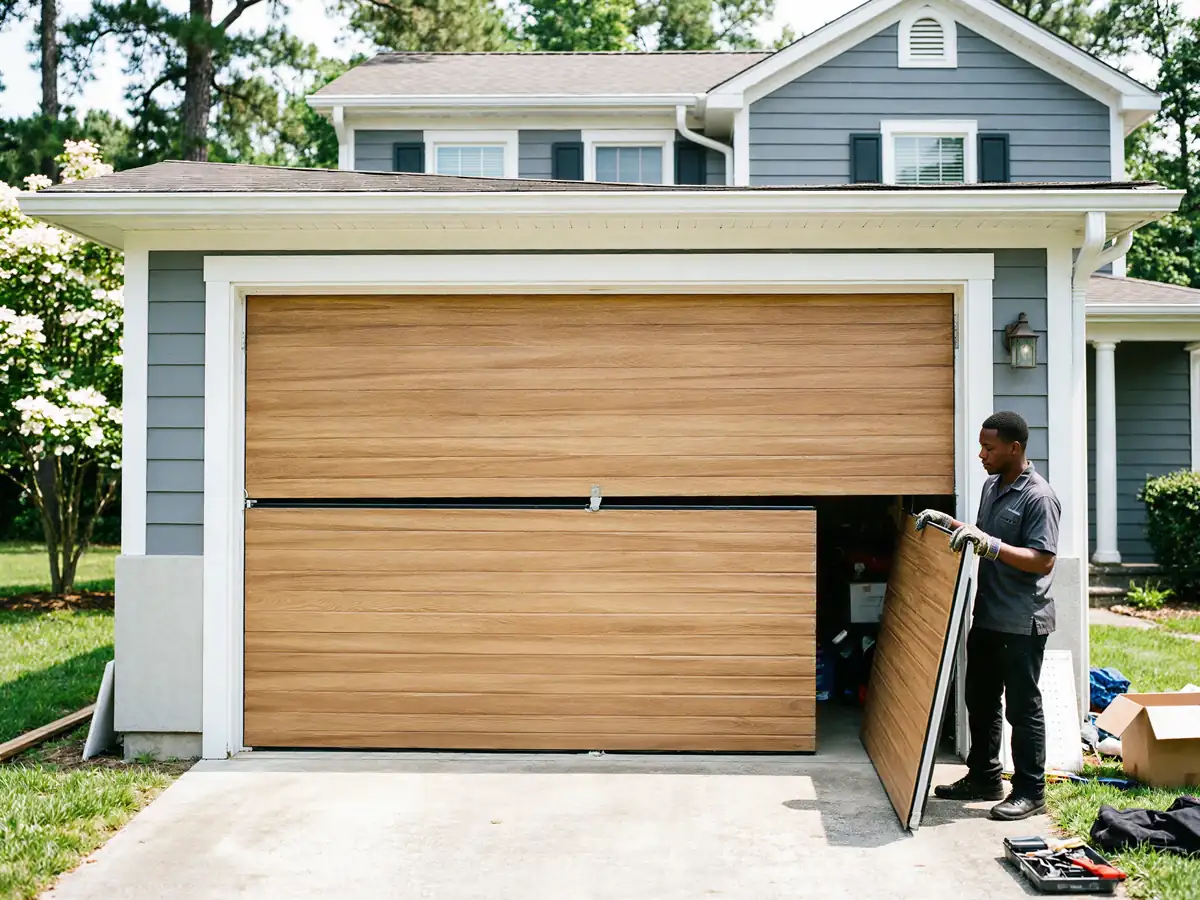
Most of the trouble we see isn't the original failure - it's what happens after someone tries to push through it. A door that's binding on a bad roller gets forced by the opener dozens more times before anyone calls, and now the opener's gear-and-sprocket assembly is worn along with the roller. A spring that snapped gets left alone because the door still sort of works on the opener's strength, until the opener burns out trying to lift a 150-plus pound door with no spring assist.
We'll be straight about this one: if a door is old enough that the track is bent, the drums are worn, and the spring has gone, replacing the whole system is usually cheaper than fixing it piece by piece, and we'll say so instead of running up a repair bill on hardware that's going to fail again in a year. That's not the answer for every call - plenty of doors in Concord's 1980s and 90s stock are mechanically fine and just need one part. But a door that's failed in three places at once is telling you something.
What Causes It Around Here
Concord's housing runs mostly from 1969 to 2006
With the bulk of it concentrated in the 1980s and 90s across the area's named neighborhoods. That means a large share of garage doors and openers are now 20 to 40 years past installation, which is well past the service life of a torsion spring under daily cycling. Springs are rated in cycles, not years, and a door used twice a day for three decades has gone through tens of thousands of open-close cycles regardless of how it looks.
- 40 years
The climate here is cold-moderate
Not the deep-freeze swings of the upper Midwest, but enough seasonal temperature change that steel springs and cables fatigue faster than they would somewhere mild year-round. Thermal cycling stresses metal every time it contracts and expands, and a spring sitting near its fatigue limit from age often picks the first cold morning of the year to finish the job. That's why we see a bump in spring-failure calls when temperatures drop sharply after a warm stretch, especially in houses built in that 1980s-1990s window.