Doing It Yourself
If one side of the door has popped a roller out of the track but the door still hangs level and nothing is bent
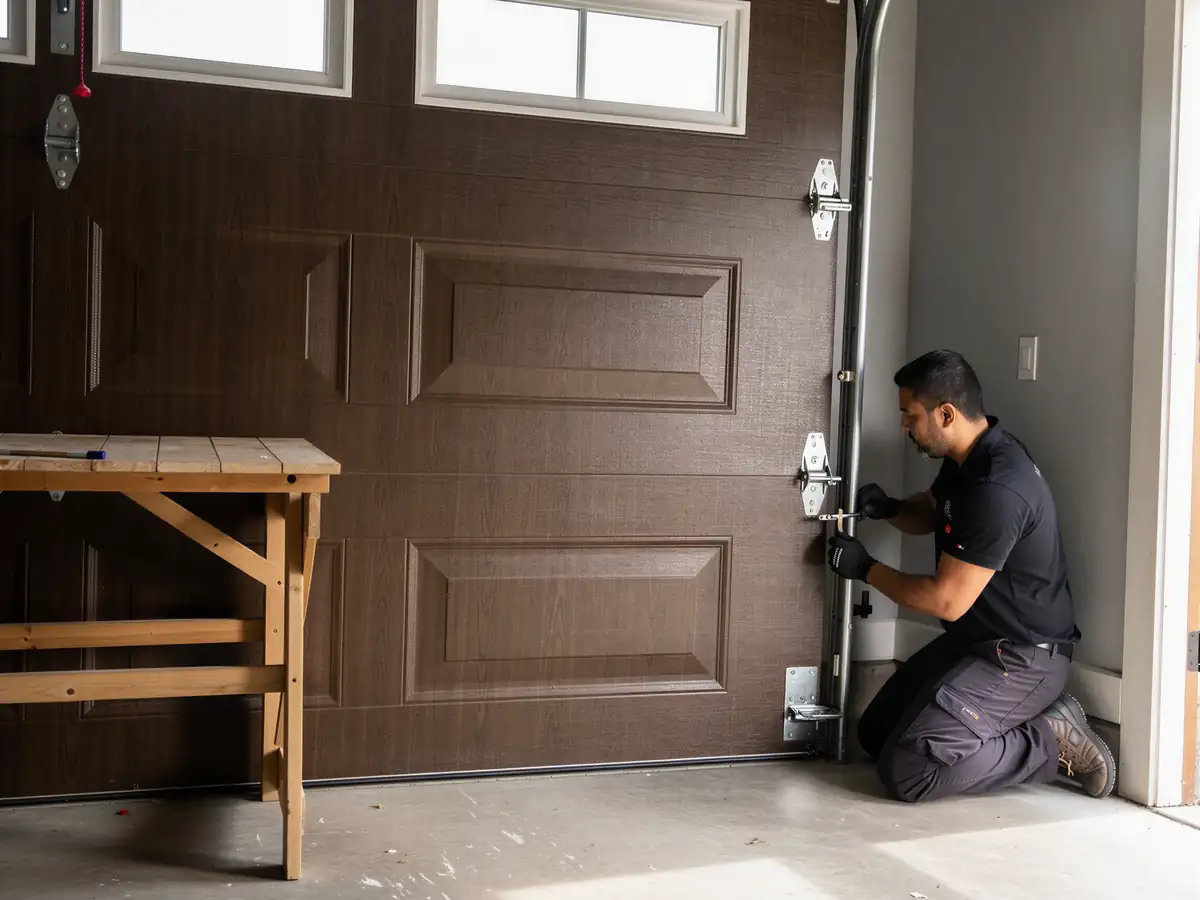
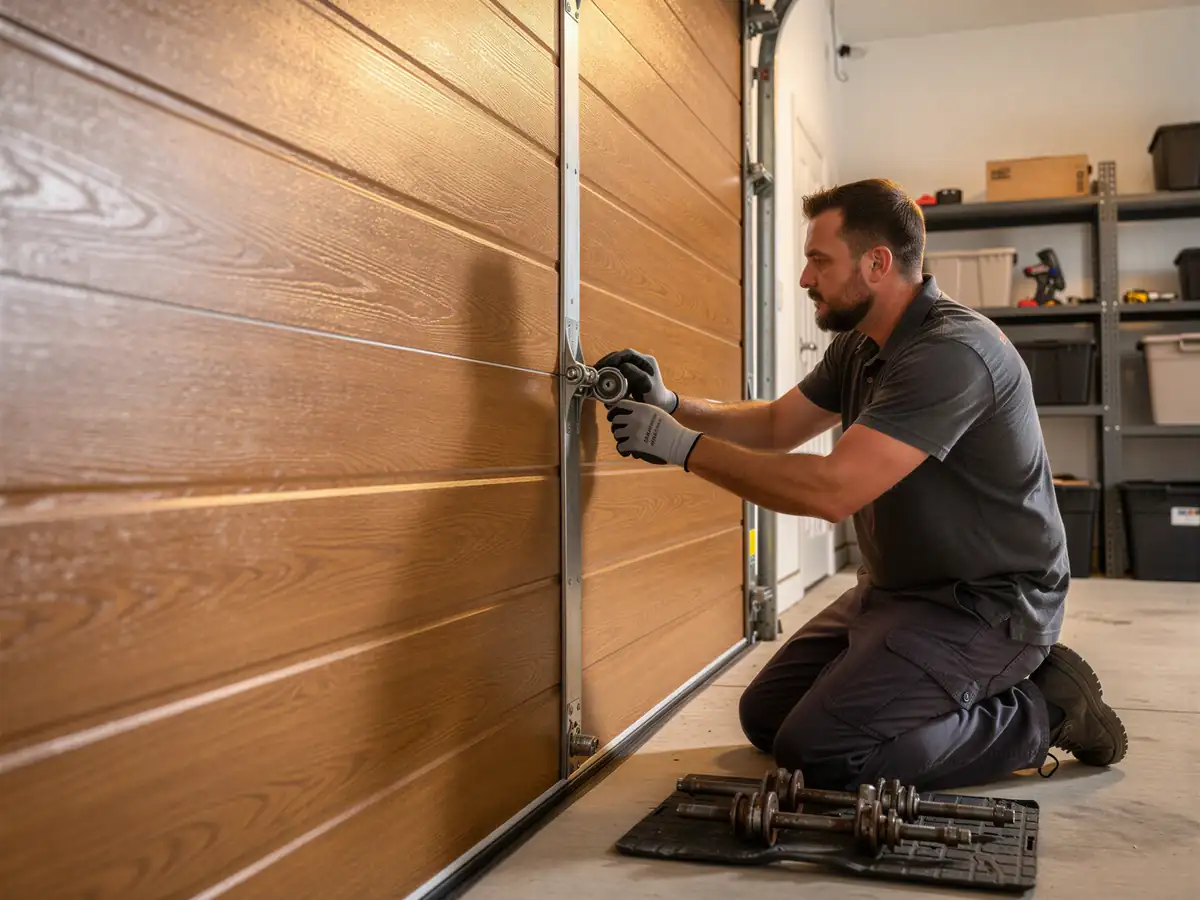
You can sometimes walk it back in. Open the door partway, find the roller, and gently guide it along the track lip while someone braces the panel. That's the limit of what you should try.
What you should not do is keep pressing the opener button hoping the door will seat itself
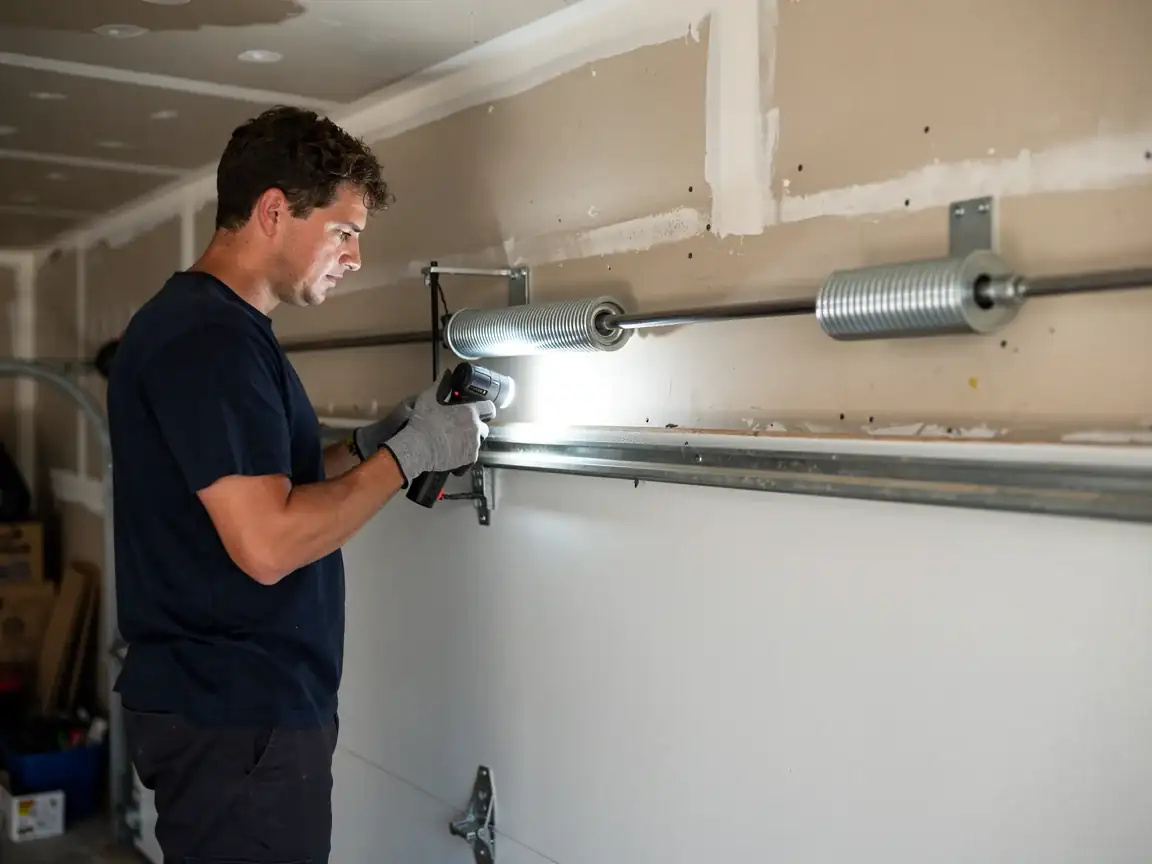
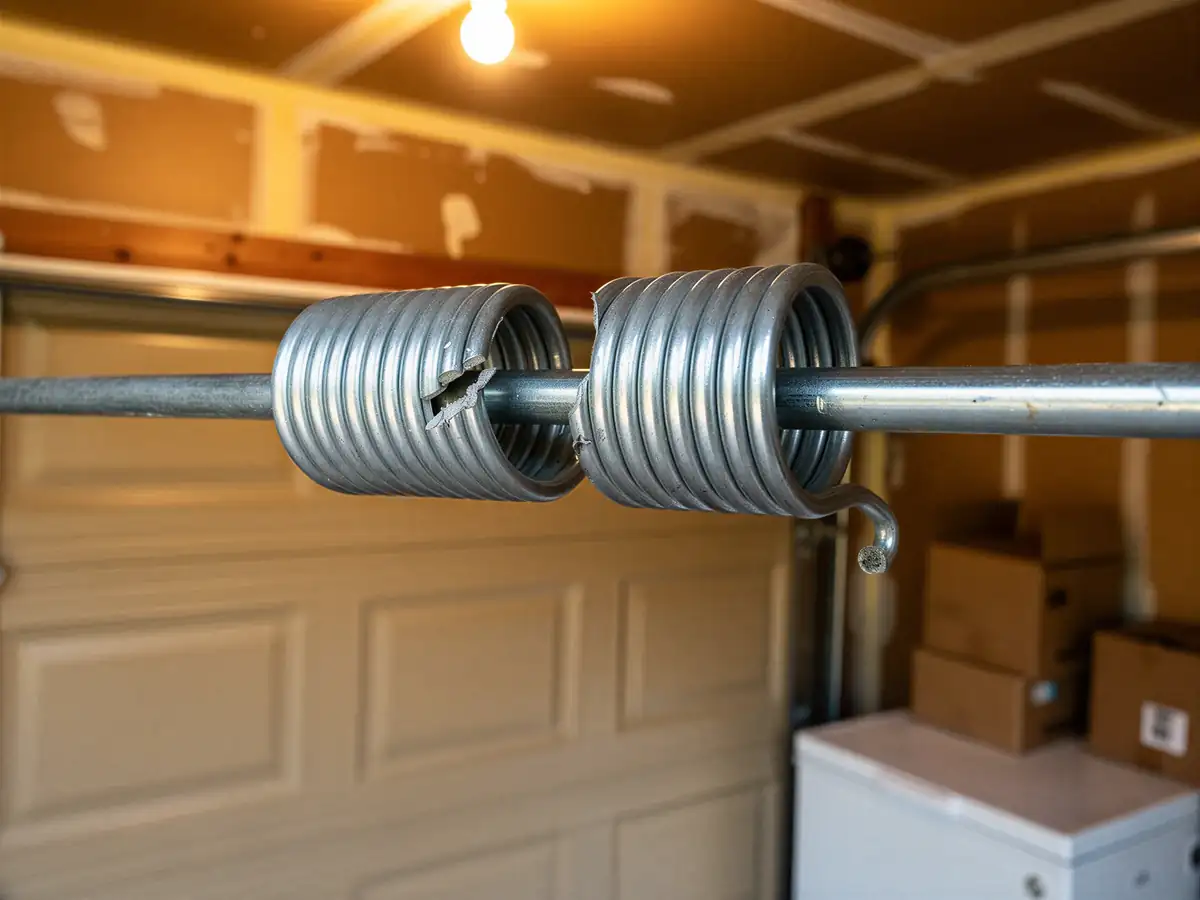
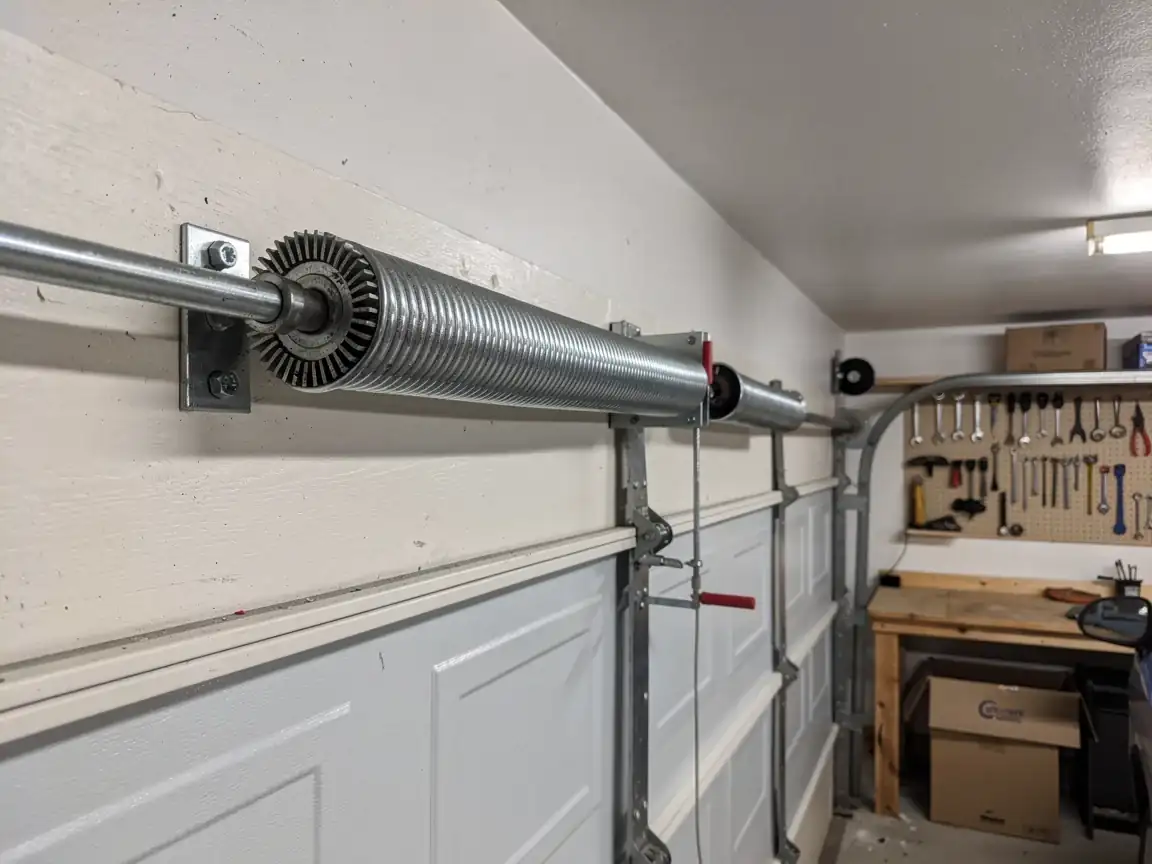
Every cycle grinds the roller stem against the track edge and can bend the track further, turning a five-minute fix into a track and roller replacement. If the door is leaning, if a cable has slipped off the drum, or if you see a bent track rail, stop. A door under spring tension that's already off one track can come down fast and crooked, and that's not a DIY repair regardless of how handy you are.
Honest limitation: if the track is visibly bowed or the bottom bracket has pulled away from the panel
Realigning it yourself usually just shifts the damage somewhere else. That's a call, not a weekend project.
How It Shows Up
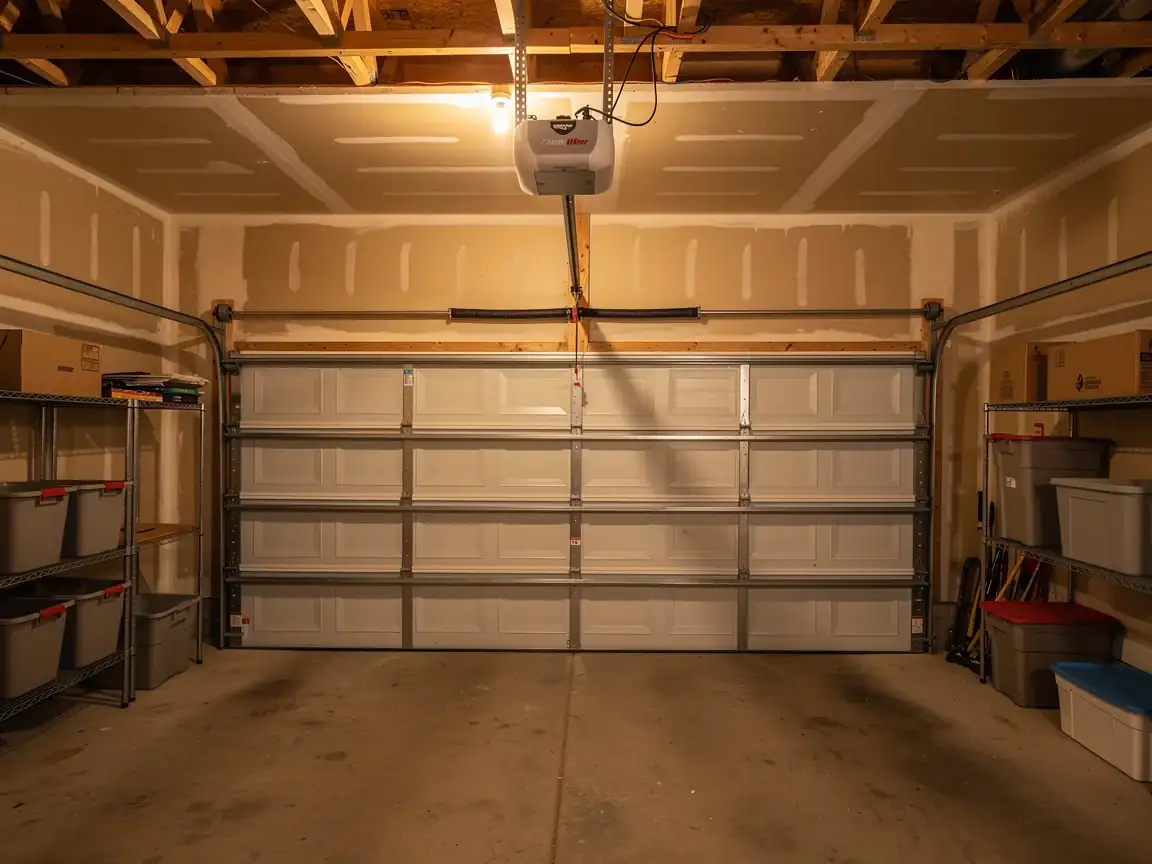
Most of the time it starts small. The door catches slightly on the way down, makes a scraping or popping sound near one of the vertical tracks, or stops a few inches shy of the floor and reverses. Sometimes a homeowner notices the door hanging at a slight angle when it's halfway open - one side higher than the other.
In houses built through Concord's main building wave, 1969 through 2006 with a lot of stock dating to the late 1980s, the original track brackets are lag-bolted into jamb framing that's had three or four decades to shift slightly. That small shift is enough to walk a roller off the rail over repeated cycles.
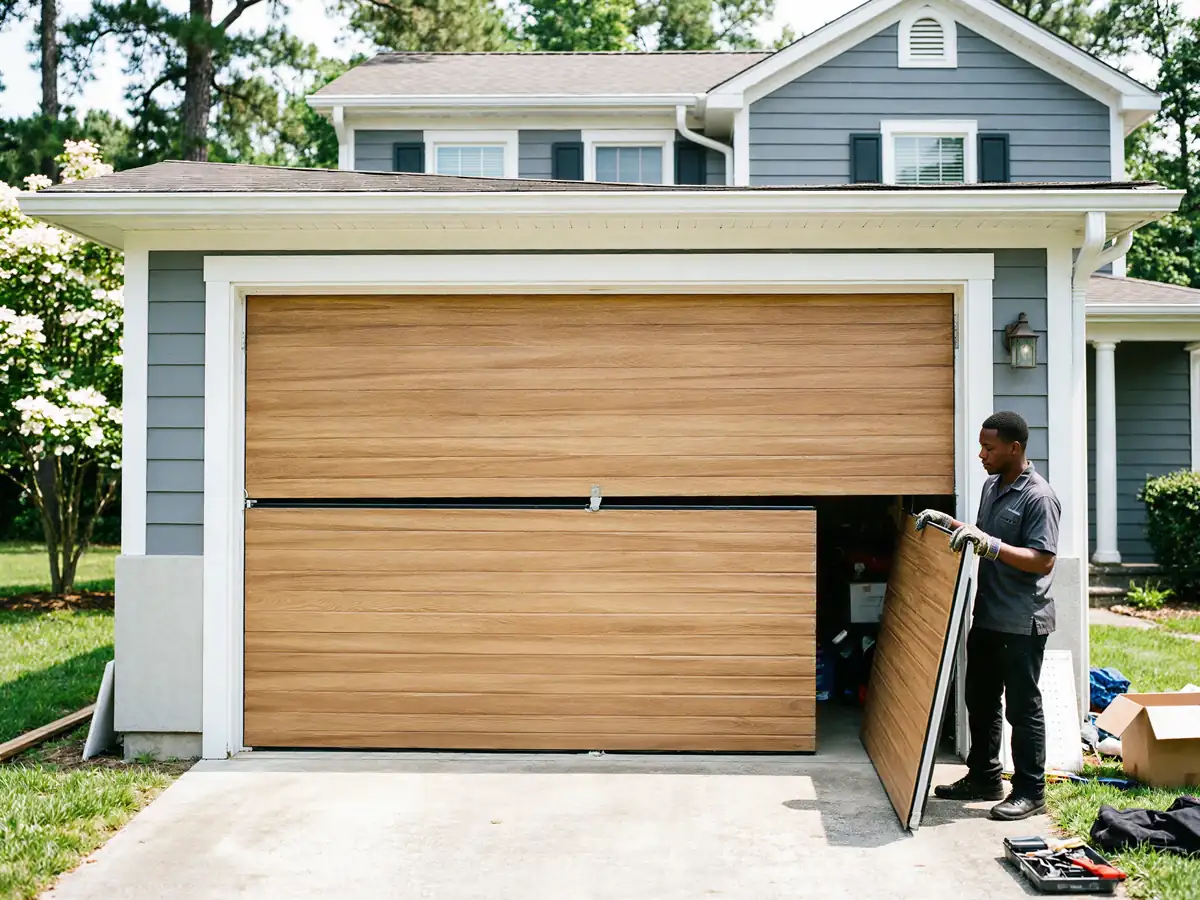
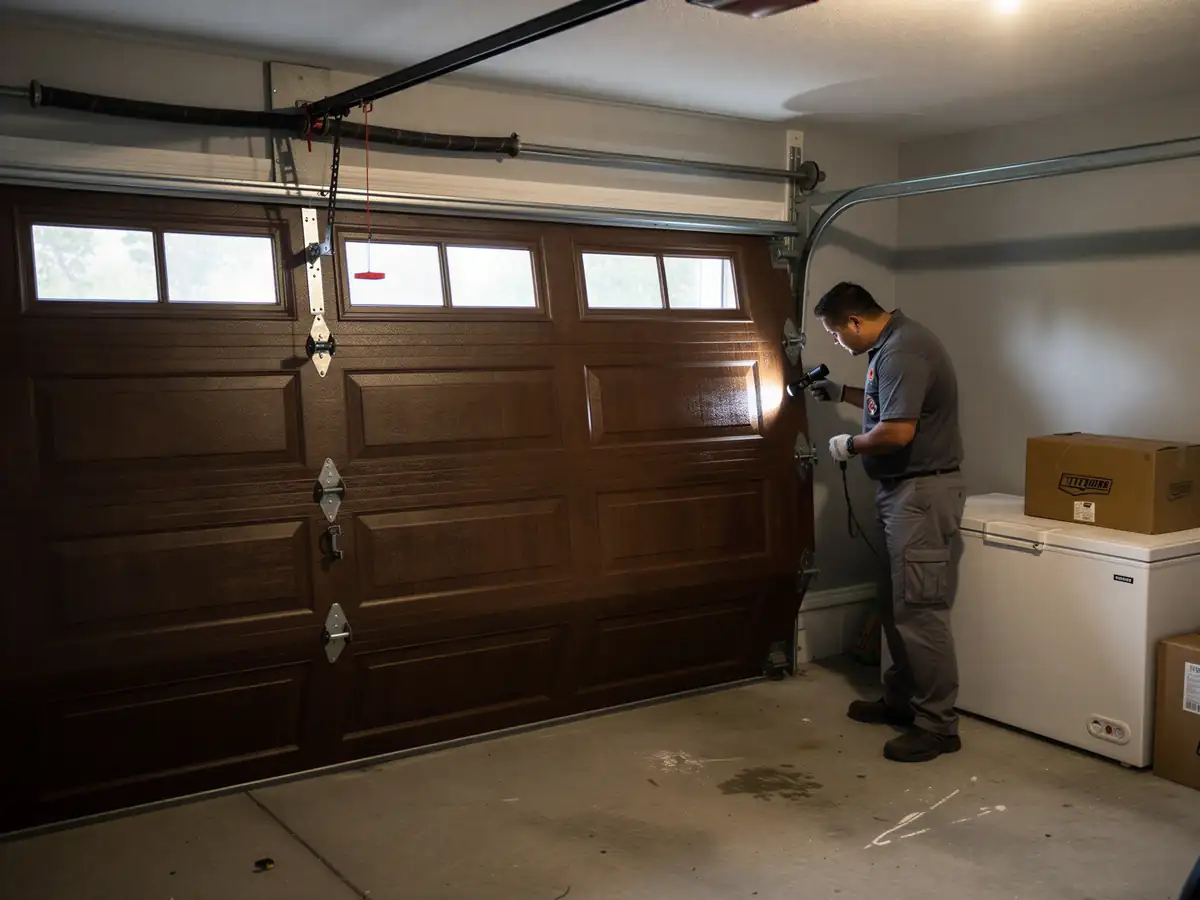
A door that's fully off track on both sides, sitting crooked in the opening, is a different animal than one roller slipped loose. The first is a same-day call. The second can usually wait a day if you leave the door alone and don't force the opener.
Where This Job Goes Sideways
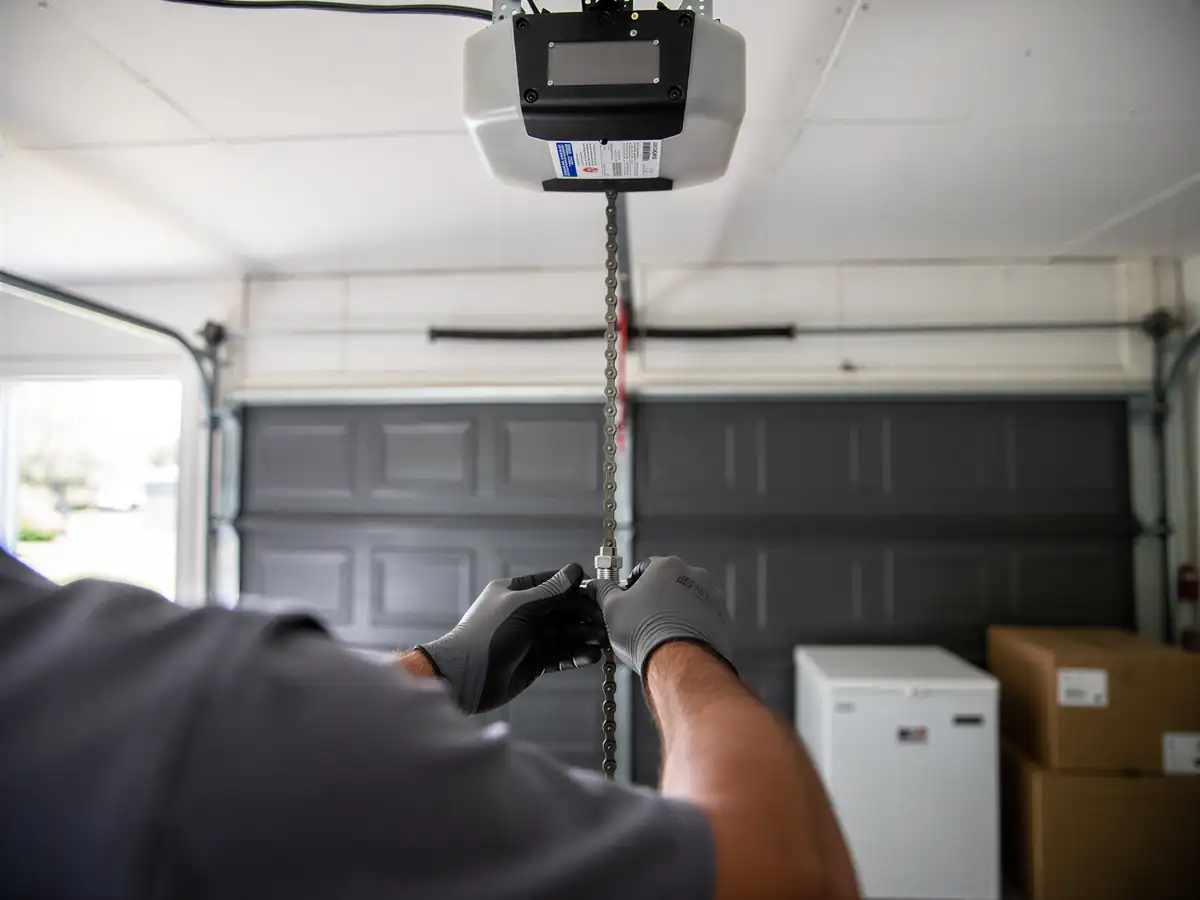
The job gets expensive and the repair window gets smaller when someone tries to force the door down with the opener after it's already jumped the track. The motor doesn't know the roller is loose - it just keeps pulling, and that's how a simple re-seat turns into a bent track, a torn panel seam, or a snapped cable.
It also goes sideways on doors from the 1980s and 90s stock common across the 16 named areas in this service territory, where original track hardware is narrower-gauge than what's sold today. A tech can usually true up a section, but if the rail itself is bent rather than just knocked loose, patching one section with newer, heavier-gauge track next to 30-year-old rail rarely rides smooth - full track replacement ends up being the honest answer even though it's not the cheaper one.
The other place this goes wrong: ignoring a slow leaner for weeks. Repeated off-and-on cycling with a slightly misaligned roller wears the roller bearing and the track edge together, so what starts as a bent bracket job becomes a bracket-plus-roller-plus-track job.
What Causes It Around Here
Three things line up in this part of North Carolina
First, the housing stock: homes here were built mostly between 1969 and 2006, median around 1987, and across the 16 named communities in this service area that 1980s-90s construction wave means a lot of original track brackets are original hardware, not replacements. Thirty-plus years of door cycles loosens lag bolts in jamb wood before most owners think to check them.
Second, the climate band here is cold-moderate
Not harsh enough to crack concrete slabs outright, but enough freeze-thaw swing through winter to shift a garage floor and foundation slightly each year. That tiny seasonal movement nudges track alignment a hair at a time, which is why off-track complaints cluster in late winter and early spring.
Third, volume
With roughly 41,230 owner-occupied houses across this service area, a large share built in that same two-decade window, the math means a steady run of doors hitting the same hardware-age wall at the same time - not a coincidence, just a lot of houses aging together.
- 41,230 owner-occupied