What the Fix Involves
Harrisburg is a smaller piece of the territory we run out of Concord
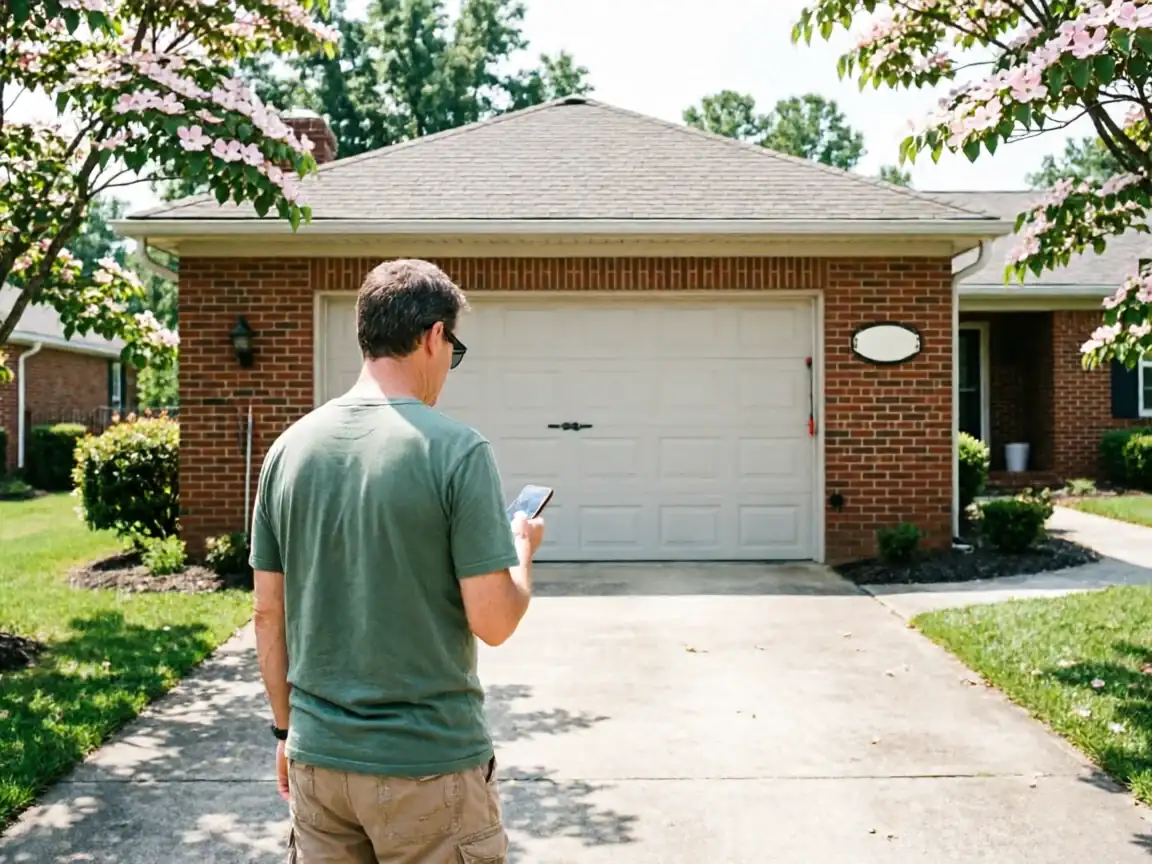
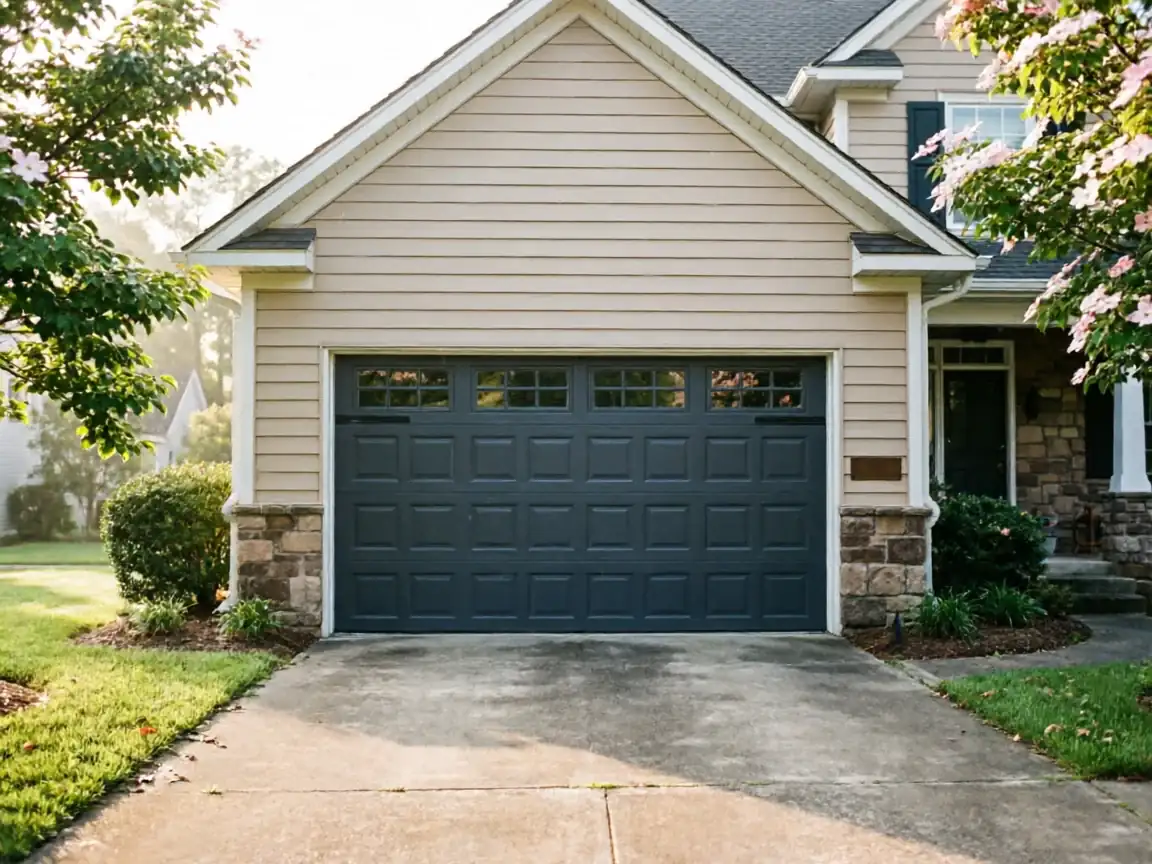
About 5,804 households, roughly a tenth the size of the 41,230 owner-occupied houses spread across the wider service area. That size matters because it means the job mix here looks different from older parts of the coverage map. Most of this area went up around 2006, well after the 1969-2006 range that covers the service area as a whole. A door built in 2006 is still running its original torsion spring and the factory opener logic board, and both are now old enough to be the reason for the service call, not a side issue.
- 5,804 households
- 41,230 owner-occupied
What we see out here tends to be wear, not neglect
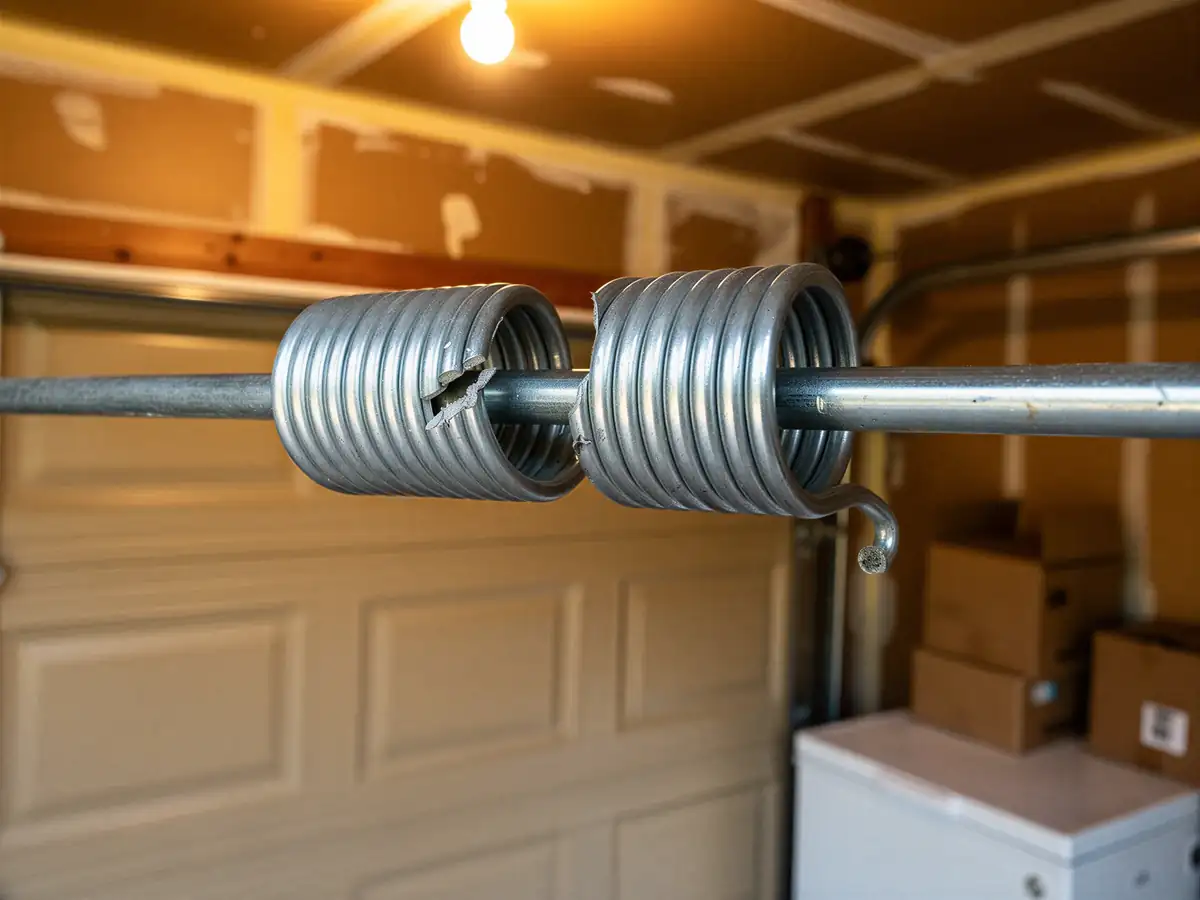
A spring that's done its 10,000 cycles, a opener that's starting to grind through its gears, rollers that have gone from nylon-smooth to chipped. The door itself - panels, track, hardware - is usually still square and true, because homes this age haven't had thirty years to settle or rust through. That's different from what a 1970s or 80s build throws at us. Here the fix is almost always mechanical, not structural.
Doing It Yourself
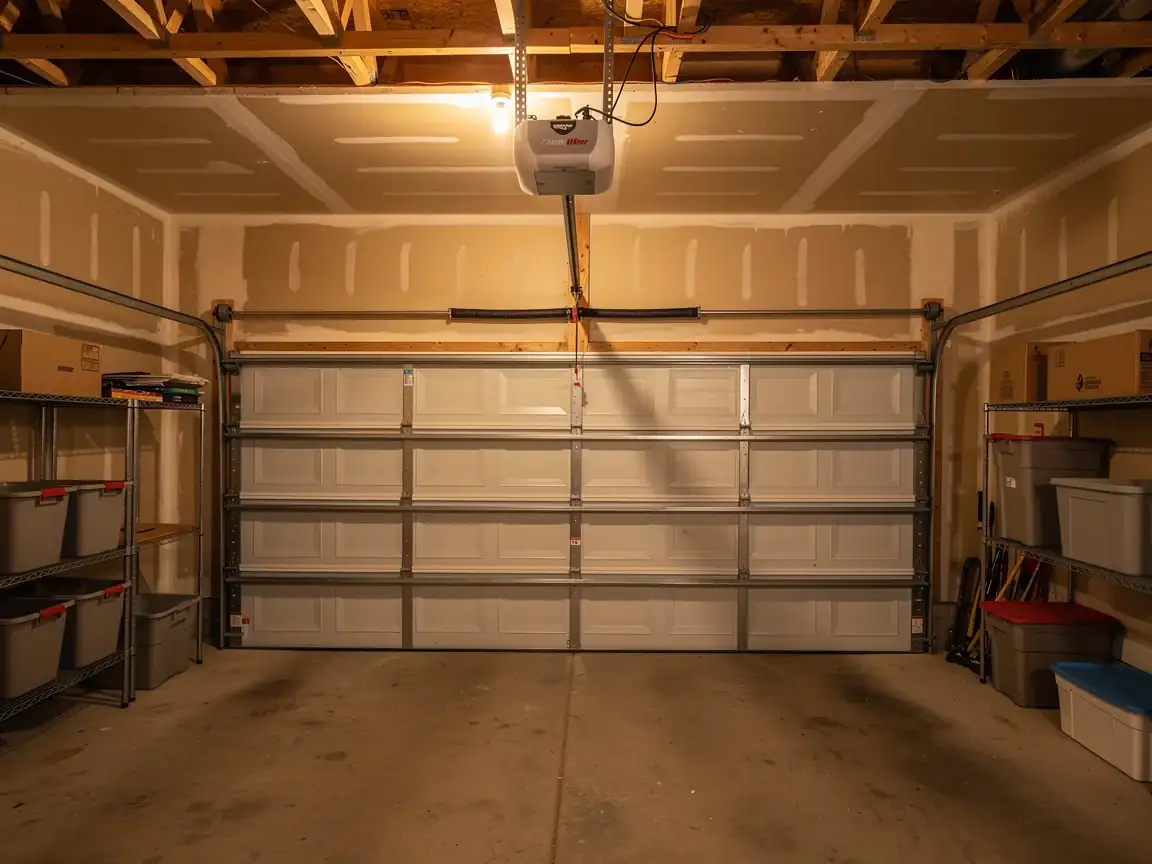
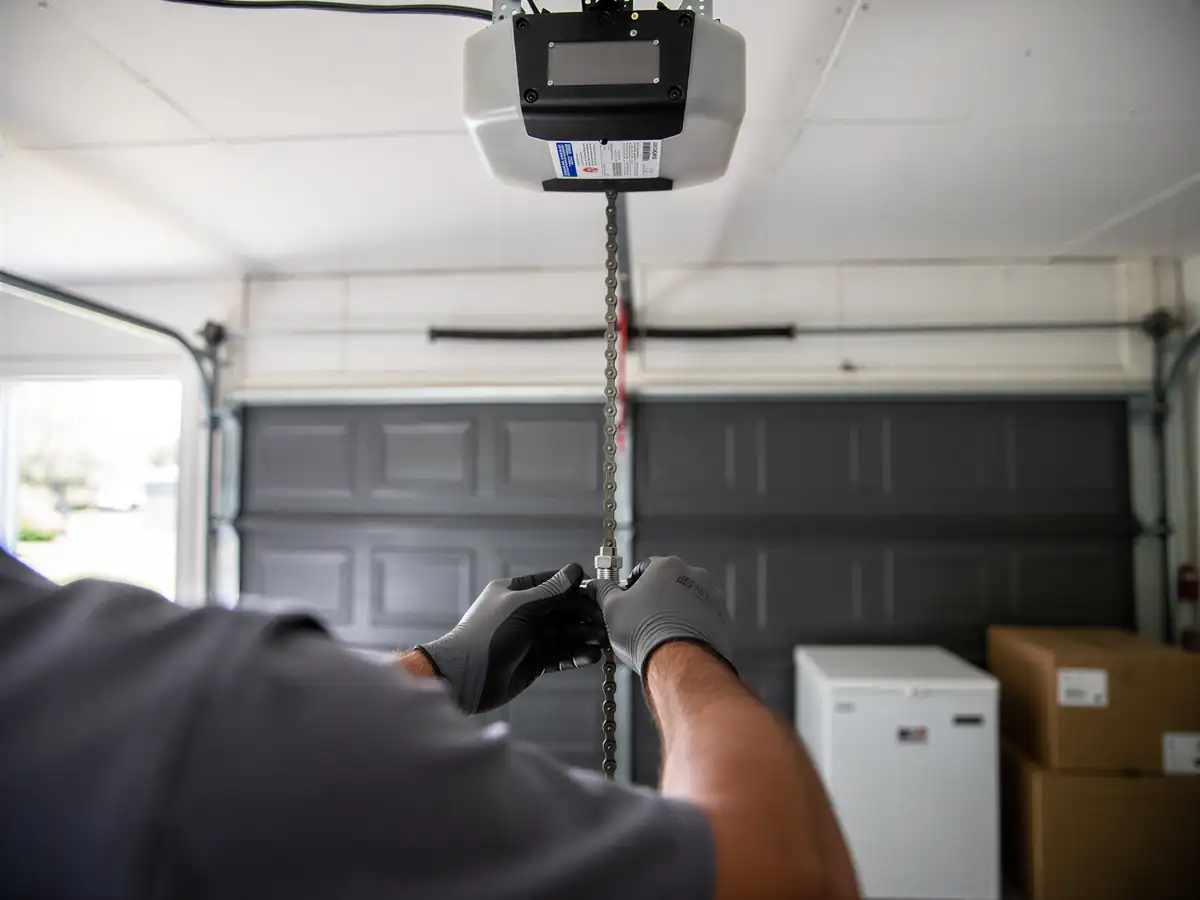
A door from the 2006-and-newer stock in Harrisburg uses standard torsion spring sizing and a conventional chain or belt-drive opener - nothing exotic, and parts are easy to source. That's the good news if you're inclined to do your own work: lubricating hinges and rollers, tightening loose hardware, and clearing the photo-eye sensors are all reasonable DIY jobs on a door this age.
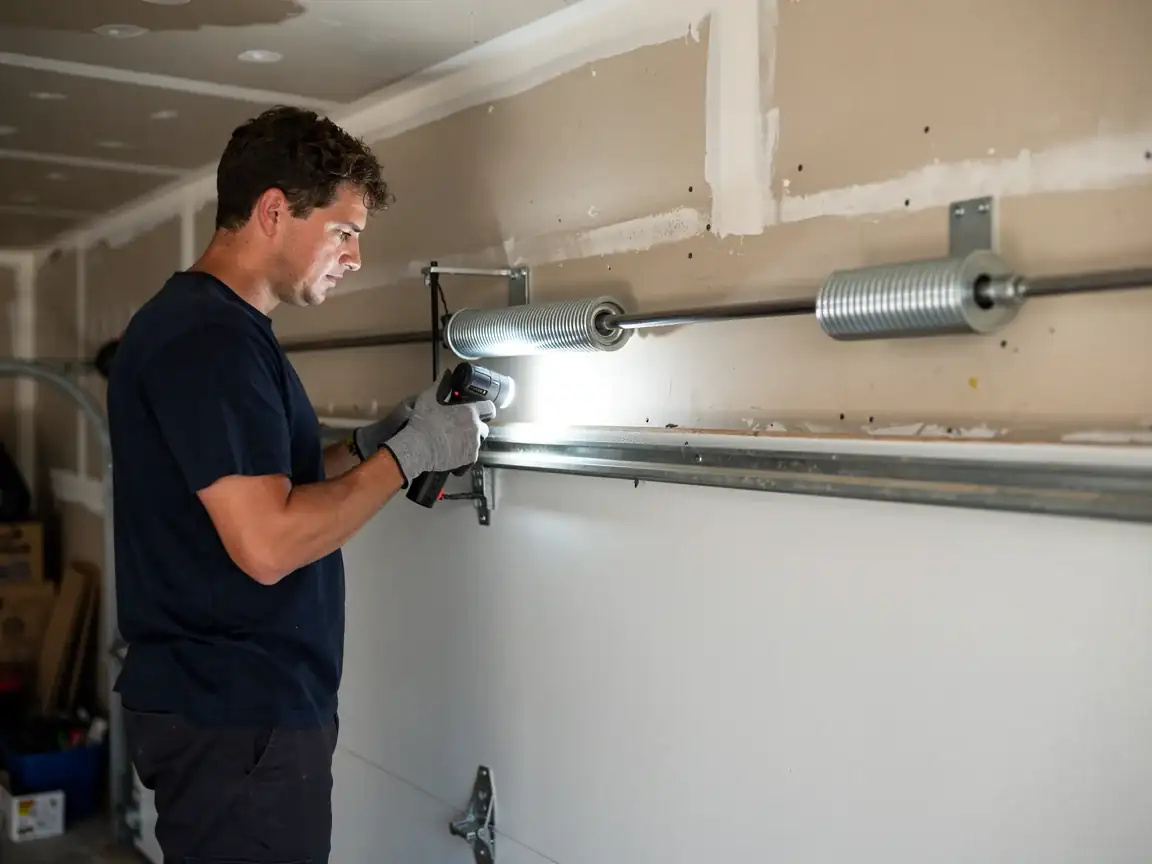
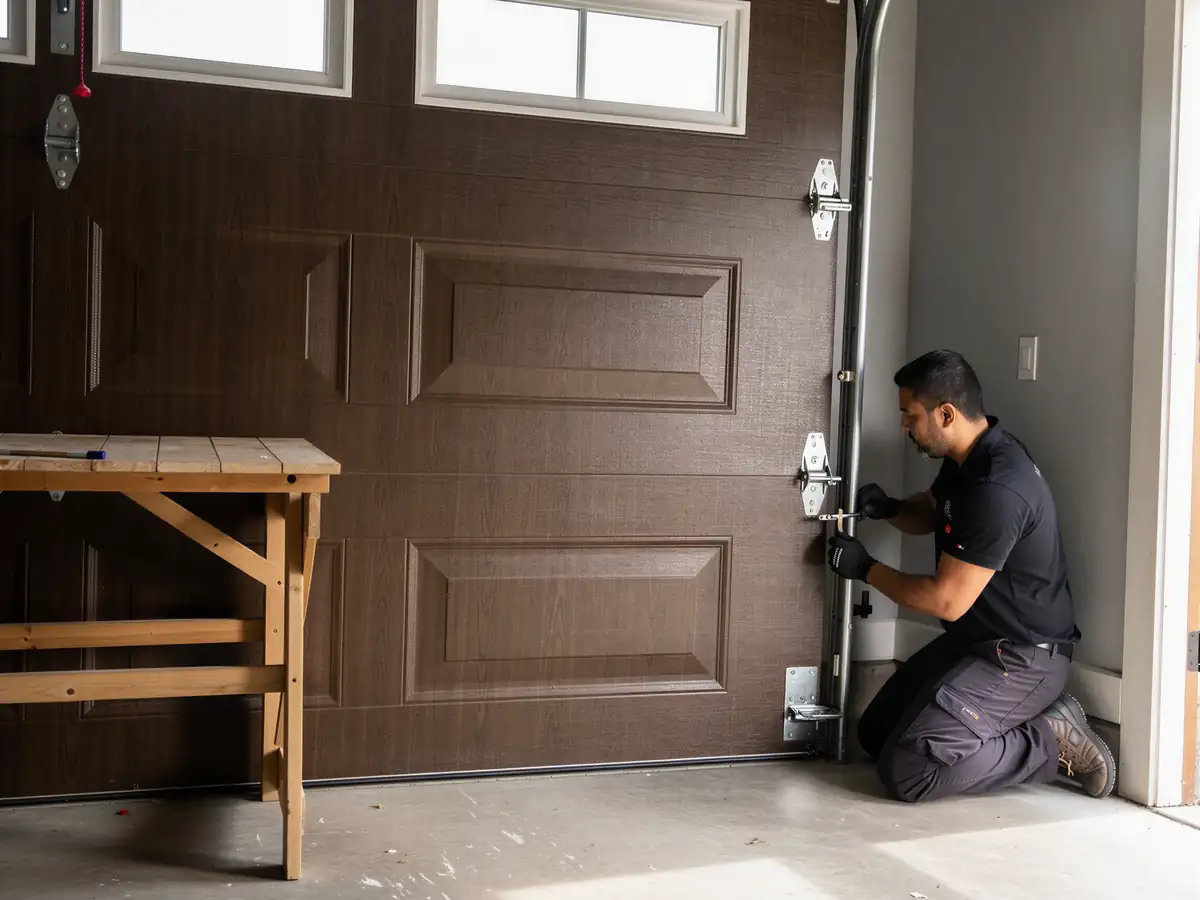
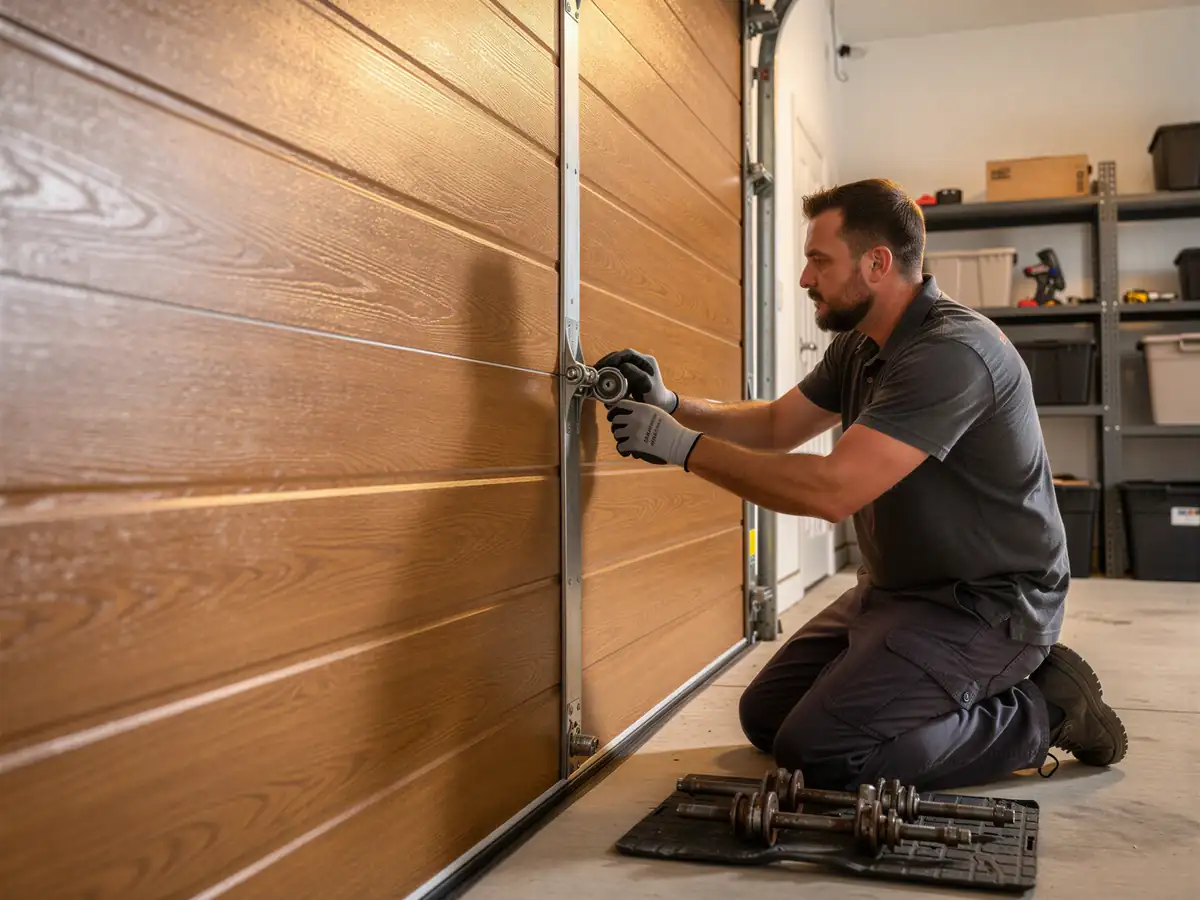
What isn't reasonable is the spring itself. A torsion spring under full tension can put someone in the hospital, and the winding bars and clamps to do it safely aren't things most garages have lying around. If your opener is cycling the door but the door won't lift, or lifts partway and stalls, that's spring tension, not a settings problem. Stop there and call it in.
Where This Job Goes Sideways
The income profile in Harrisburg runs well above the service area median of $79,765, and homes here tend to have better-finished garages - insulated doors, side-mounted openers, sometimes a second door on the same wall. That's usually a plus, but it means a straightforward spring swap can turn into a bigger job if the opener's travel limits or force settings were never set right at install, which happens more than you'd think on newer tract construction.
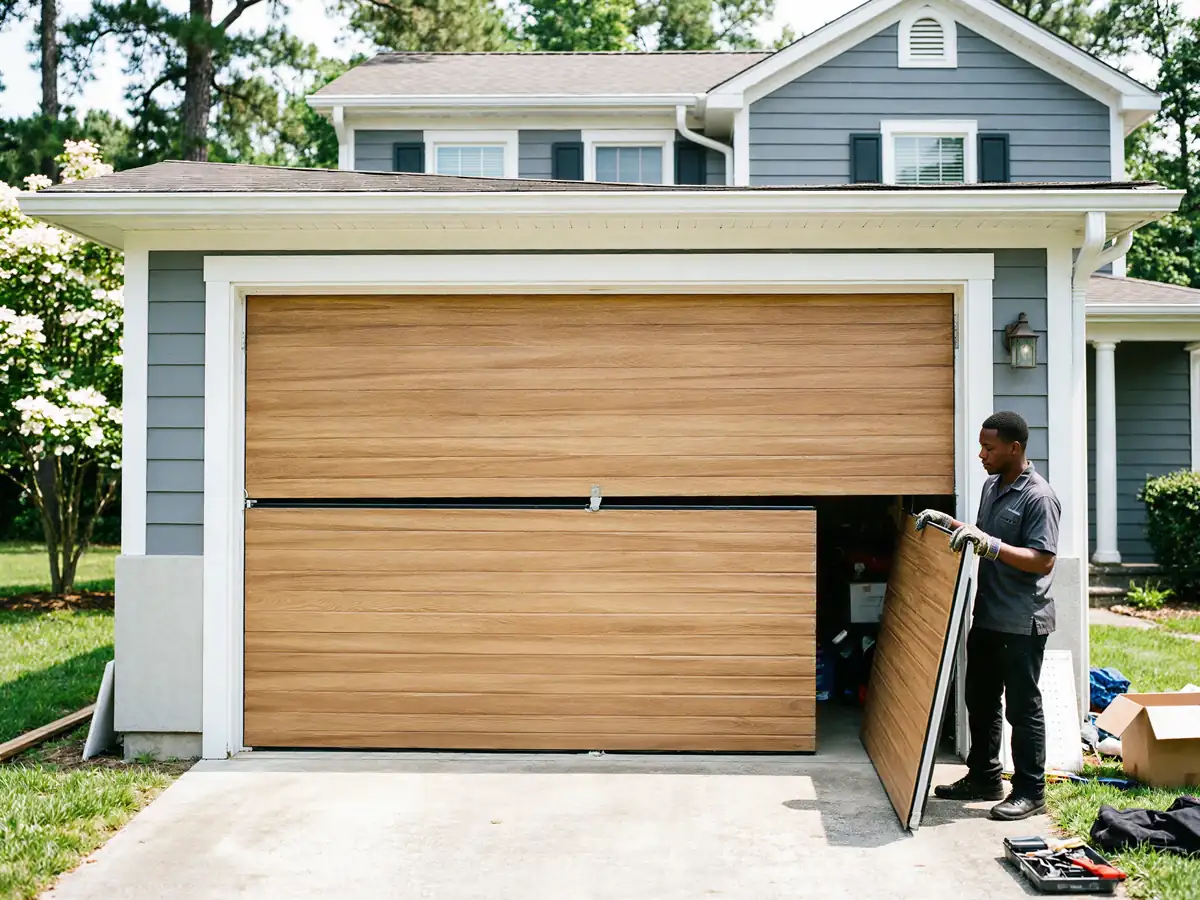
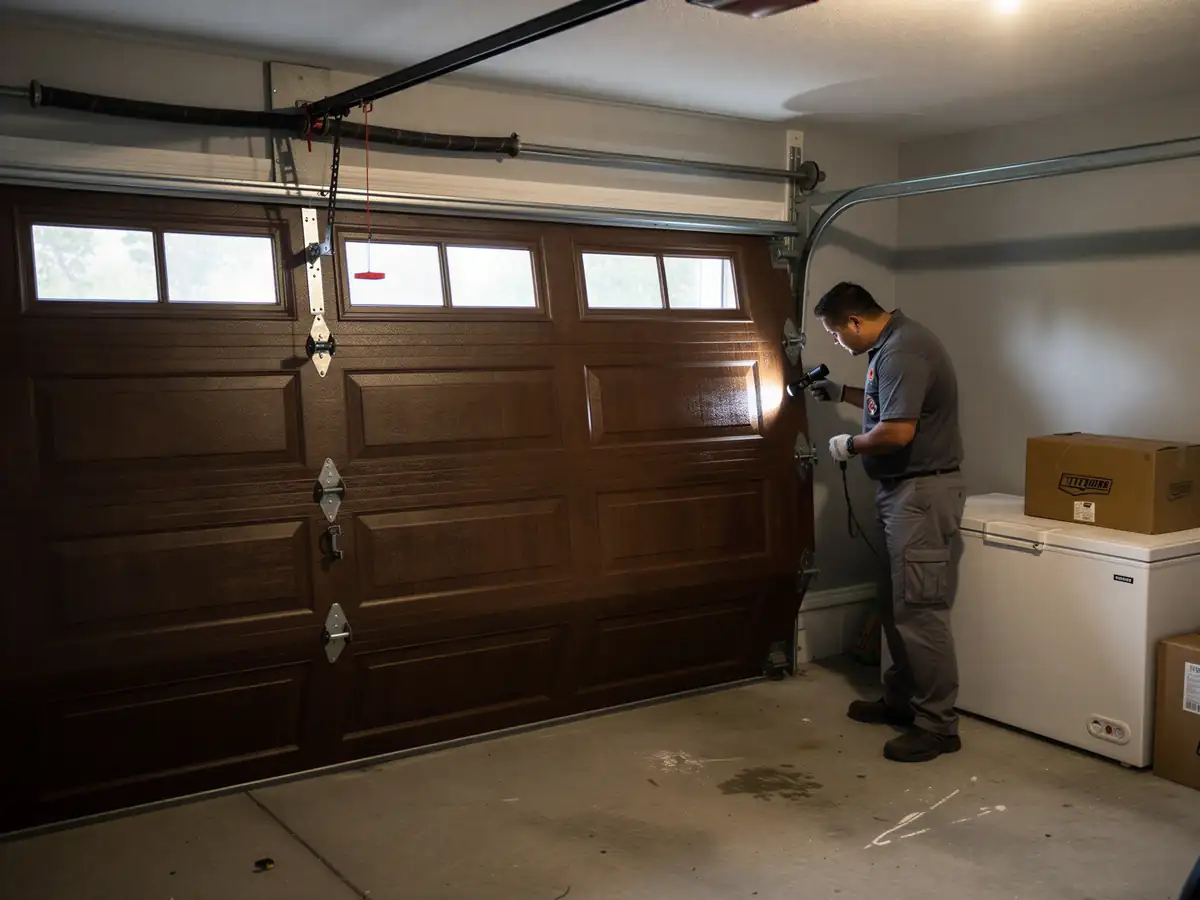
The other place this goes sideways: a door that looks fine but was installed slightly out of plumb from the start. On a 15-to-20-year-old door, cables wear unevenly against a track that was never quite square, and by the time a cable frays, the track's often bent too. We won't quote a spring-only fix on a job like that and then come back for the track a week later - we'll tell you on-site if it's really a two-part job.
Time on the Job
We work out of Concord
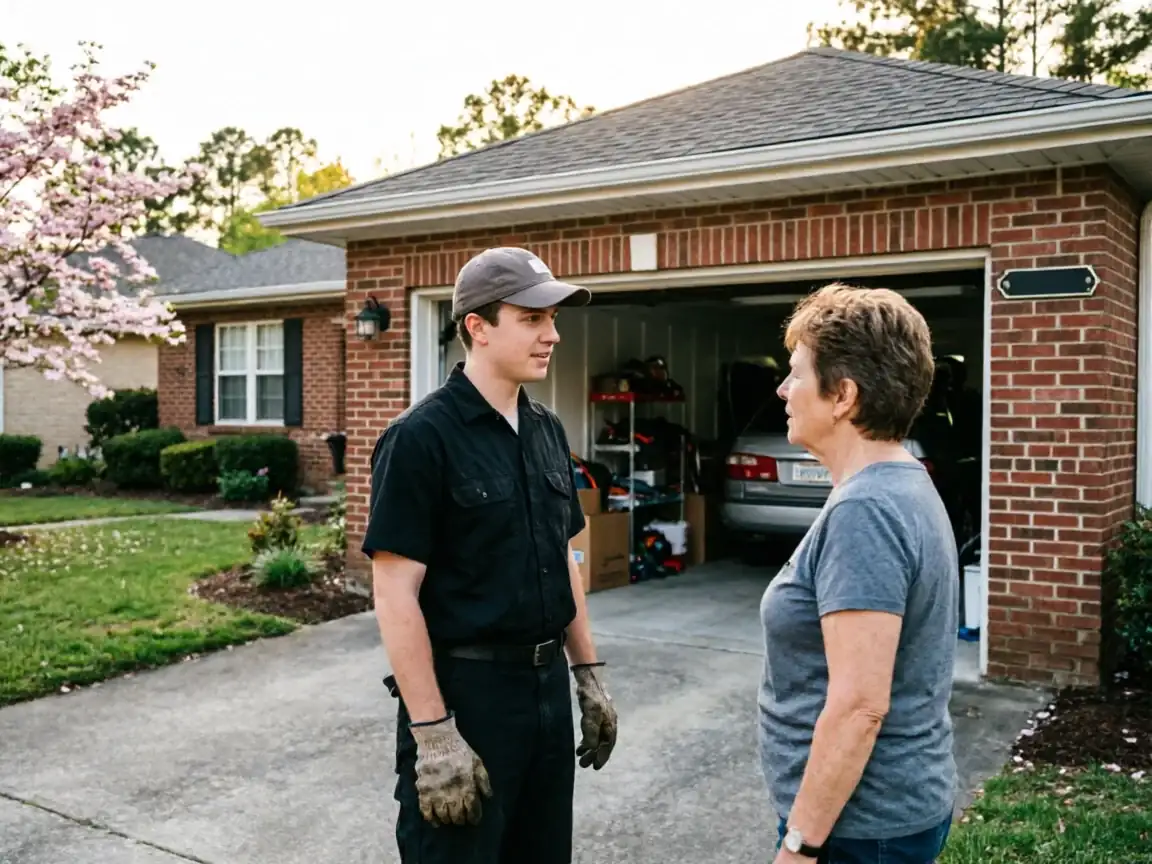
And Harrisburg sits about 6 miles out, so there's travel time built into the day but not a lot of it. A straight spring replacement or opener swap on a door this age is usually a contained job - the hardware is recent enough that we're not fighting rust or hunting for a discontinued bracket.
- 6 miles
Where time adds up is diagnosis, not driving
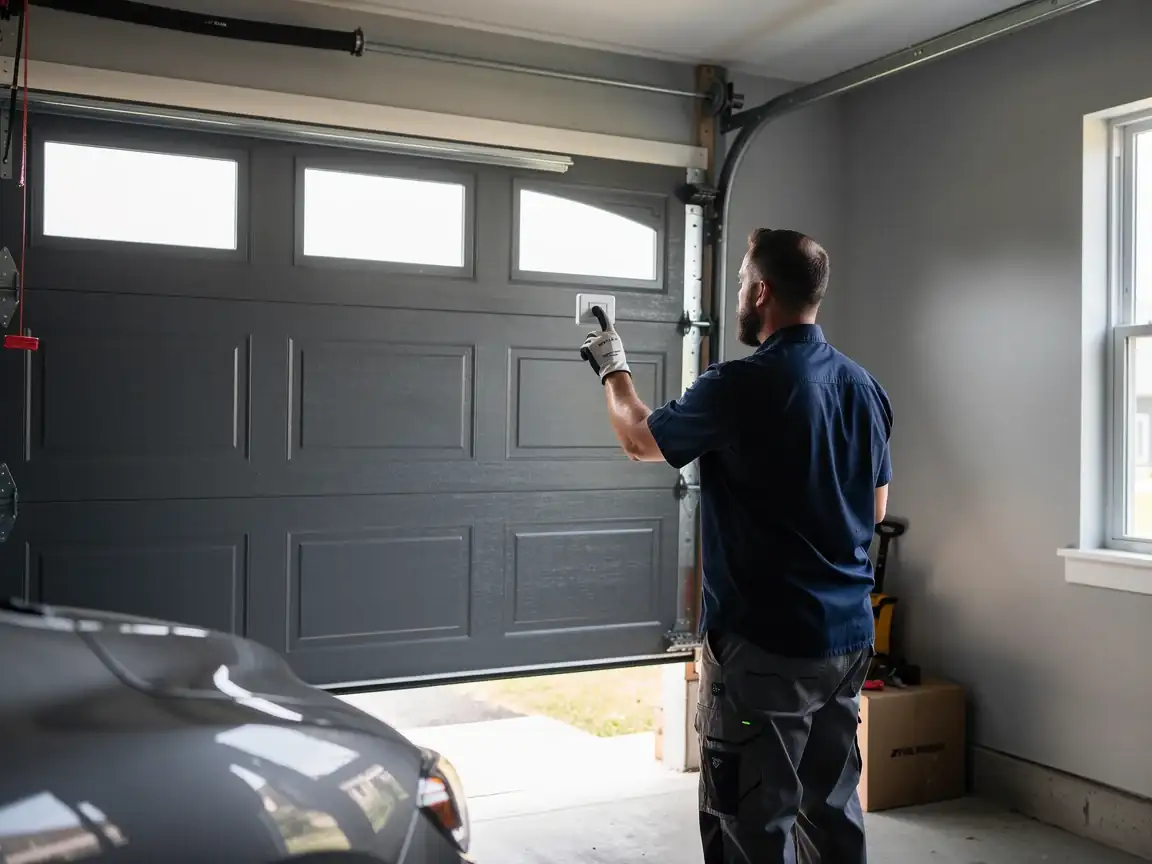
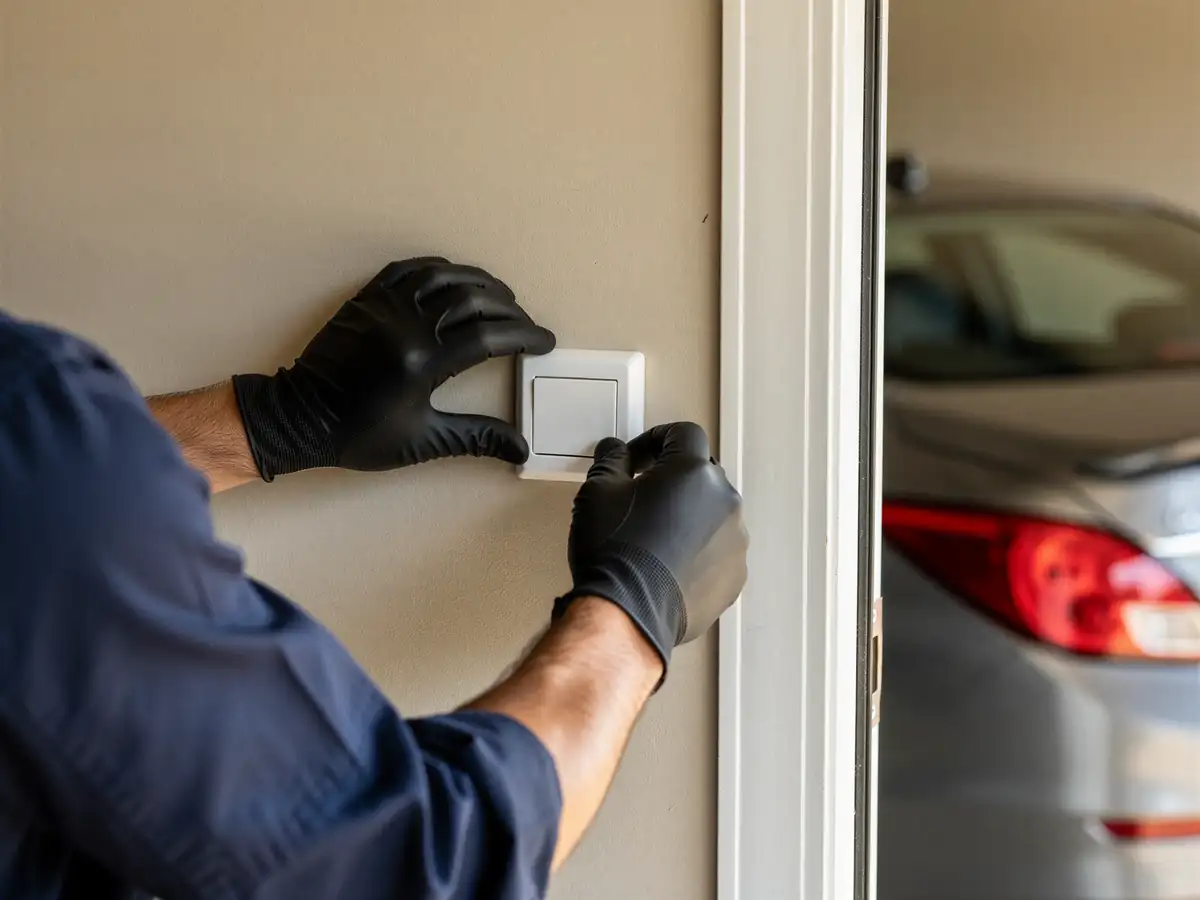
An opener that's intermittently failing is slower to run down than a spring that's visibly snapped, because we have to rule out the logic board, the sensors, and the wall switch before we touch the motor. We'd rather take the extra twenty minutes on-site than replace a part that wasn't the problem.
What Is on the Truck
For the kind of calls this area generates, the truck carries standard torsion springs in common sizes, rollers, cables, and the hardware for chain and belt-drive openers - the parts that match a 2006-and-newer build. What we don't carry is anything for a door and track system that's genuinely custom or decades out of production; those jobs are rare in Harrisburg given the housing age, but when they turn up, we'll tell you straight if the part needs to be ordered rather than pretend we have it on the shelf. That honesty costs us a same-day fix sometimes, but a wrong part installed twice costs the homeowner more.