What the Fix Involves
Across the Concord service area, the median house was built in 1987
With stock running from 1969 up through 2006. Harrisburg skews newer - its median build year sits right at that 2006 end of the range. That matters for an off-track call, because a door that came off its track on a house built in 2006 is almost never fighting original 1970s or '80s steel. It's usually a factory-standard roller-and-track setup, often still on its first set of rollers, that's gotten knocked loose by a bent track, a snapped cable, or a roller that finally gave out after two decades of use.
The fix starts the same way every time
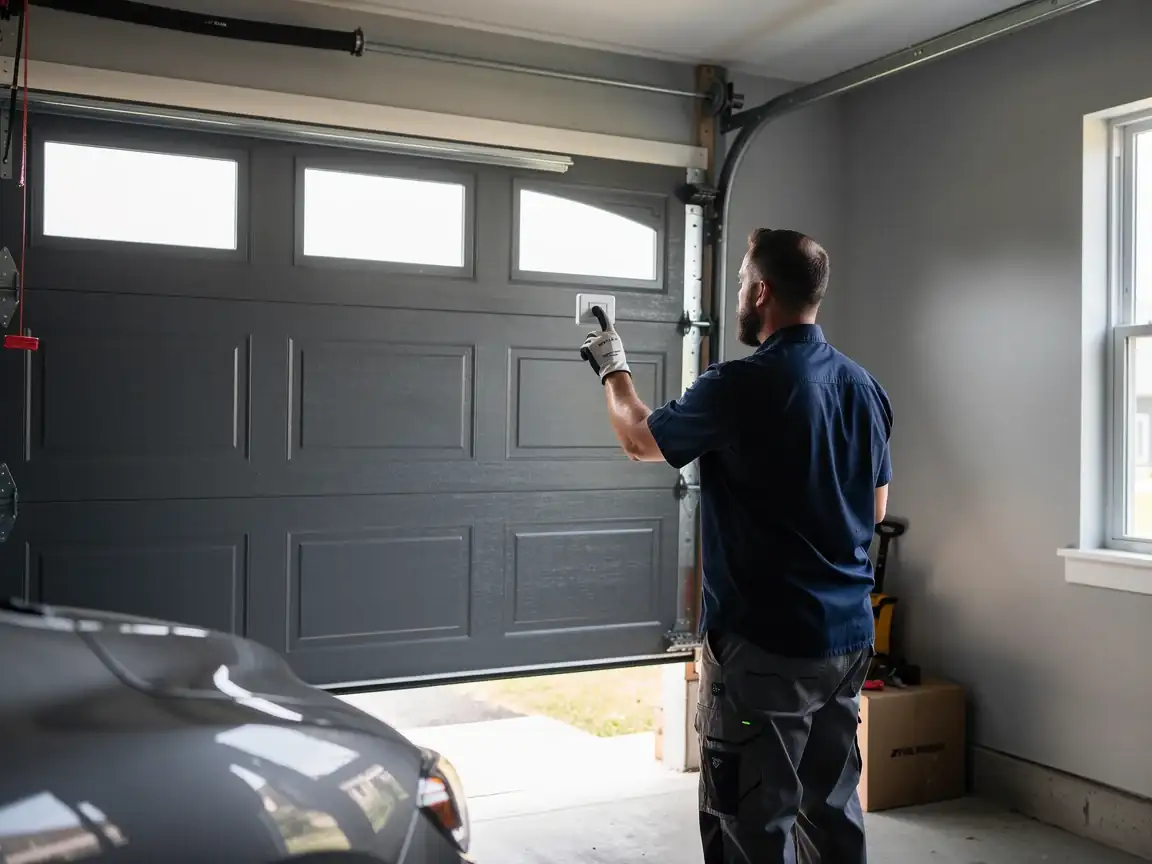
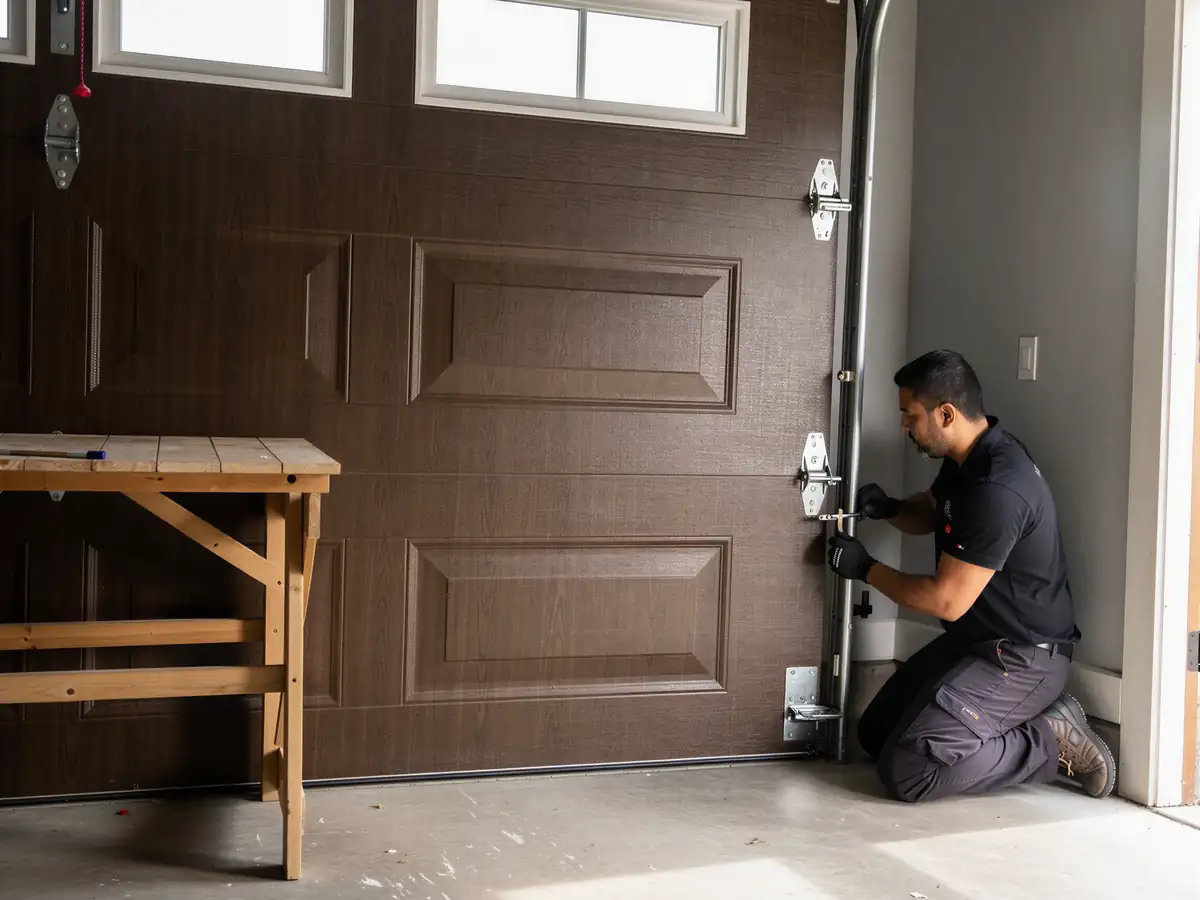
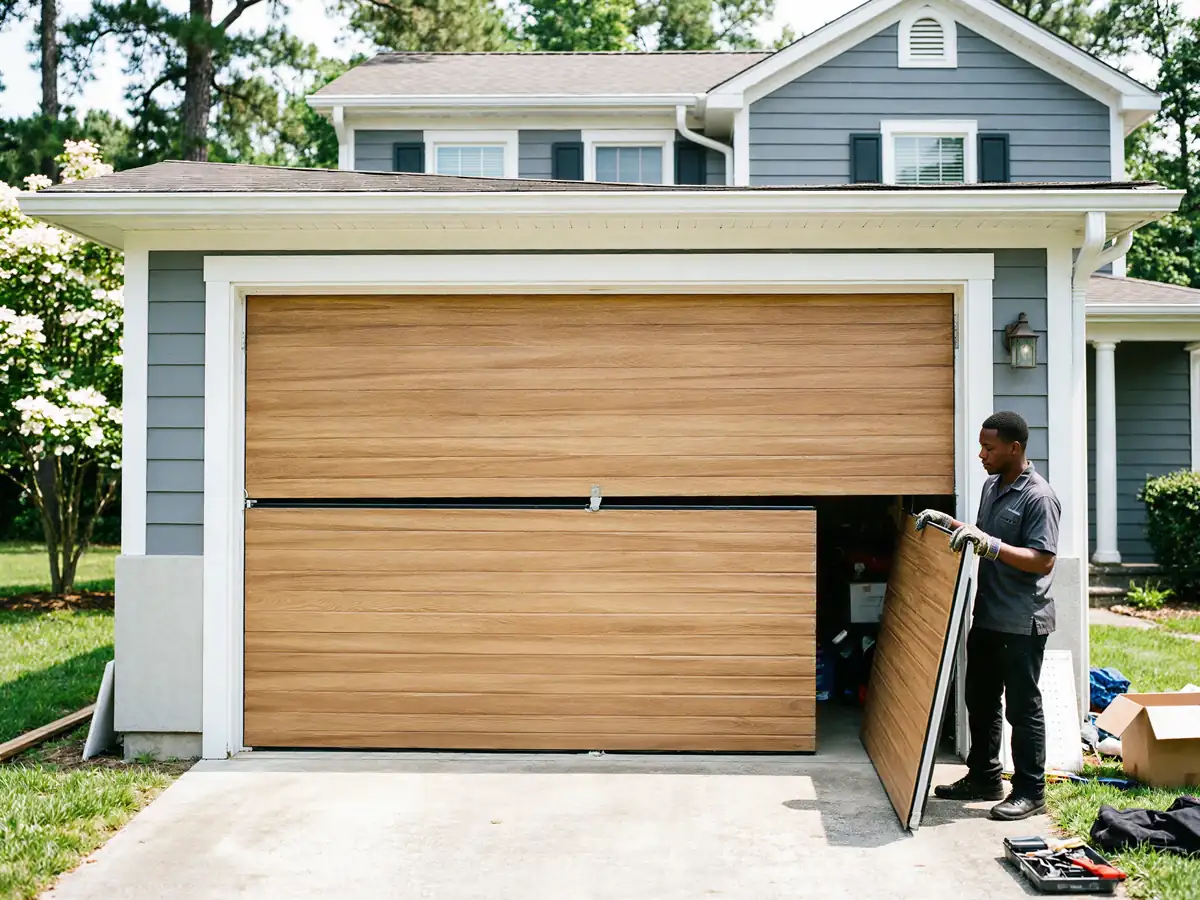
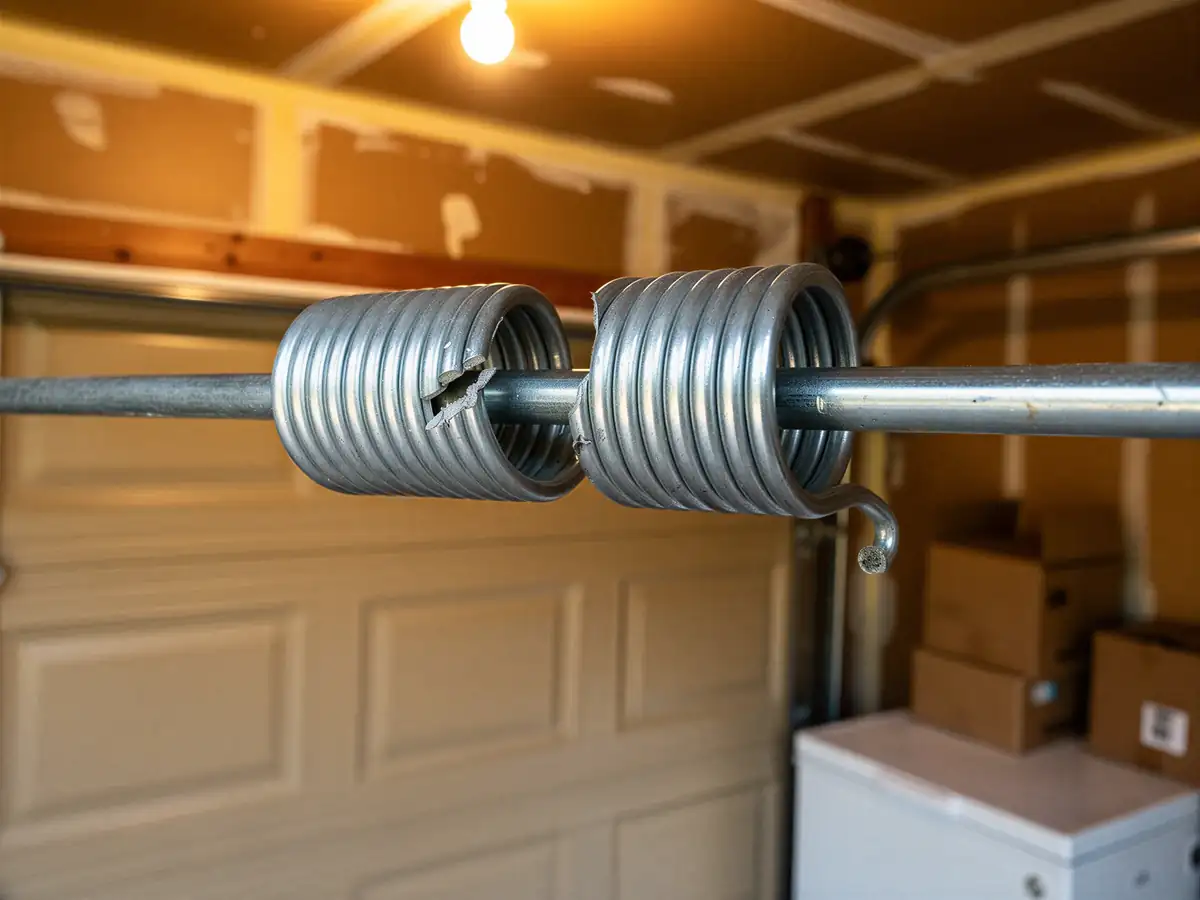
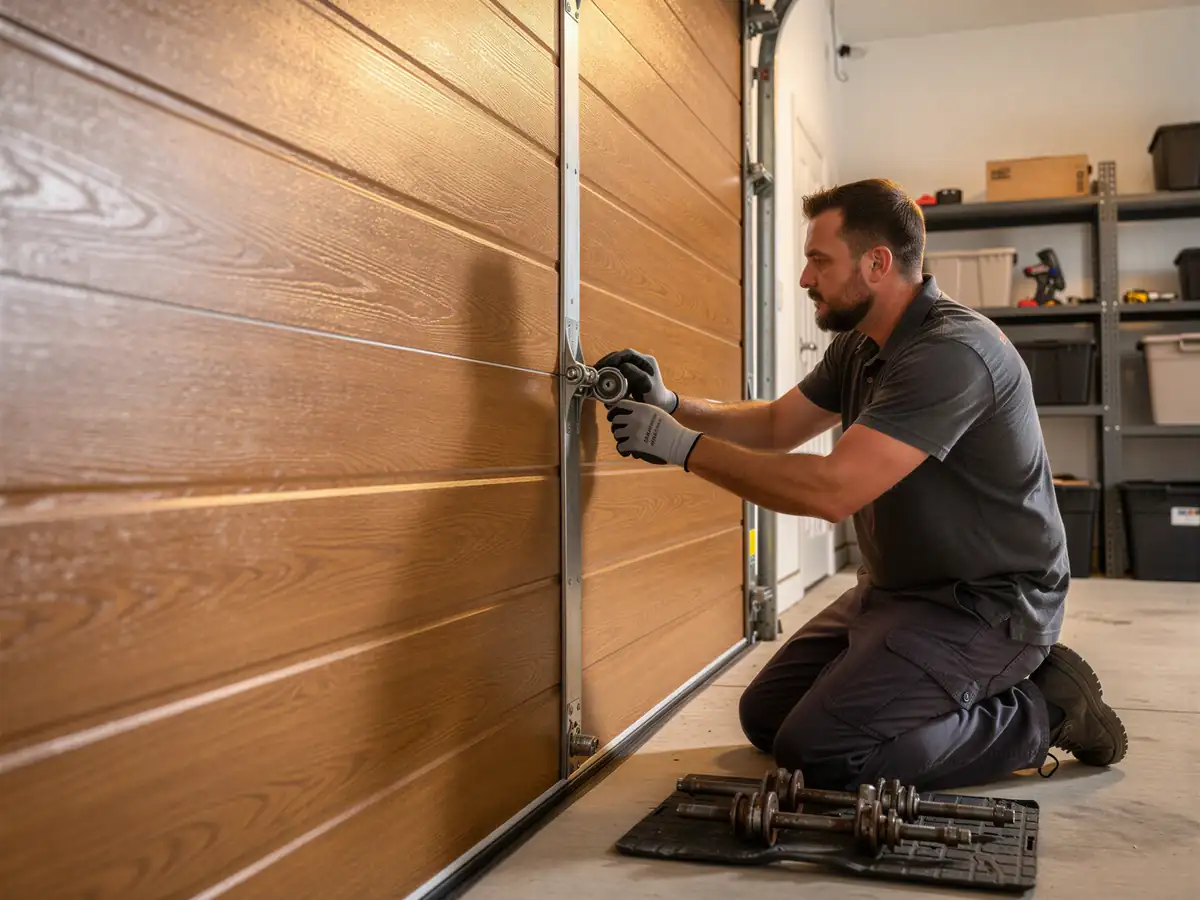
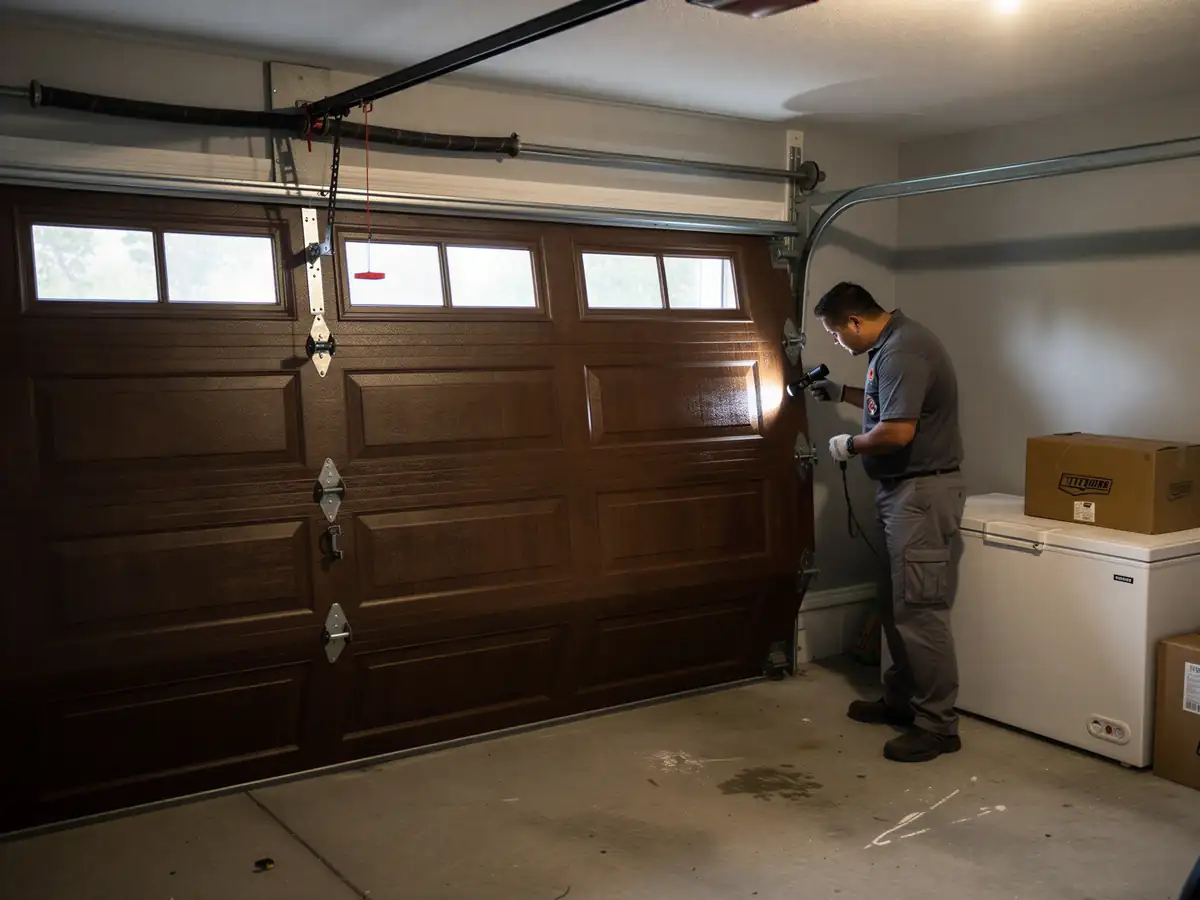
Find out whether the door is actually off the track or whether a spring failure is making it look that way. A door with a broken torsion spring will hang crooked and feel like it's derailed, but the track itself is usually fine. True off-track jobs mean the rollers have left the channel - sometimes on one side, sometimes both - and the panel is bowed or racked in the opening. We check the track alignment, the roller condition, and the cable tension before we touch anything, because forcing a door back onto a bent track just repeats the failure.
Doing It Yourself
If one roller has popped out but the door is still sitting mostly square in the opening, you can sometimes walk the door back on by hand with the opener disconnected - manual release pulled, door moved slowly, nothing forced. That's about the limit of what's safe without the right bars and clamps.
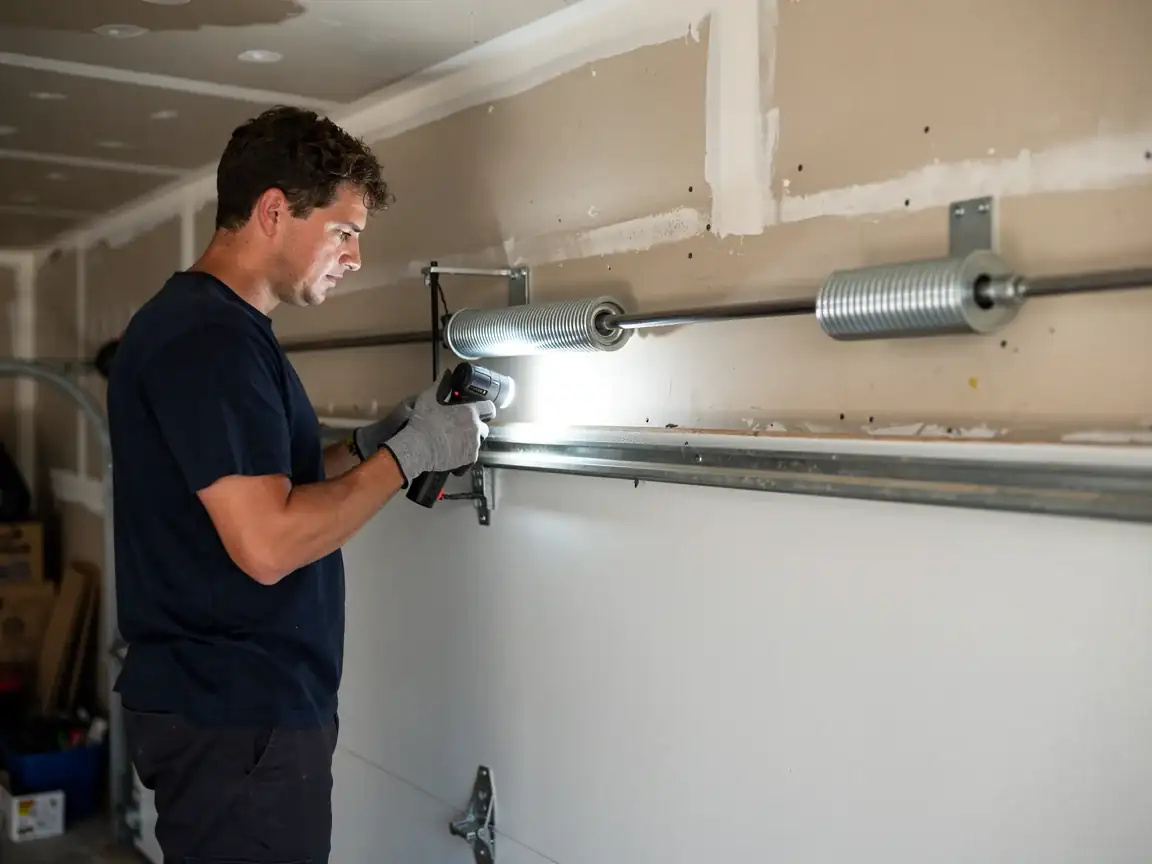
What you should not do is cut the door loose with the spring still loaded. A torsion spring under tension that lets go while you're working near it can break fingers or worse. If the door is leaning at an angle inside the opening, or a cable has come off the drum, stop and call. Those jobs need the door secured before anyone touches the track, and that takes tools most garages don't have.
Where This Job Goes Sideways
The newer housing stock in Harrisburg brings its own failure pattern. Builder-grade rollers on doors from the early 2000s are often plastic or light nylon, rated for a shorter service life than the steel ball-bearing rollers a homeowner might upgrade to later. On a door that's twenty-some years old now, those original rollers are frequently the actual cause of an off-track event - not a one-time impact, but gradual wear that finally let the roller slip the track lip.
The other pattern we see on this newer stock: track brackets that were fine for the original door weight but struggle once a heavier insulated replacement panel gets installed later without matching hardware. If a door's been off track more than once in the same spot, that's usually the bracket or the track alignment, not bad luck.
What Is on the Truck
We carry standard track sections, steel ball-bearing rollers, cable, and the clamps and vise grips needed to secure a door safely before working near a loaded spring. What we don't always carry is a bracket or track piece sized for an unusual or discontinued panel - if a previous owner put in a nonstandard replacement door, we may need to order a matching part rather than carry it on the truck that day. We travel the roughly 6 miles out from Concord to reach Harrisburg, so we load based on what you describe on the call; a clear description of which side the door is off on, and whether the opener is still trying to run it, helps us bring the right parts the first time.