Booking a Visit
We run out to Midland from our shop in Concord, about 12 miles up the road
There's no branch out here and we won't pretend there is one - a call gets scheduled and a truck comes out, same as it would for any job outside the home base. Tell us the door's brand or at least roughly when the house was built if you know it. Midland's housing sits newer than a lot of what's around it, and that one detail changes what we expect to find under the hood before we ever pull into the driveway. We work the whole stretch between Concord and Midland, so a spring call here goes on the same board as everything else that day. If you're not sure whether what you're hearing is the spring or something else, say so - a five-minute description over the phone usually tells us enough to bring the right parts the first trip instead of a second one.
- 12 miles
One thing worth saying up front
If a door's cables, drums, or bottom brackets look rough along with the spring, that's not a one-part fix, and we'll say so before we start rather than after.
How It Shows Up
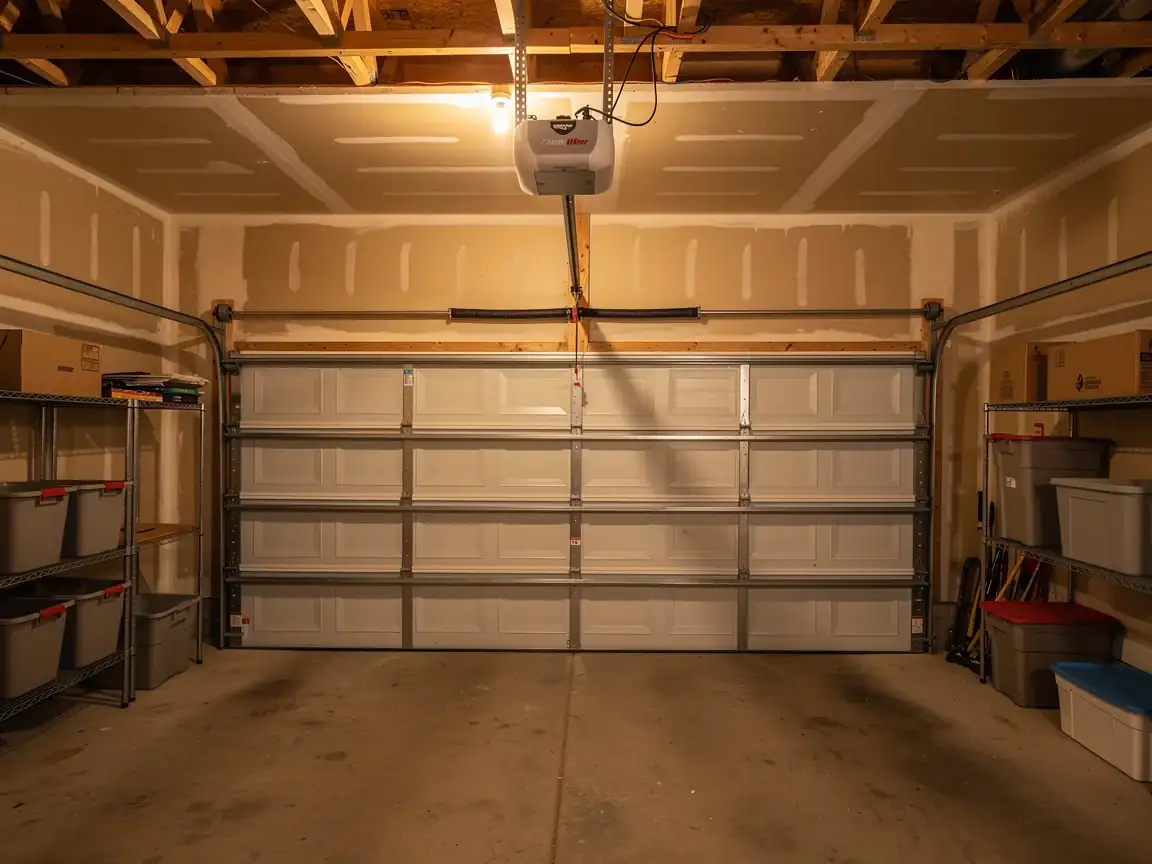
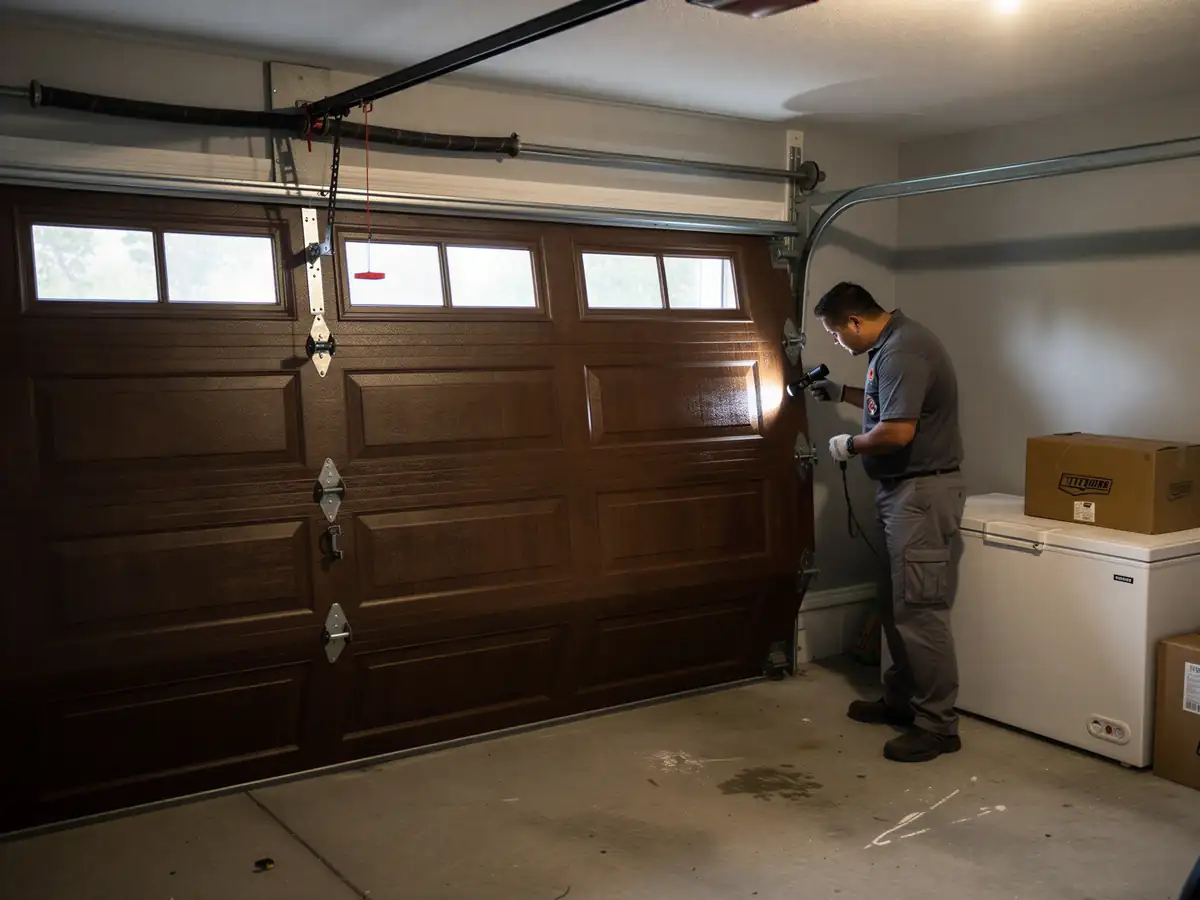
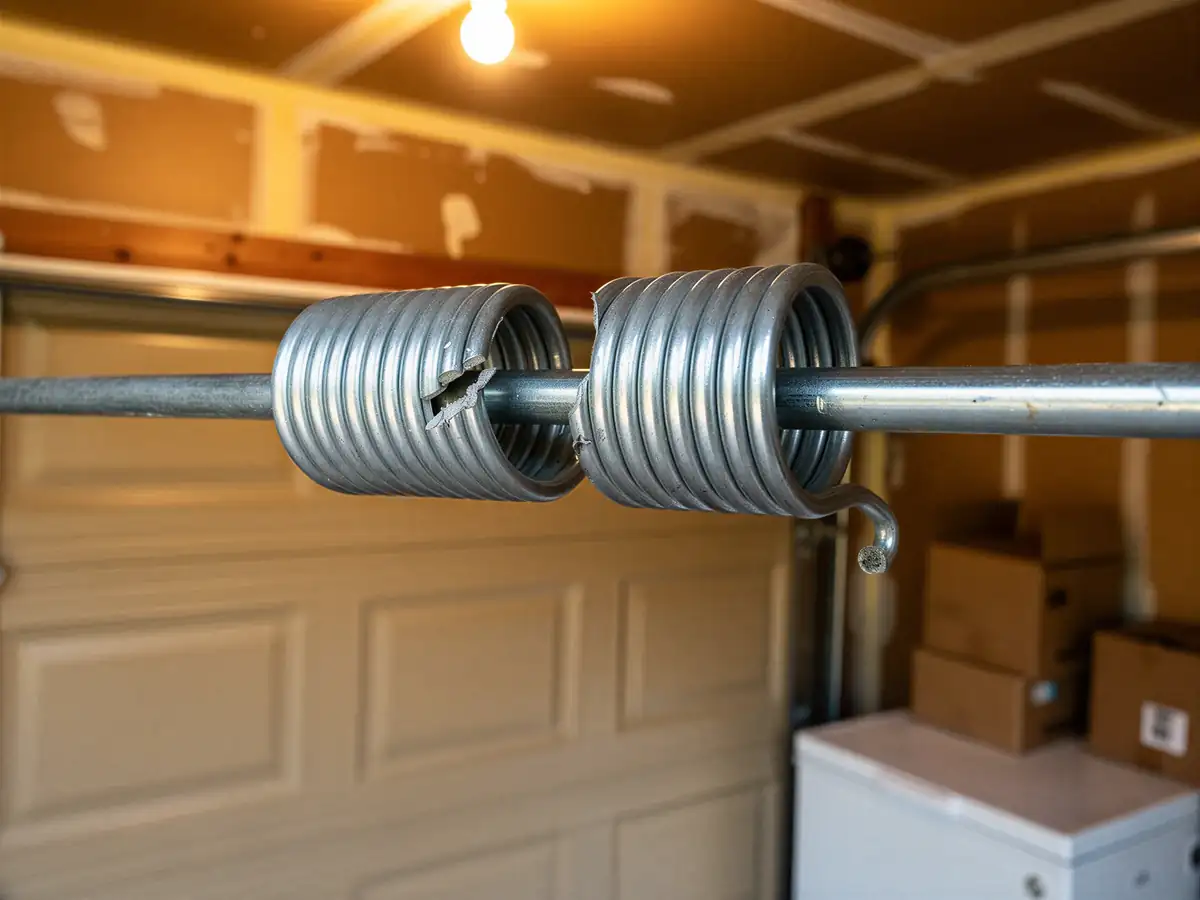
Midland's median year built sits around 2006, which puts a good share of these doors into their high-use years on the original torsion spring - not failing yet in every case, but getting there. The usual sign is a door that used to lift with one hand and now needs two, or an opener that strains and groans on the way up instead of lifting smooth. Some owners hear a loud bang in the garage, usually when nobody's home, which is the spring letting go under tension rather than anything breaking in the opener itself. On a double door with two springs, the door often tilts to one side when you open it manually, because one spring is still holding and the other isn't carrying its half anymore.
A door that reverses itself halfway up, or that the opener strains against before giving up, is doing exactly what it's built to do - the opener isn't rated to lift a door with a dead spring, and running it that way burns out the motor faster than the spring problem alone would have.
What Causes It Around Here
Most garage door springs are rated for a set number of open-close cycles, and once a house crosses from its first decade into its second, that number starts getting used up regardless of how careful the owner's been. With Midland's housing clustered around a 2006 build year, a lot of these doors are now in that window where the original spring is nearing the end of what it was built to do - not from anything the owner did wrong, just mileage.
The cold-moderate climate out this way adds its own wear. Steel springs tighten slightly in cold snaps and loosen as temperatures swing back up, and that cycle of contraction and expansion over a winter adds stress a spring in a climate without real cold wouldn't see. It's not the dominant factor - cycle count still does most of the damage - but on a spring that's already near its limit, a hard cold morning is often the day it finally lets go.
What the Fix Involves
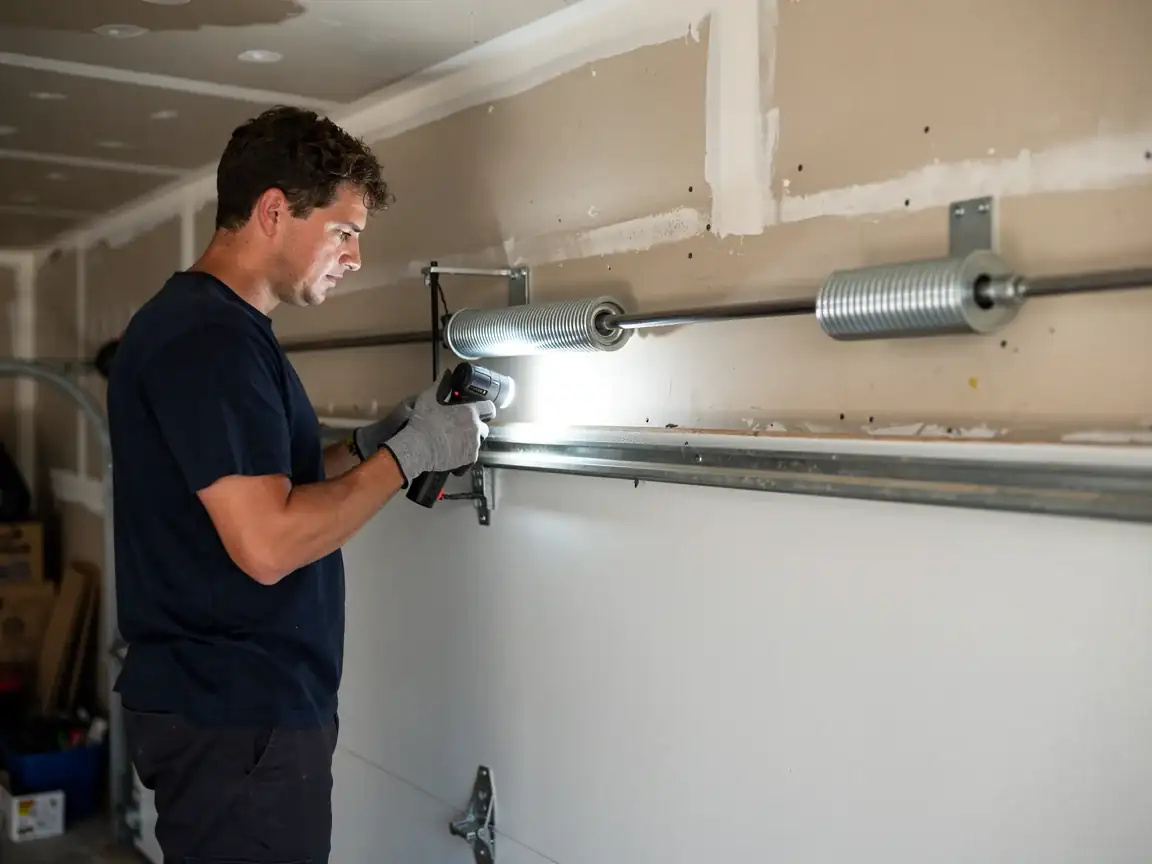
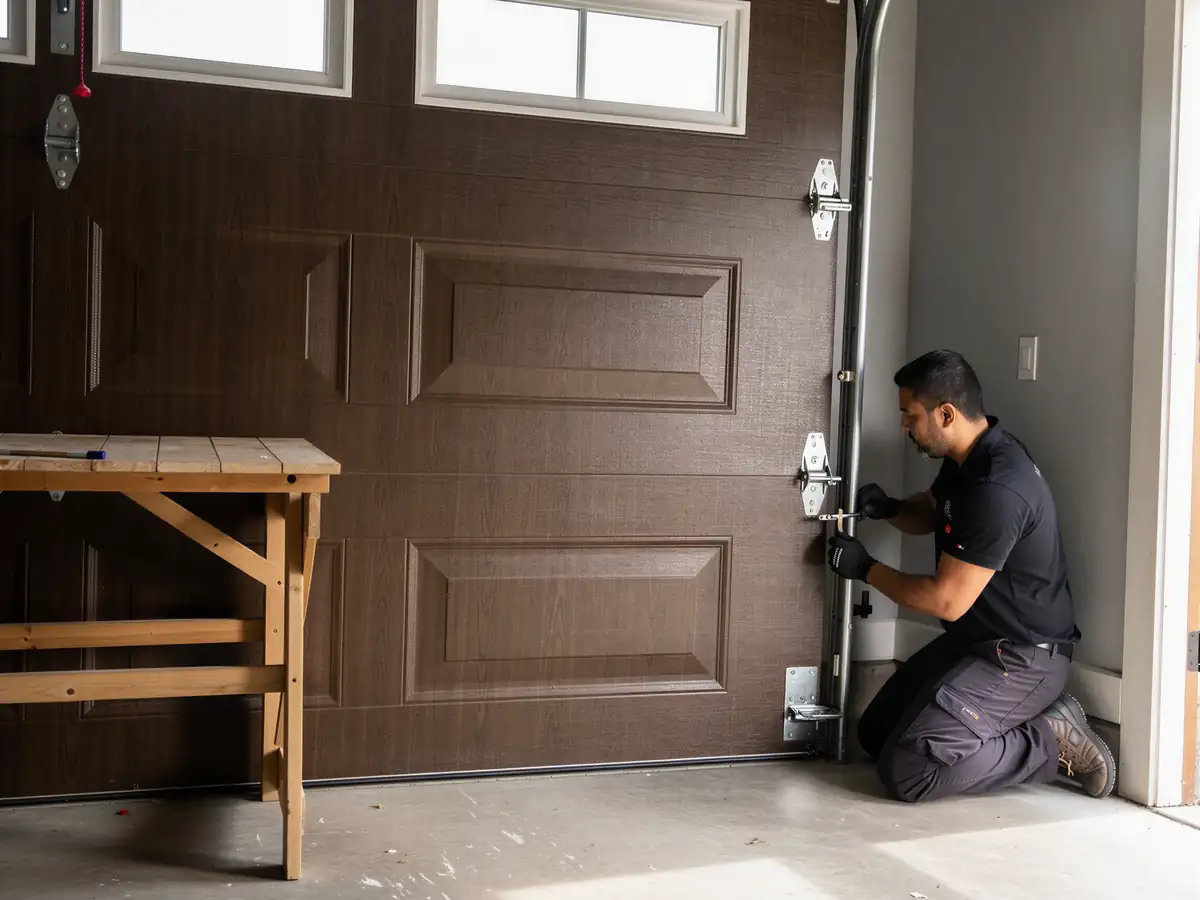
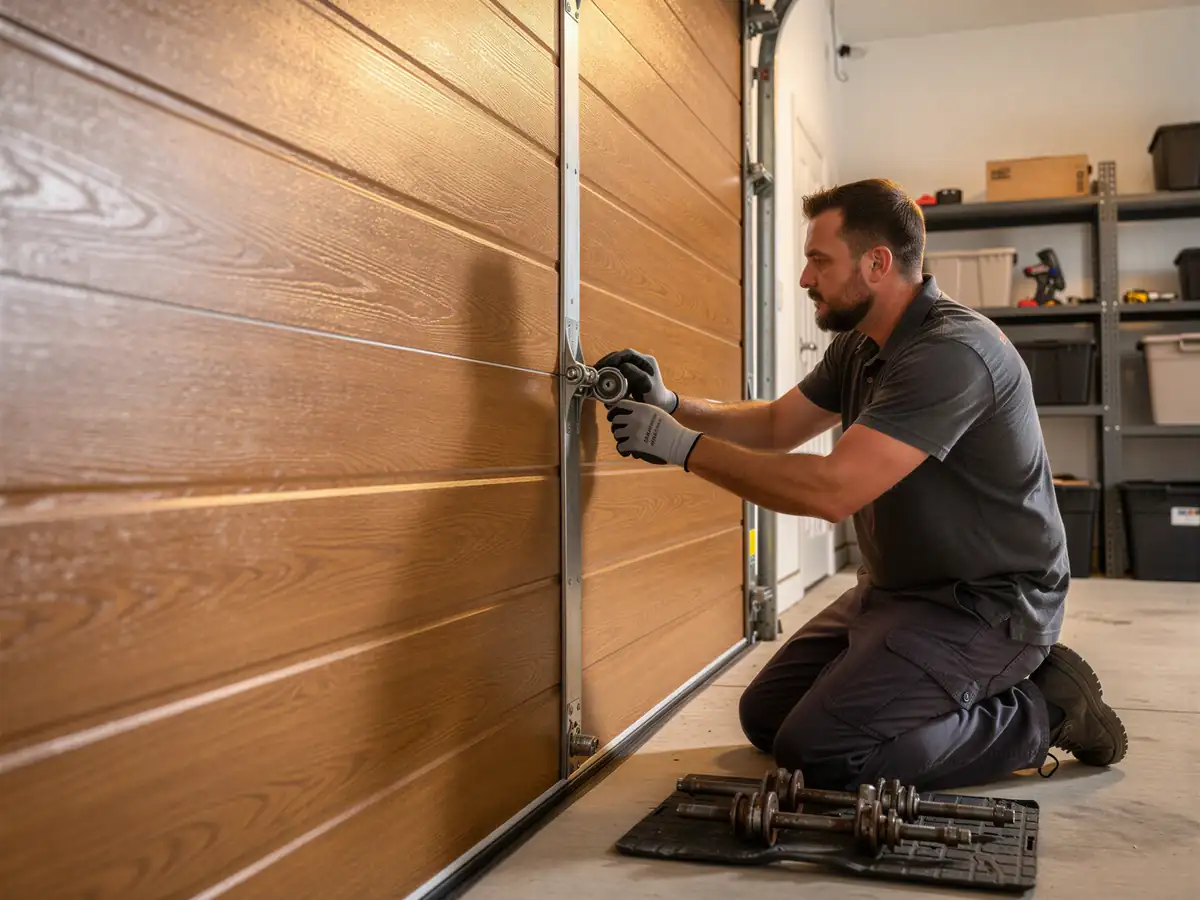
A torsion spring replacement means winding down the old spring safely, pulling it off the shaft
And setting a new one matched to the door's weight and track setup - this isn't a job to do standing on a ladder without the right winding bars, and we don't recommend homeowners attempt it. On a lot of the newer builds out here, the door and opener are both still factory-matched, which usually makes this a clean one-spring or two-spring swap rather than a full hardware overhaul.
We'll also check the cables, drums, and bearing plates while we're in there
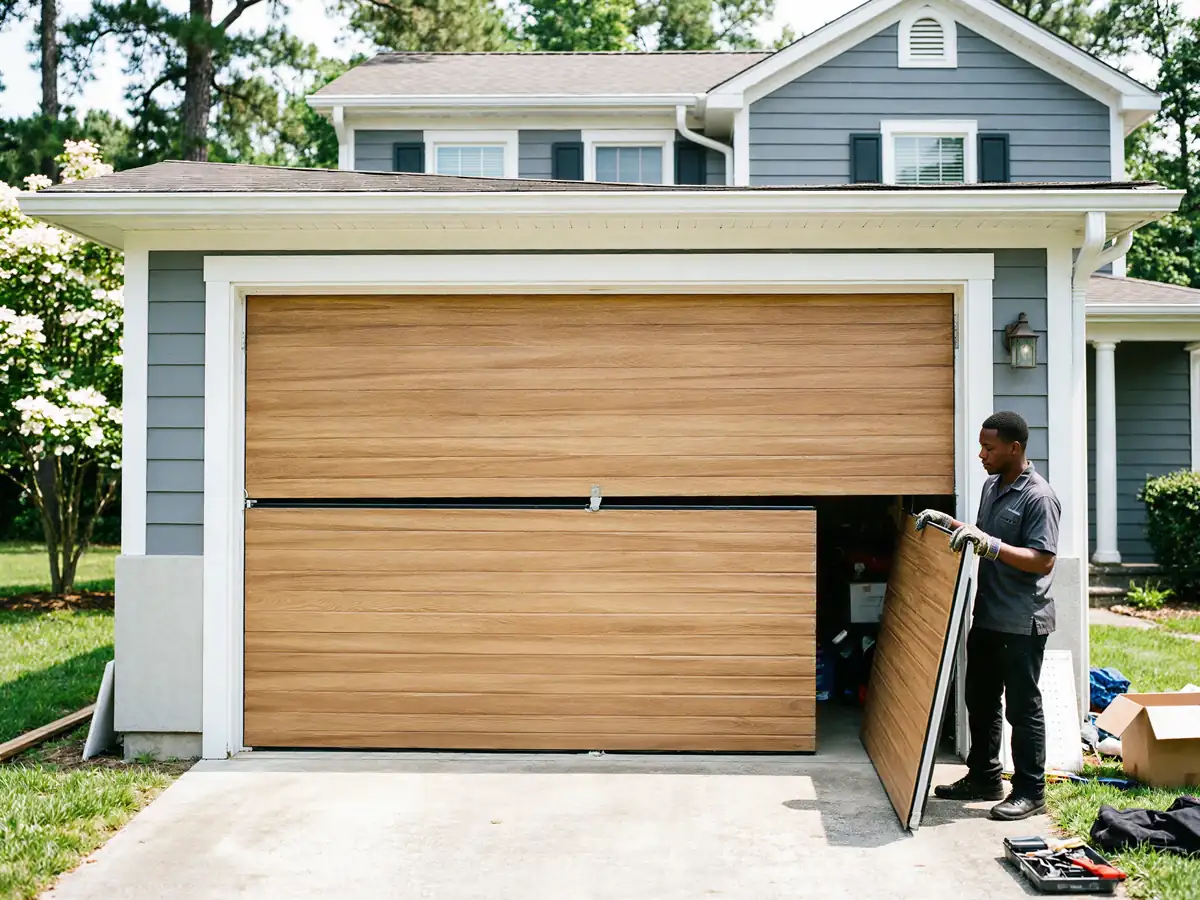
Since those wear alongside the spring and it's cheaper to catch a frayed cable now than after it fails on its own. If a door is older or already showing panel damage alongside the spring issue, we'll tell you honestly when replacement makes more sense than another repair - a new spring on a door that's failing elsewhere isn't money well spent, and we'd rather say that than sell a repair that doesn't hold up.