Booking a Visit
We run this call from Concord, about 12 miles out
So we're not sitting on a truck in Mount Pleasant waiting for the phone to ring. That means we ask a few more questions up front than a shop that's five minutes away would - is the door still moving at all, is a cable hanging loose, can you get the car out. Those answers decide whether we send a tech out the same day or schedule around other stops on that side of the county. With 676 households in this area, it's not a huge call volume for us, but it's a consistent one, and the doors we see here tend to share the same age and the same failure points, which actually helps us show up with the right parts the first time instead of guessing.
- 12 miles
- 676 households
We don't keep a branch or drop-off point in Mount Pleasant itself
If you need same-day urgency, say so when you call, and we'll tell you honestly whether that's realistic for that day's route.
Where This Job Goes Sideways
Mount Pleasant's housing stock runs older than the Concord average - most of it went up around 1984, a few years ahead of the broader service area's 1987 median. That matters for off-track doors because the rollers and track brackets from that era were built to a looser tolerance than anything installed after 2000. On a door that age, one bent hinge or a missing bracket screw doesn't stay a small problem. The panel starts walking out of the track a little more each cycle, and by the time you notice it visually, the roller's usually already chewed up the track edge.
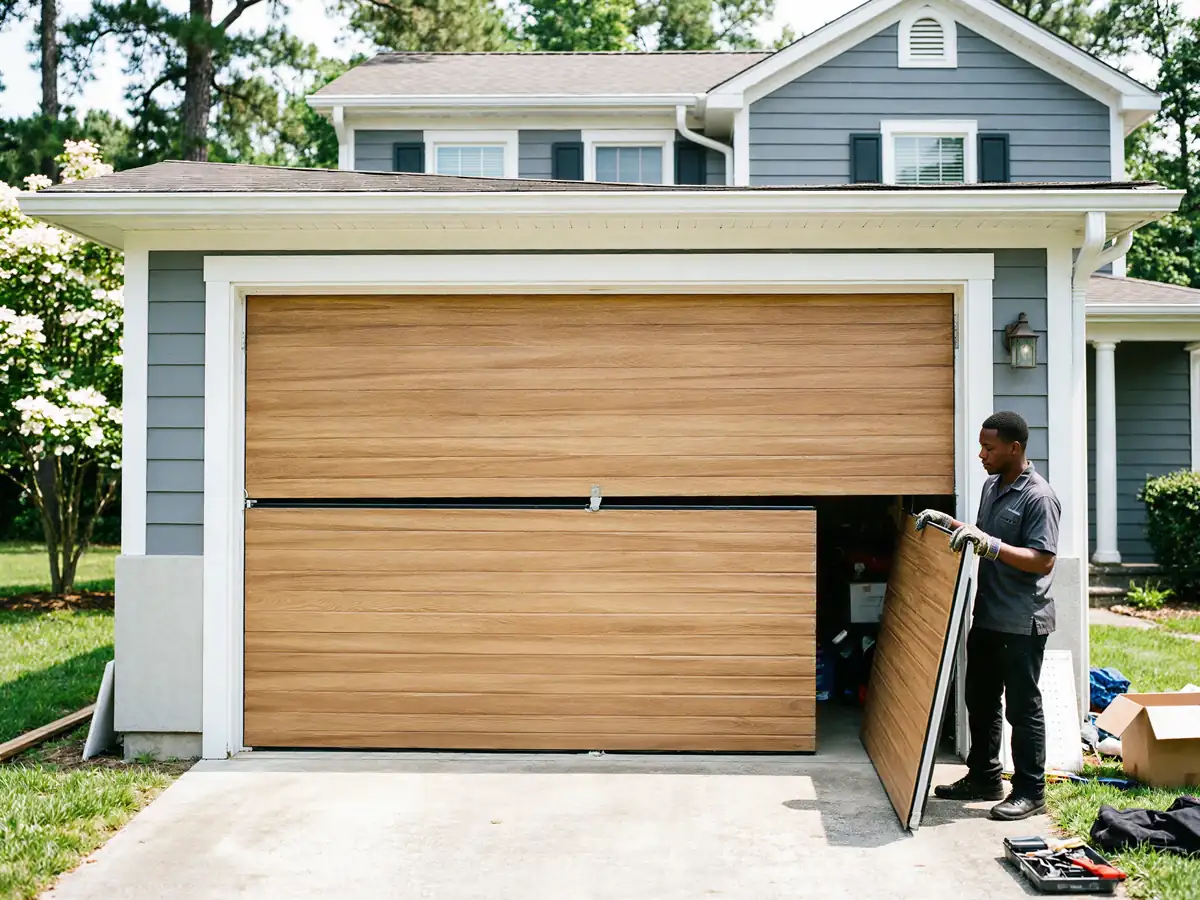
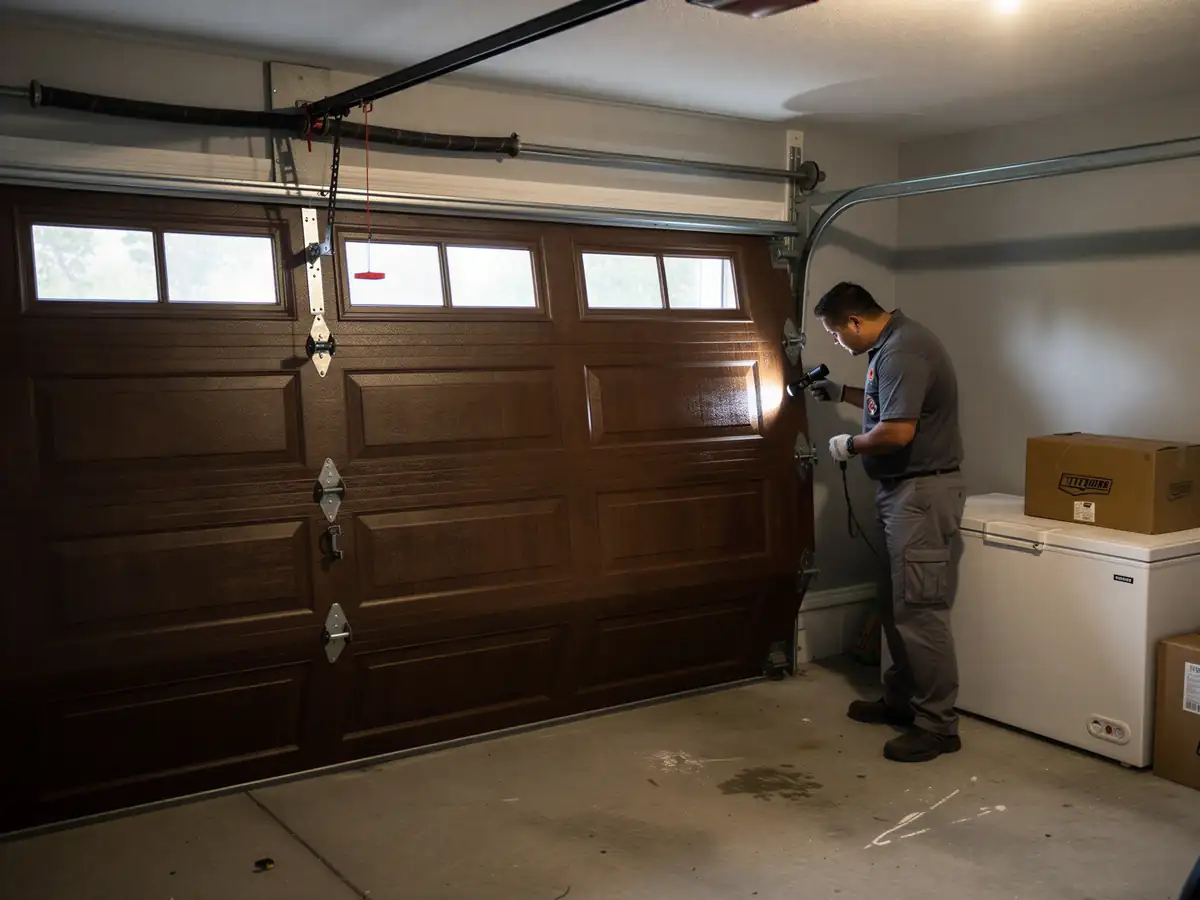
The other way this goes sideways is the cable. Mid-80s doors around here were commonly hung on standard lift cables without the safety features that became common in later installs, so a frayed cable doesn't always announce itself - it can let go on one side mid-cycle and yank the door off the track in a single motion. That's the call where the door is sitting at an angle in the opening, not the one where it's merely sticking.
What Causes It Around Here
Three things show up again and again on these calls. First, age of hardware - a door built around 1984 has had four decades of thermal cycling on its track brackets, and this area sits in a cold-moderate climate band where winter contraction loosens lag screws a little more every year until one finally lets go. Second, track alignment that was never quite right to begin with; a lot of these doors were installed before torsion hardware was standardized the way it is now, so a slightly out-of-plumb track has been working against the rollers since day one. Third, simple impact - a car bumper, a bike, a basketball - on an older door with worn rollers, it doesn't take much to pop it loose.
We don't see much from newer-build issues here, because the housing in Mount Pleasant skews older than Concord proper. That's actually useful: it narrows down what we check first on a service call instead of running through a full diagnostic from scratch.
Doing It Yourself
If the door is off track but the opener still has power and nothing's binding
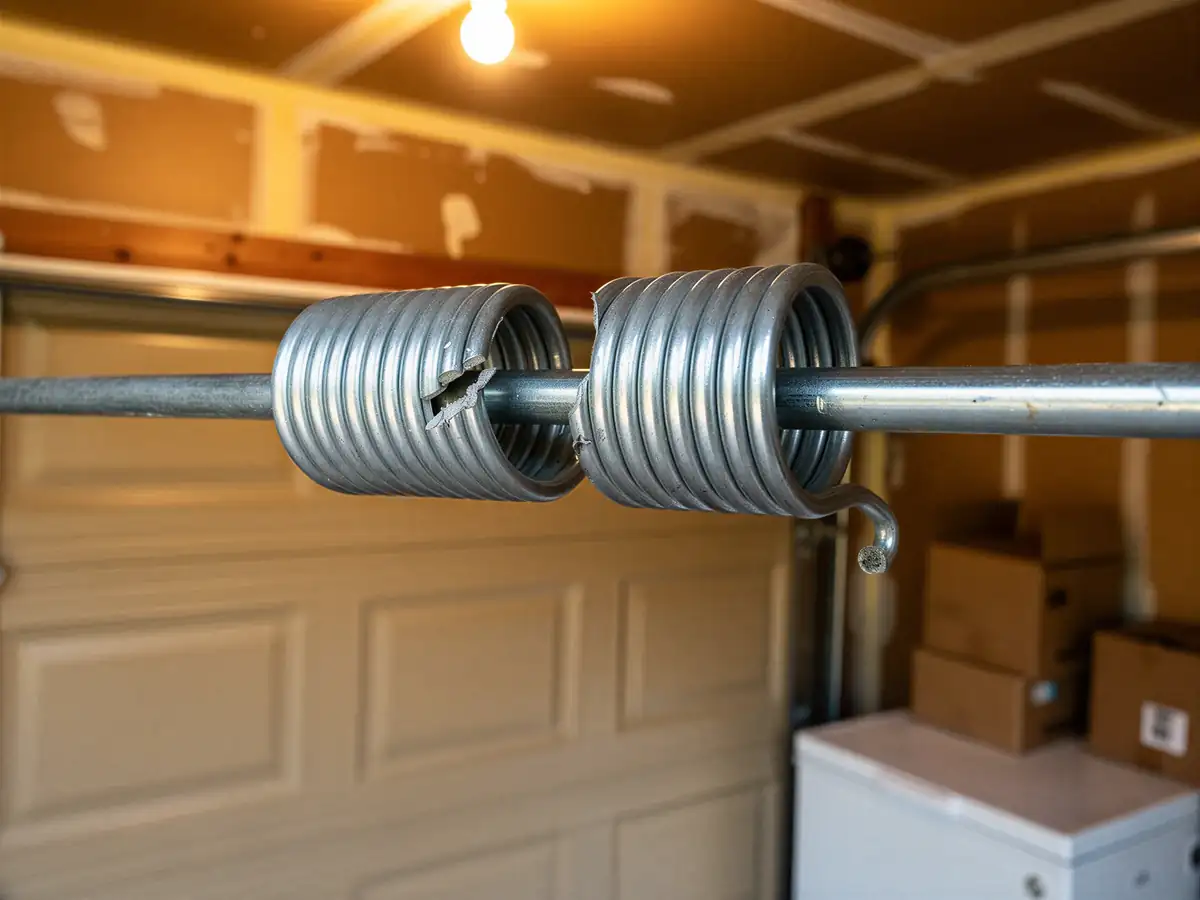
You can sometimes walk the door back manually - disconnect the opener, pull the release cord, and gently guide the panel back into the track by hand while someone else watches the rollers. That's about where DIY should stop. If a cable is loose or frayed, if the door is at a visible angle, or if you hear a spring under tension, step away and call. Torsion springs on doors this age store enough force to cause a serious injury, and we're not going to pretend otherwise.
One honest limit here
We can't always get there same day from Concord, especially on a day with multiple calls already on the route. If the door is safely off its track but not blocking you in or out, it's usually fine to wait until we can get a tech out properly rather than forcing it back yourself.
What You Pay
We don't post a flat number for off-track repair because the cost swings a lot based on what the track inspection turns up - sometimes it's a bent section that bends back and a roller swap, sometimes the bracket itself needs replacing. What we can tell you is that median household income in this area runs about $81,250, a bit above the $79,765 figure across our wider service area, and most of the jobs we price here land in a range homeowners expect for a half-day repair rather than a full door replacement. We'll give you the number before we start work, not after.
What the Fix Involves
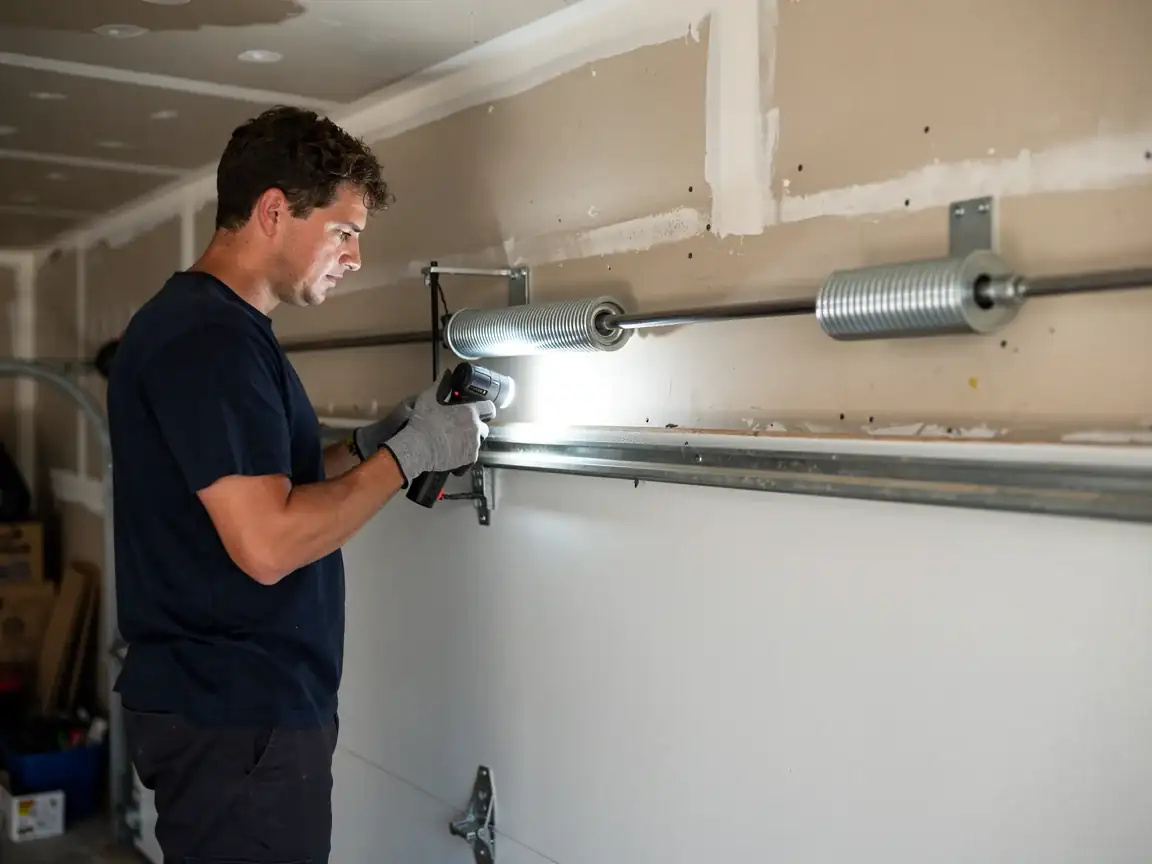
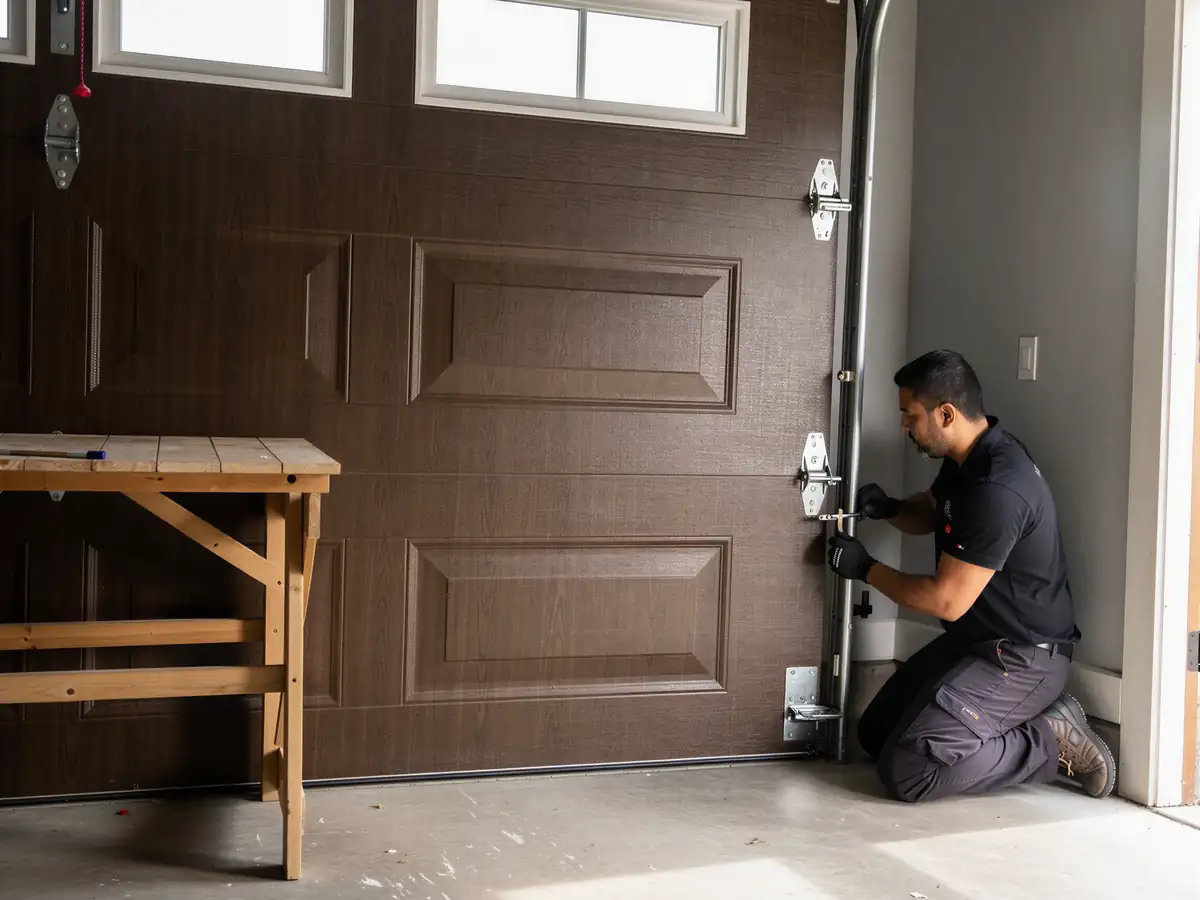
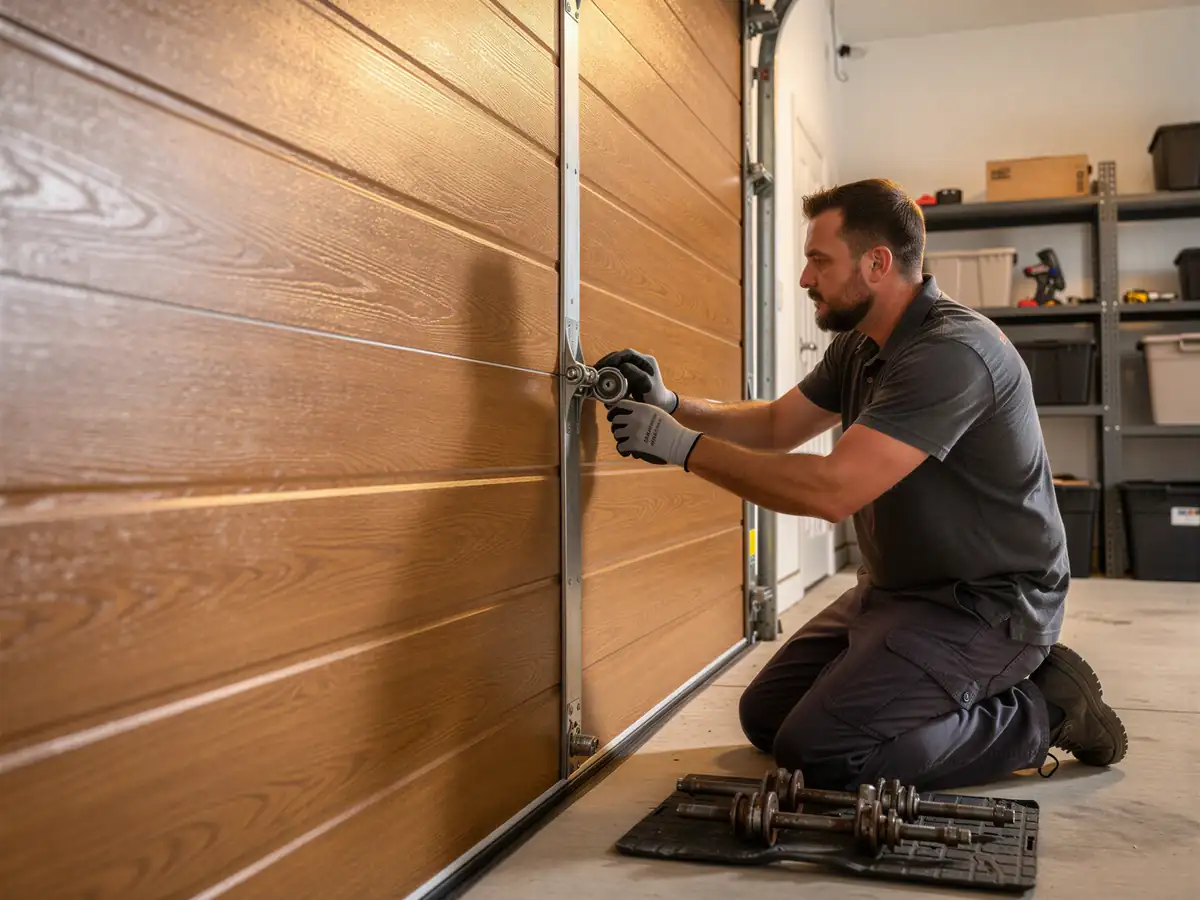
Getting a door back on track properly isn't just lifting the panel back into the rail. We check the rollers for flat spots or cracking first, since a worn roller is usually what let the door jump in the first place. Then we check track alignment with a level, not by eye - on a door built around 1984, it's common to find the track has drifted a few degrees over the years as brackets loosened, and forcing the panel back in without fixing that just sets up the next failure. If a cable caused the problem, we replace both cables as a pair, not just the one that frayed, since the other one is the same age and under the same stress.
Last step is a full cycle test under power, watching the door open and close twice before we call it done. If the bracket itself is pulled loose from the framing, that's a separate repair from the track work, and we'll flag it separately rather than bundle it into one number.