What the Fix Involves
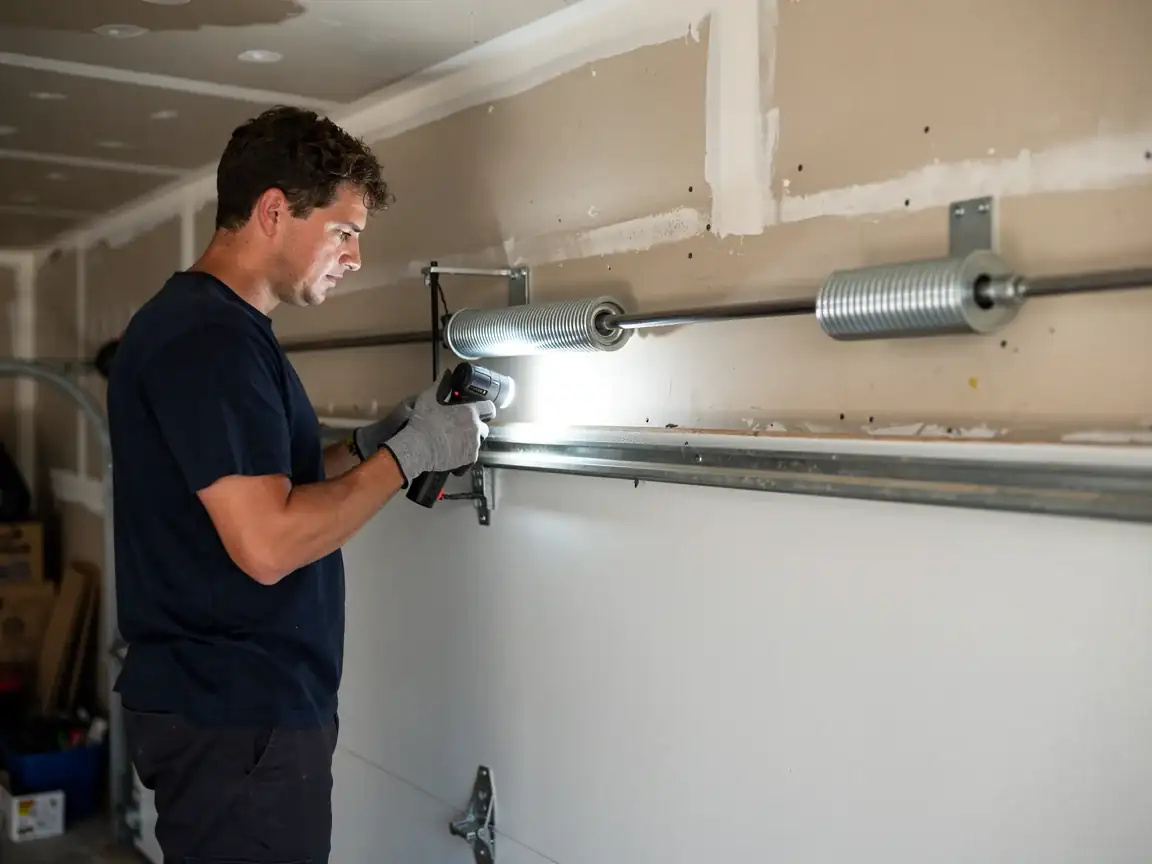
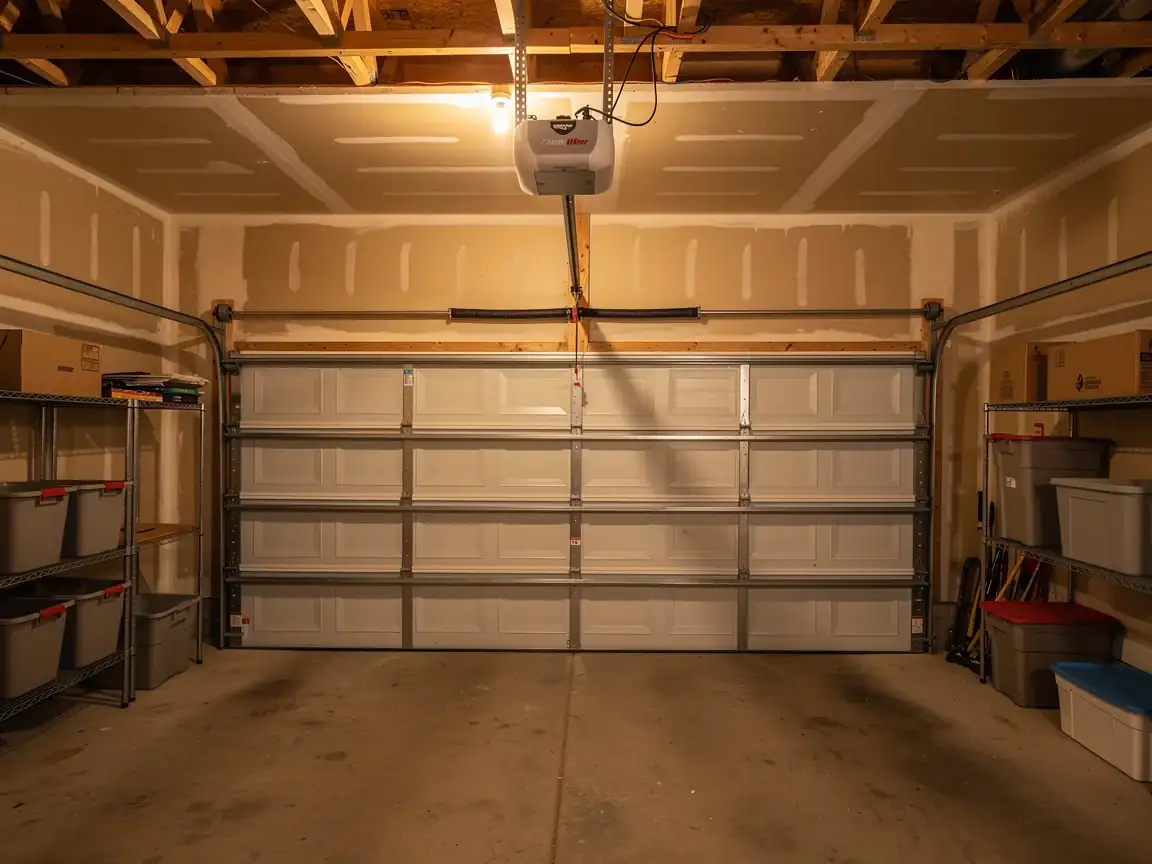
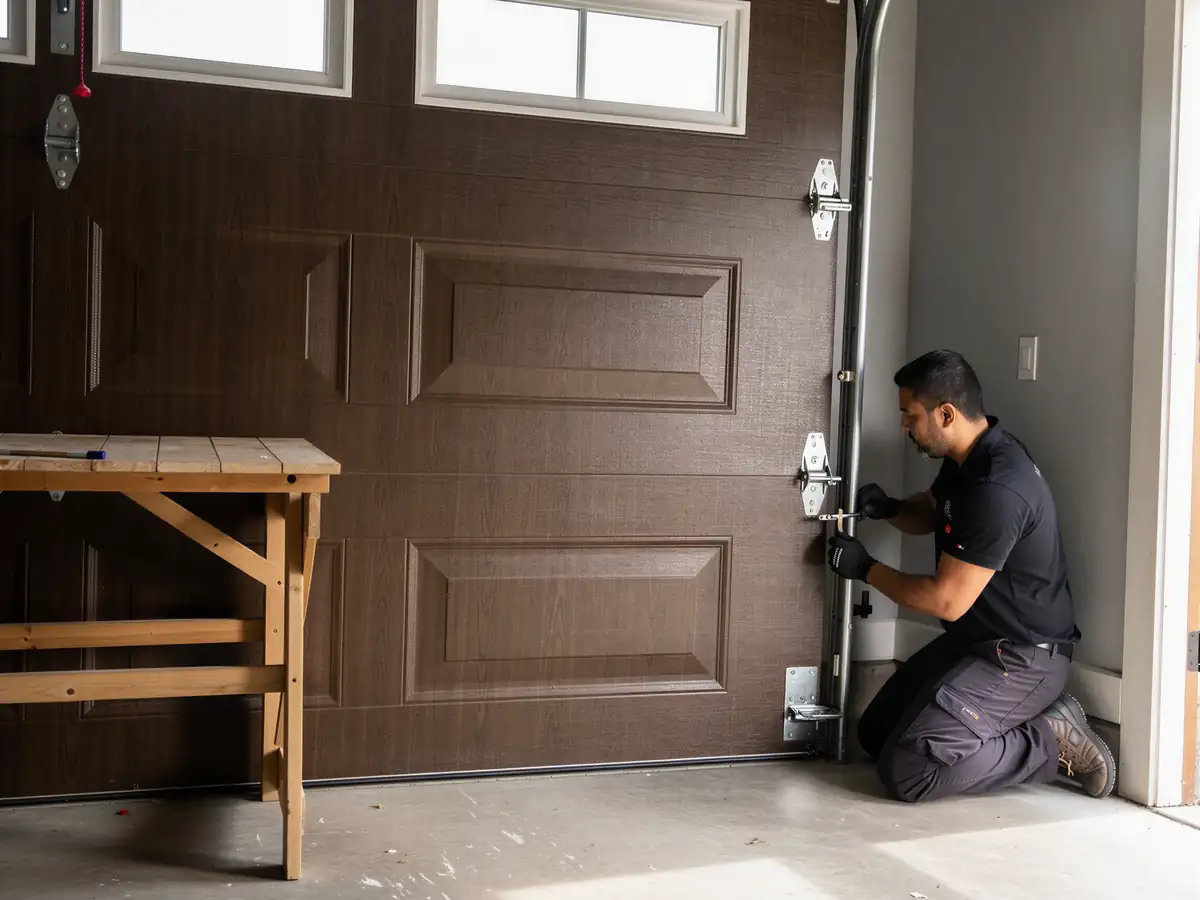
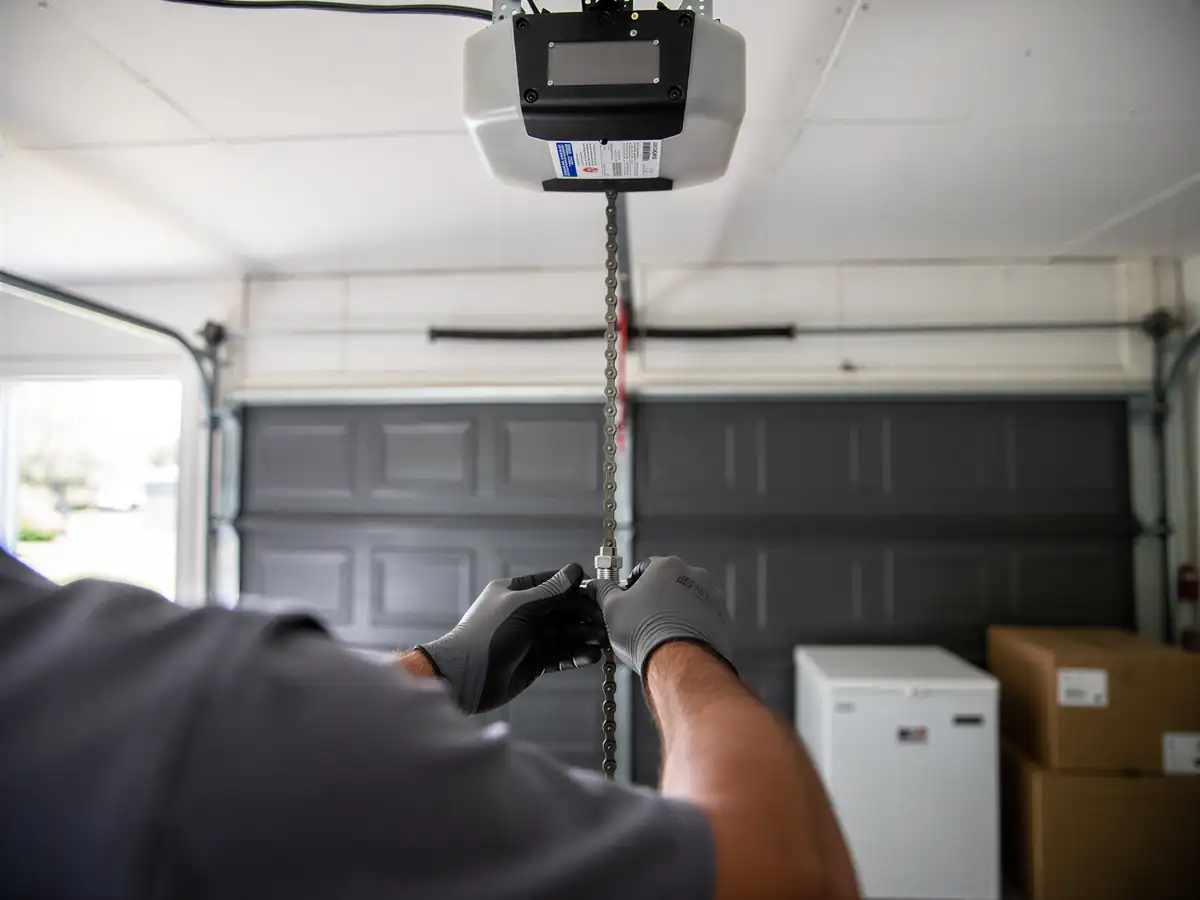
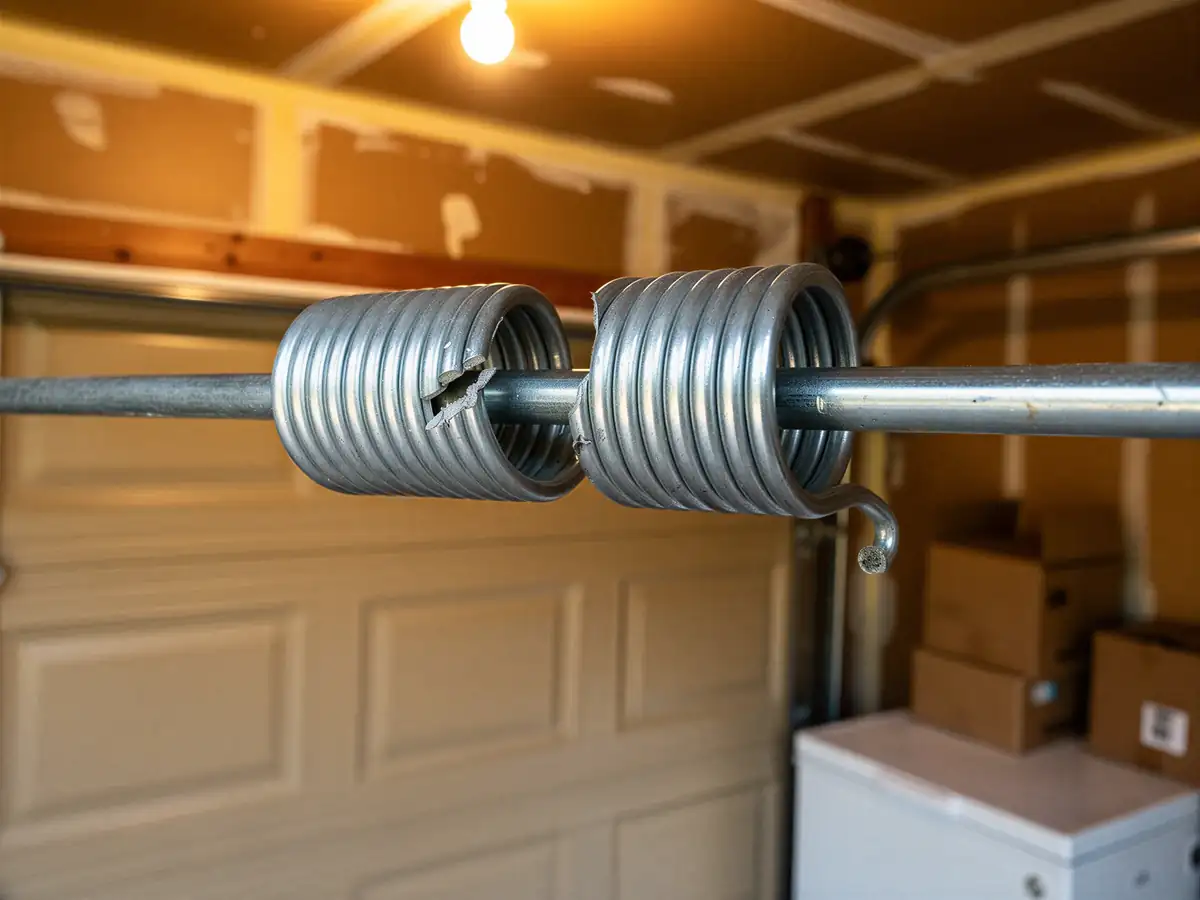
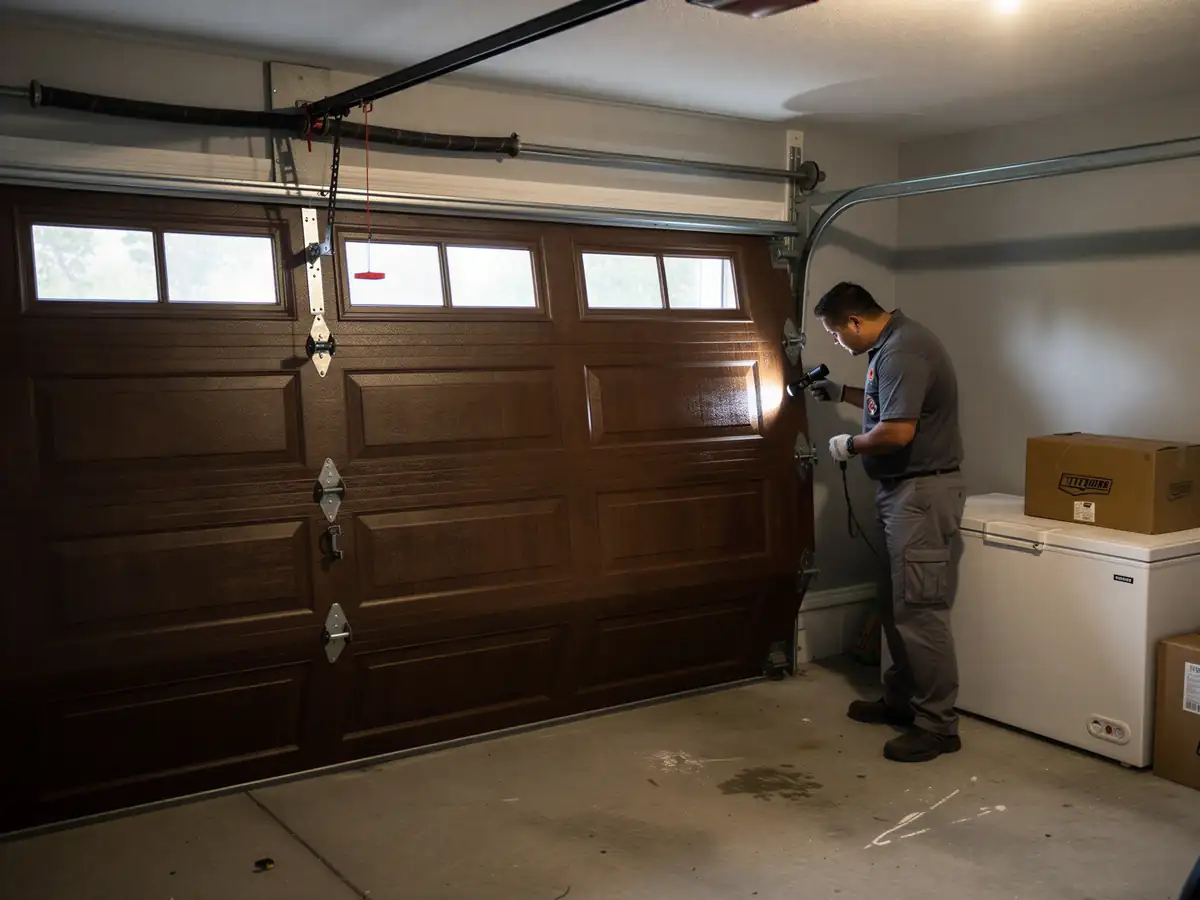
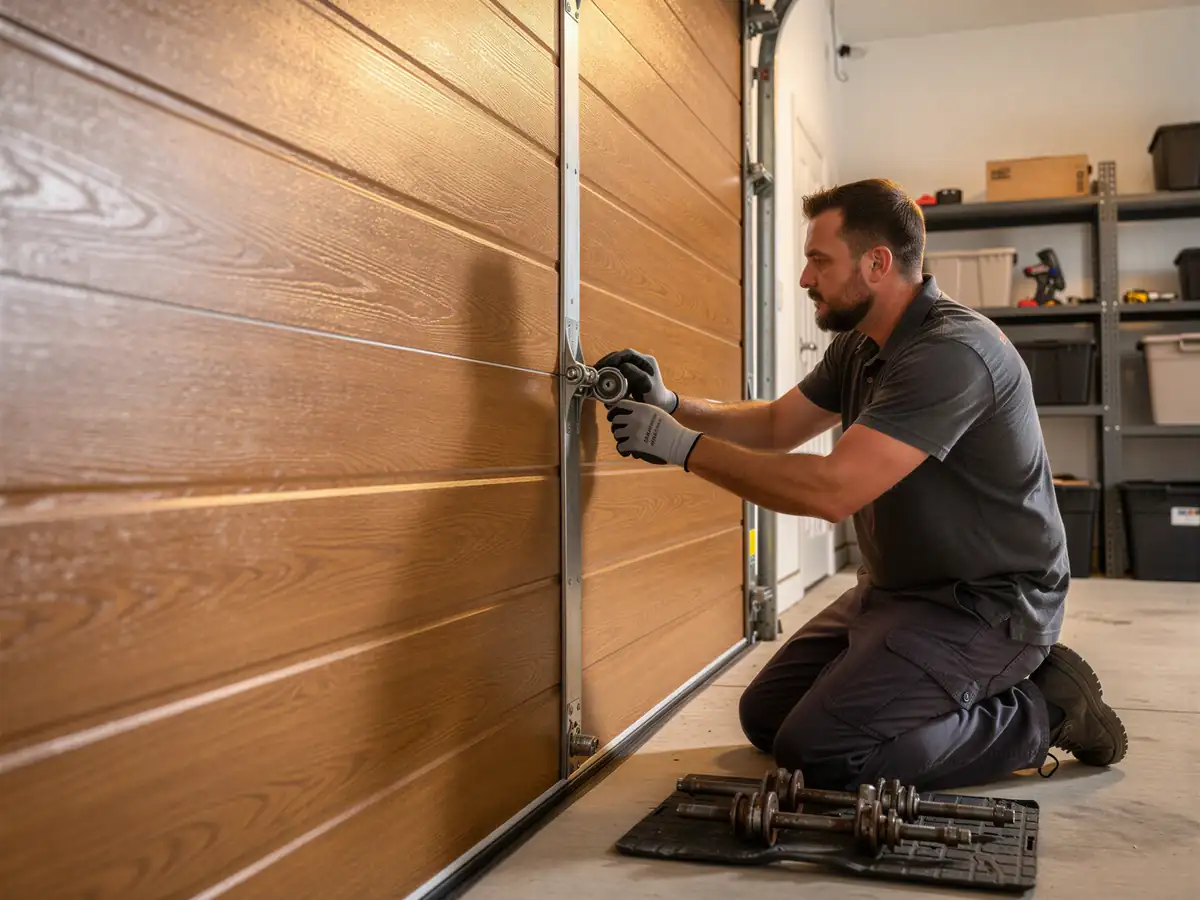
On a 2001-era door, the fix is usually mechanical, not structural. Torsion springs installed around then are past or near their cycle life, and that's a predictable failure, not a mystery. We check spring wind and wire gauge against the door weight, replace rollers that have gone from nylon-and-bearing to just plastic, and look at the bottom bracket and cables since those take the daily stress of opening and closing. Track alignment is a common culprit on these builds too, especially if the door's ever been bumped by a car bumper or a basketball. If the opener is original to the house, the drive gear inside the unit is often the first thing to strip, long before the motor itself gives out. We don't push full door replacement unless the panels are actually damaged or the door's out of square - on a door this age, most of what's wrong is replaceable parts, not a condemned structure. That said, if the springs were undersized for the door at install (it happens), a fix that's just 'put the same spring back' won't hold, and we'll tell you that instead of doing a repair that fails again in six months.
Time on the Job
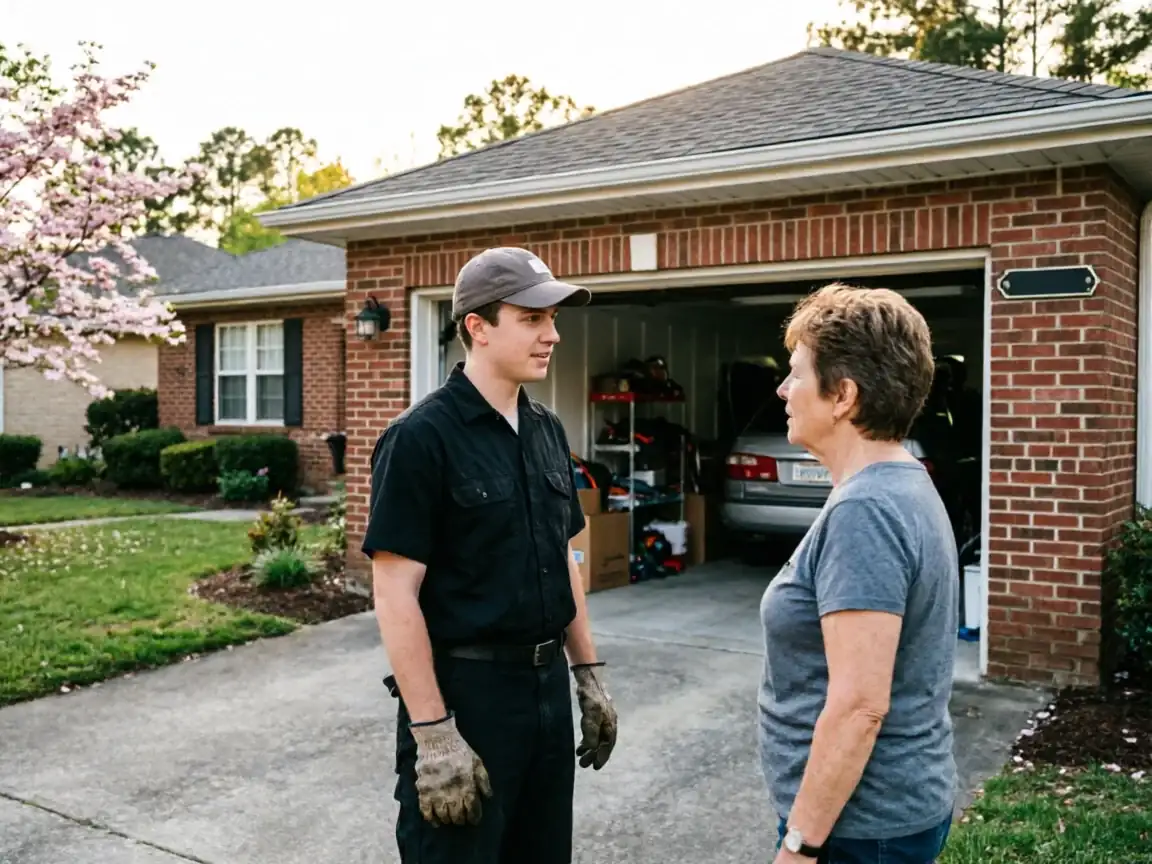
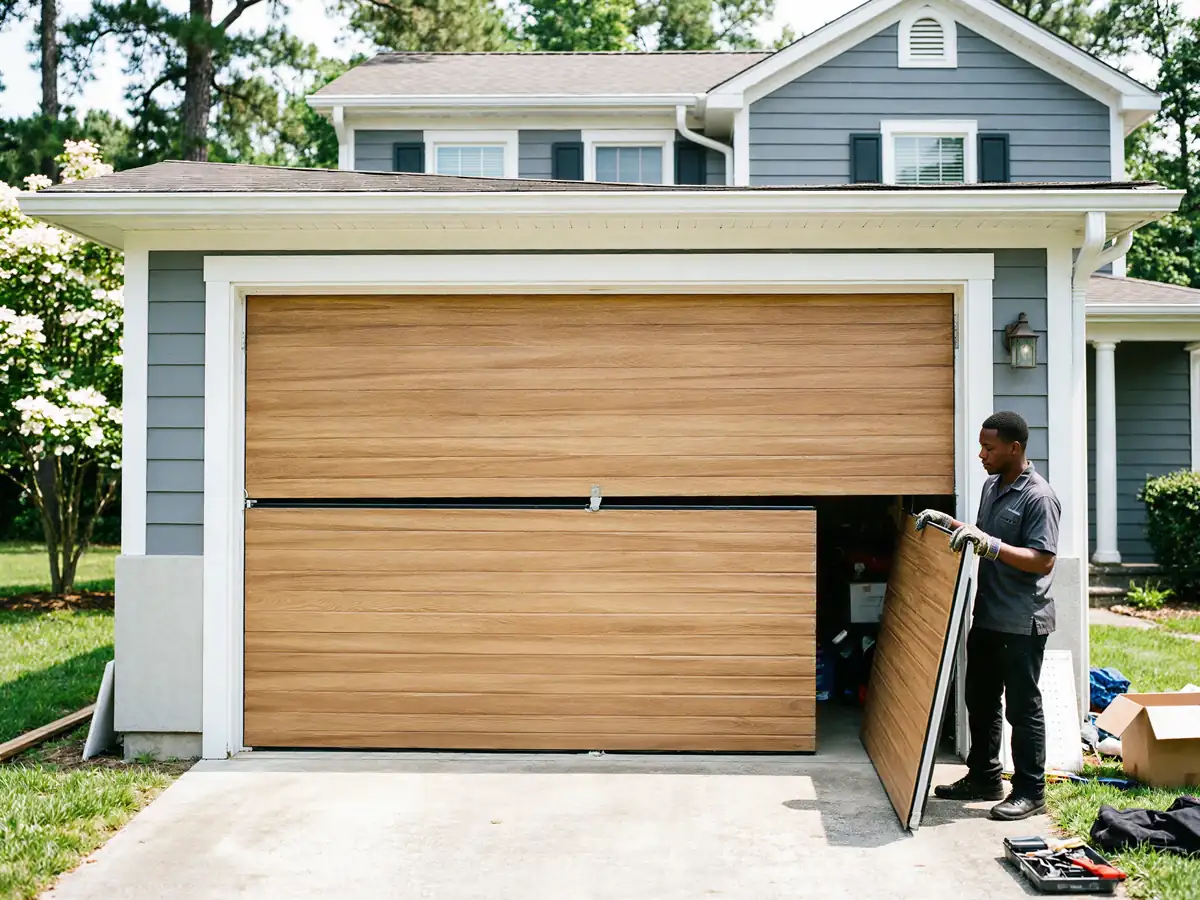
Spring and roller work on a standard sectional door is a same-visit job once the truck is on site - there's no reason to leave a Locust garage half-fixed overnight for parts that are common stock. Opener issues take a bit more diagnosis time since we have to confirm whether it's the gear, the logic board, or the sensors before replacing anything, so plan on that taking longer than a straight spring swap. Given the drive out from Concord, we try to scope the job over the phone first so we're not guessing on-site about what hardware to bring, which keeps the visit itself focused on the actual repair rather than troubleshooting from scratch.
How It Shows Up
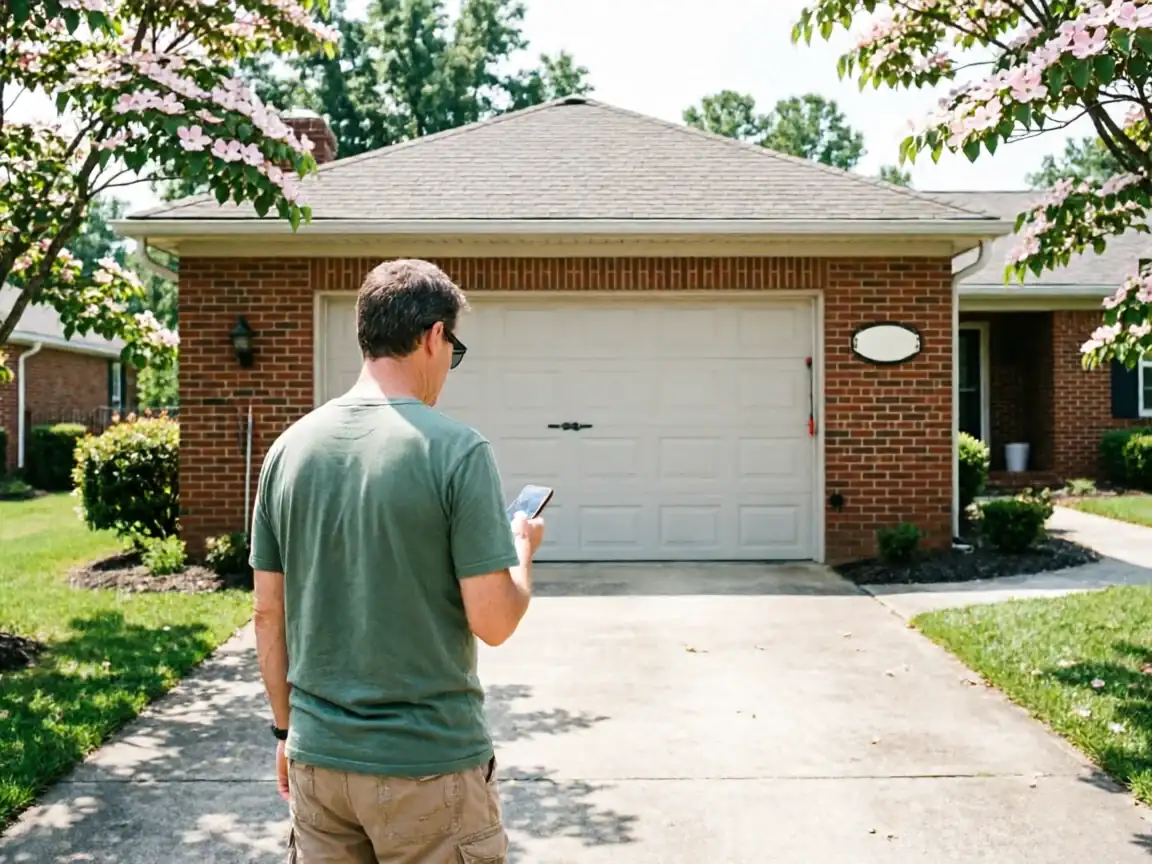
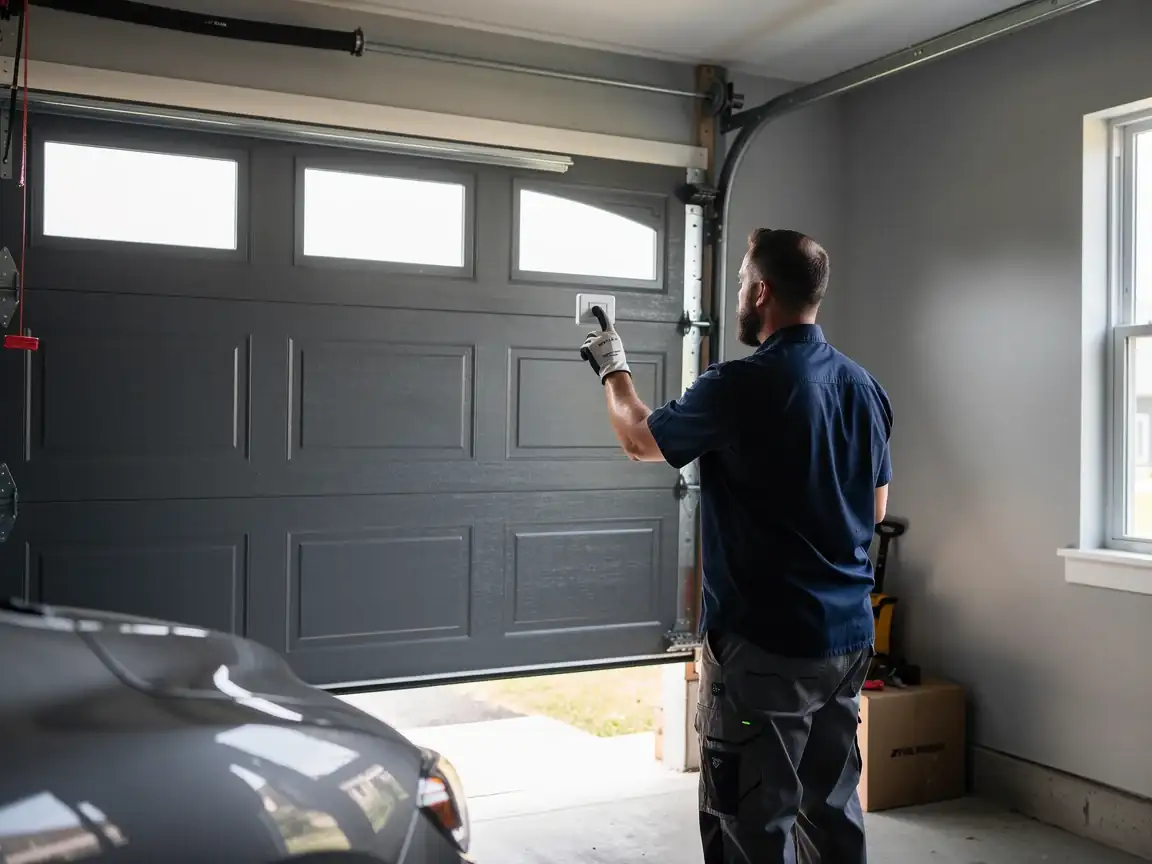
The usual first sign on a 2001-built house is the door getting heavy to lift by hand, or the opener straining and reversing partway up - both point to a spring that's lost tension, not an opener that's failing outright, even though it looks like the opener's the problem. A loud bang from the garage, especially in cold weather, is almost always a spring letting go rather than anything structural. Noisy rollers that have gone from a smooth roll to a grinding rattle are next, usually a sign the bearings are shot rather than just needing lube. If the door only moves a few inches and stops, check the sensors first - that's an opener symptom, not a spring one, and it's a much cheaper fix.
What Causes It Around Here
The region sits in a cold-moderate climate band, and that matters for doors installed in the early 2000s because the weatherstripping and seals from that era weren't always rated for the freeze-thaw cycling we get. Rubber seals harden and crack with repeated cold snaps, letting in drafts and debris, and stiff seals put extra drag on the opener that accelerates wear elsewhere. Temperature swings also affect spring steel over nearly two decades of cycling - metal fatigues faster with repeated contraction and expansion than it would in a milder, steadier climate. None of this is unique to one house; it's the baseline wear pattern for doors of this age in this part of the state, which is why so many Locust service calls land on the same two or three parts.