Where This Job Goes Sideways
At a median household income of $78,280, Locust sits close to the $79,765 figure for the wider Concord service area
Which matters because that's the income band where a straight repair almost always beats replacement. An off-track door on a builder-grade steel panel, the kind that went into most of the roughly 1,888 households here, is a track and roller job, not a new-door job. The math only flips if the panel itself is bent or the opener is original and failing at the same time. We see that combination less here than in older pockets of the service area, because Locust's housing stock skews newer.
- 1,888 households
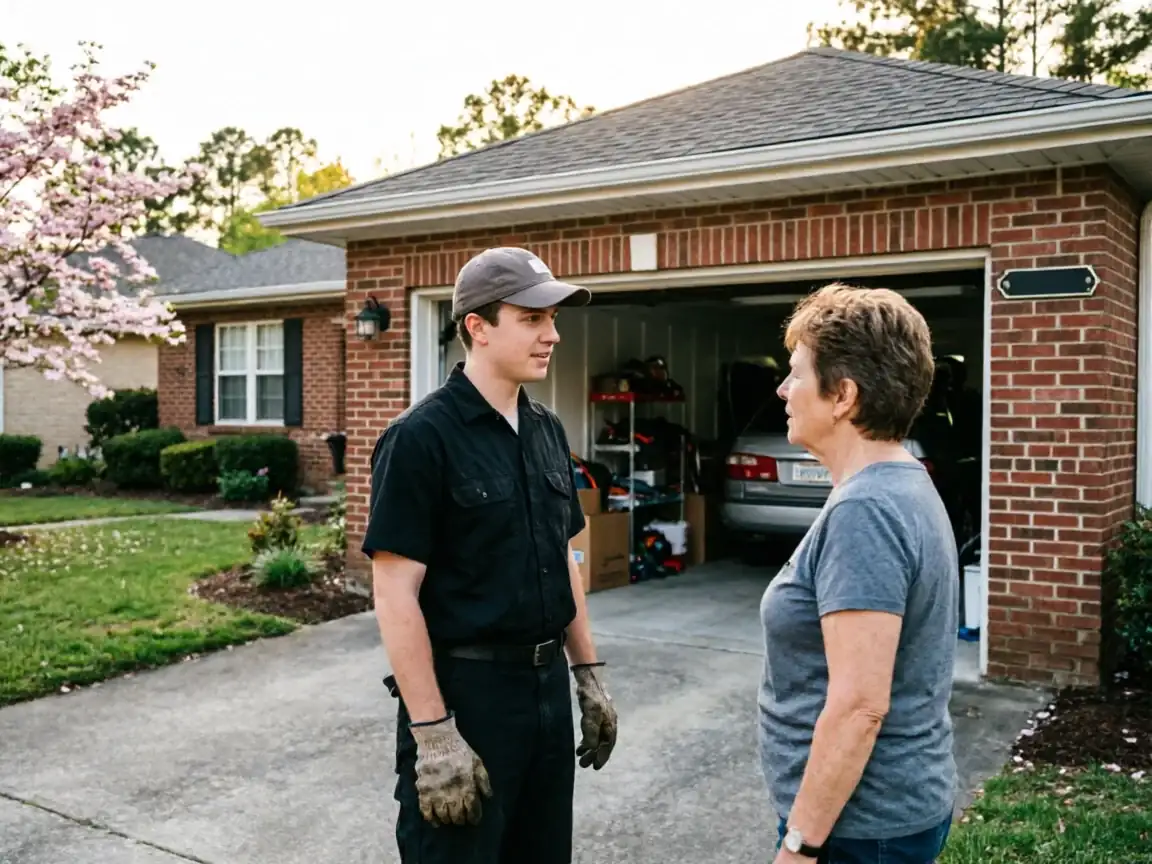
That's the call we make on-site
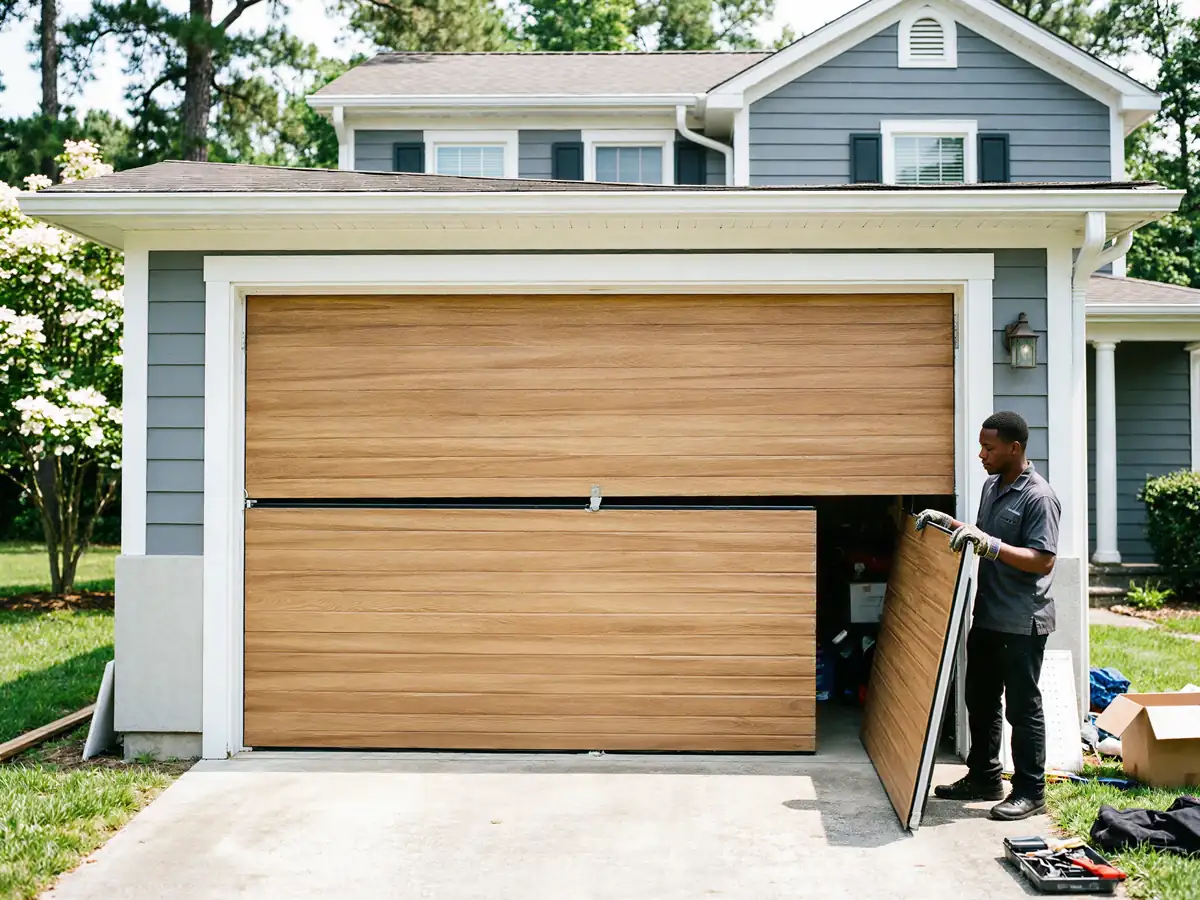
Is this a bent track and worn rollers, or did something hit the door hard enough to rack the whole frame. One is a 90-minute fix. The other starts a different conversation about what the door is worth saving.
What the Fix Involves
With a median year built of 2001, most Locust garage doors are running the same vertical and horizontal track hardware that went in with the house - now into its third decade of daily cycles. The track bends at the horizontal-to-vertical transition first, usually from a car bumper catching the bottom panel or a roller that finally gave out mid-cycle and let the door drop sideways in the opening.
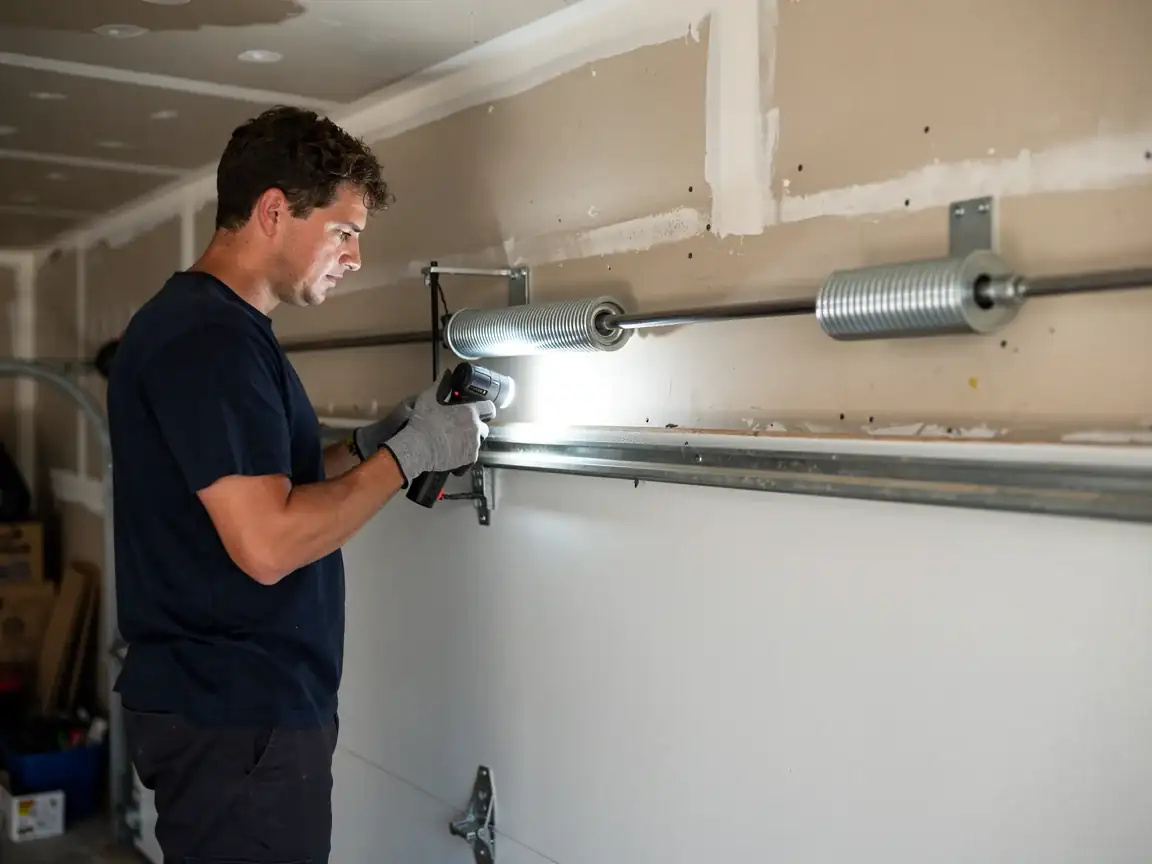
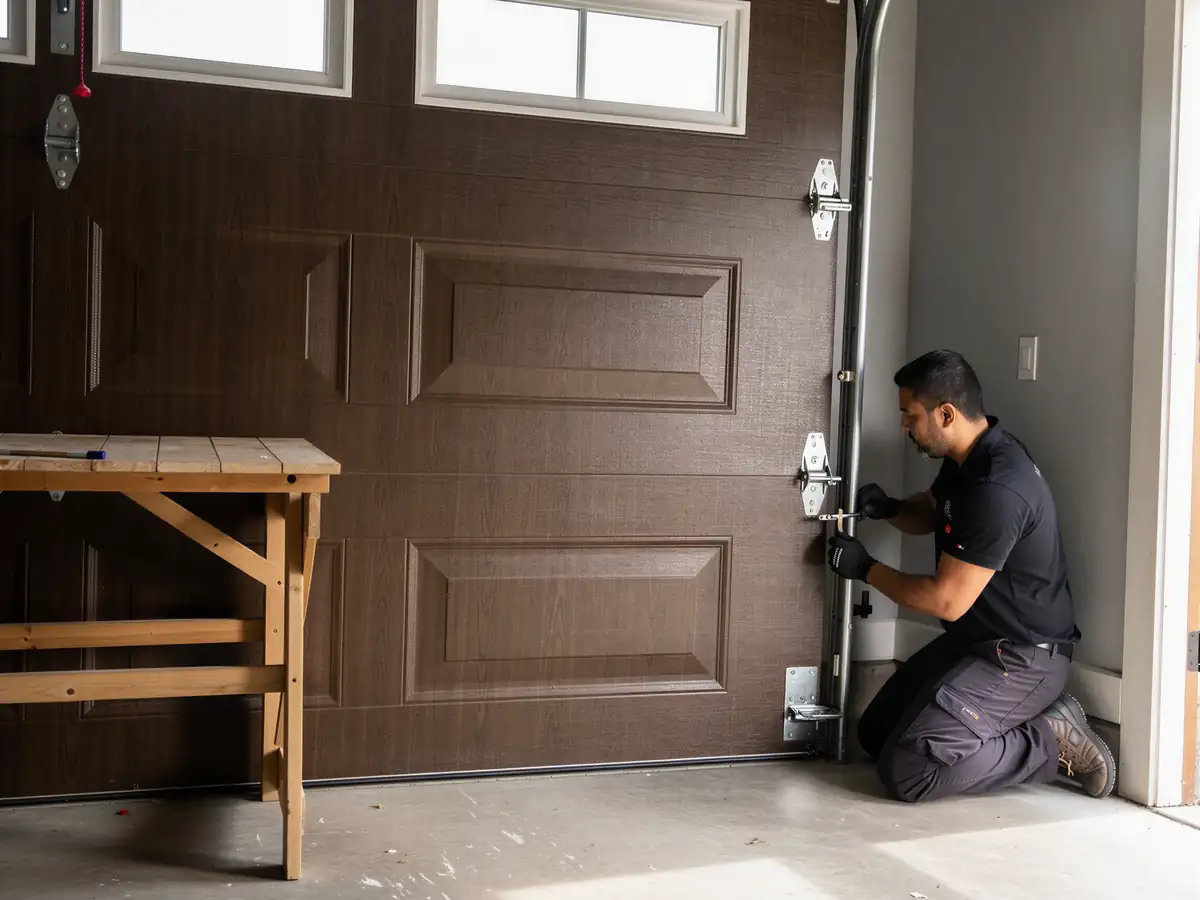
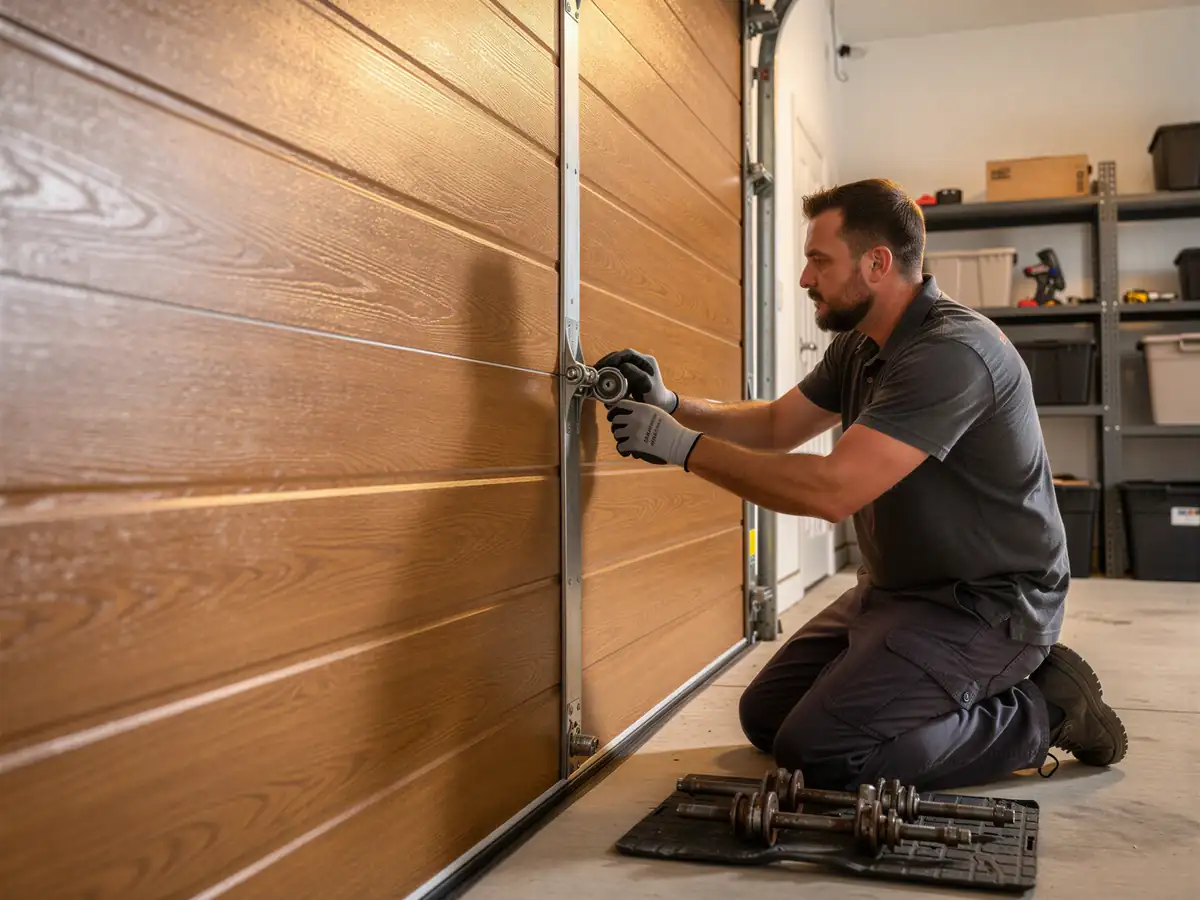
The fix is almost always the same sequence: back off the opener and cables, pull the bent section of track, check the roller brackets for stripped screws (common at this age of builder-grade steel), re-set the track to plumb with a level, and swap any rollers that are cracked or flat-sided rather than round. If the door came off because a cable snapped rather than the track bending, that's a separate repair, and we don't reuse a cable that's already frayed once it's off the drum.
Time on the Job
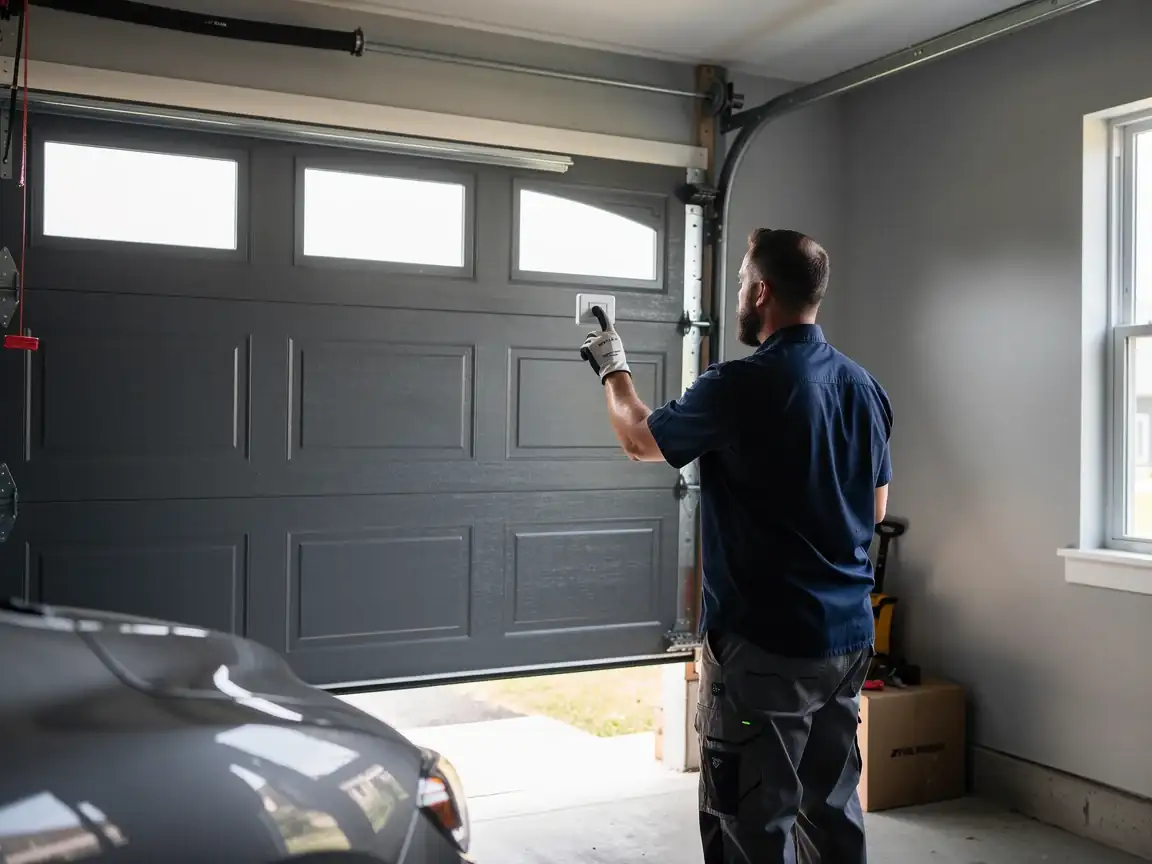
A straightforward off-track call - track bent, rollers shot, panel intact - runs about the length of a lunch break once we're on-site. Add time if the opener's travel limits need resetting after the track geometry changes, which happens more often than homeowners expect because the opener doesn't know the track moved.
What we can't shrink is the travel time getting to Locust - it's about 14 miles out from Concord, so plan the appointment window around that rather than expecting a walk-up same-hour fix. That's not a Locust-specific slowdown in the repair itself, just the honest math of where the truck starts from.
Doing It Yourself
Re-racking a door back onto bent track is not a safe weekend project if the door is still under spring tension
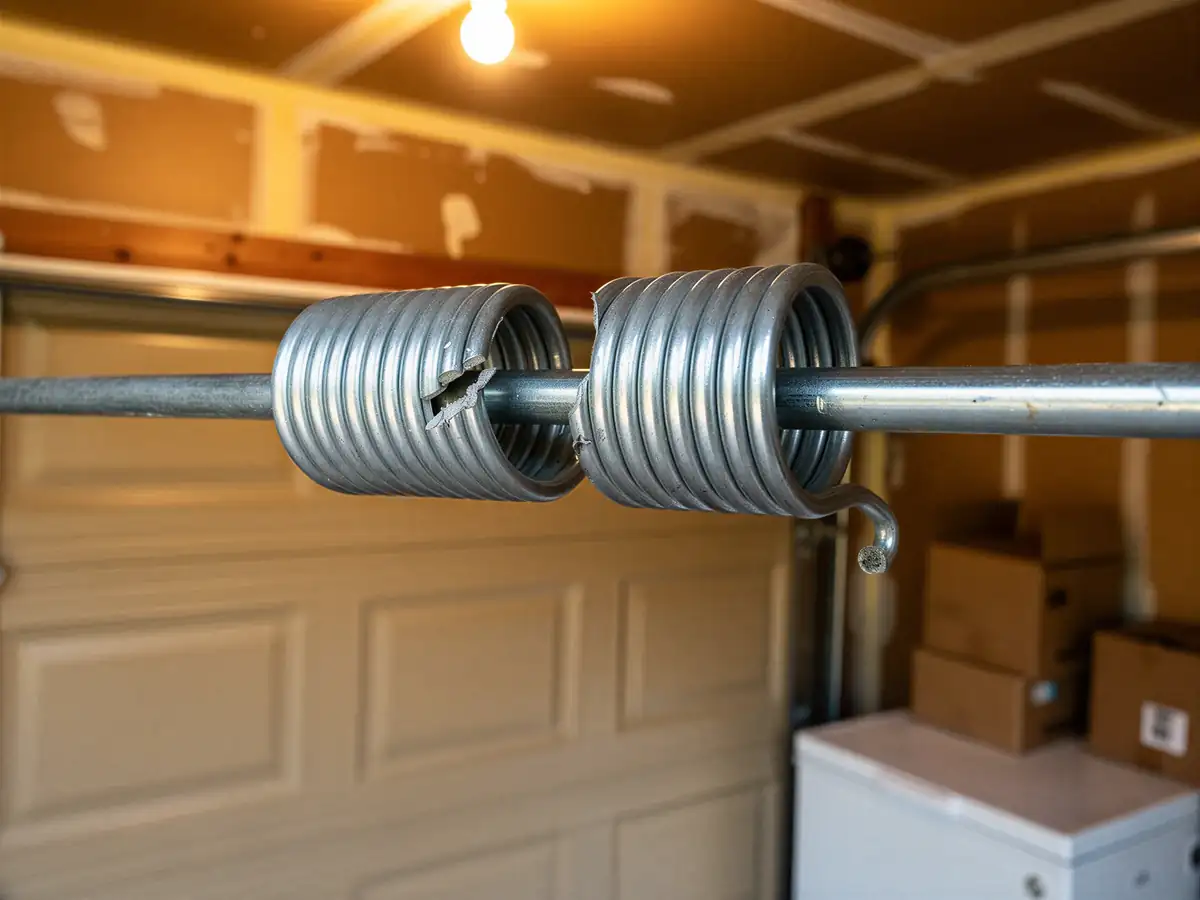
And on a 2001-era build, the torsion spring has had over twenty years of cycles, which is past the point where we'd trust it to hold while someone's hands are near the track. Lifting the door manually to inspect the track, with the opener disconnected, is reasonable. Forcing a door back into the track while it's hung up is how people get fingers caught in the roller bracket.
If the fix is just a loose bracket screw you can reach from a stepladder, that's fair game
Anything involving the spring, the cable drum, or re-tensioning the track alignment is where we'd tell you to call it in rather than guess.
How It Shows Up
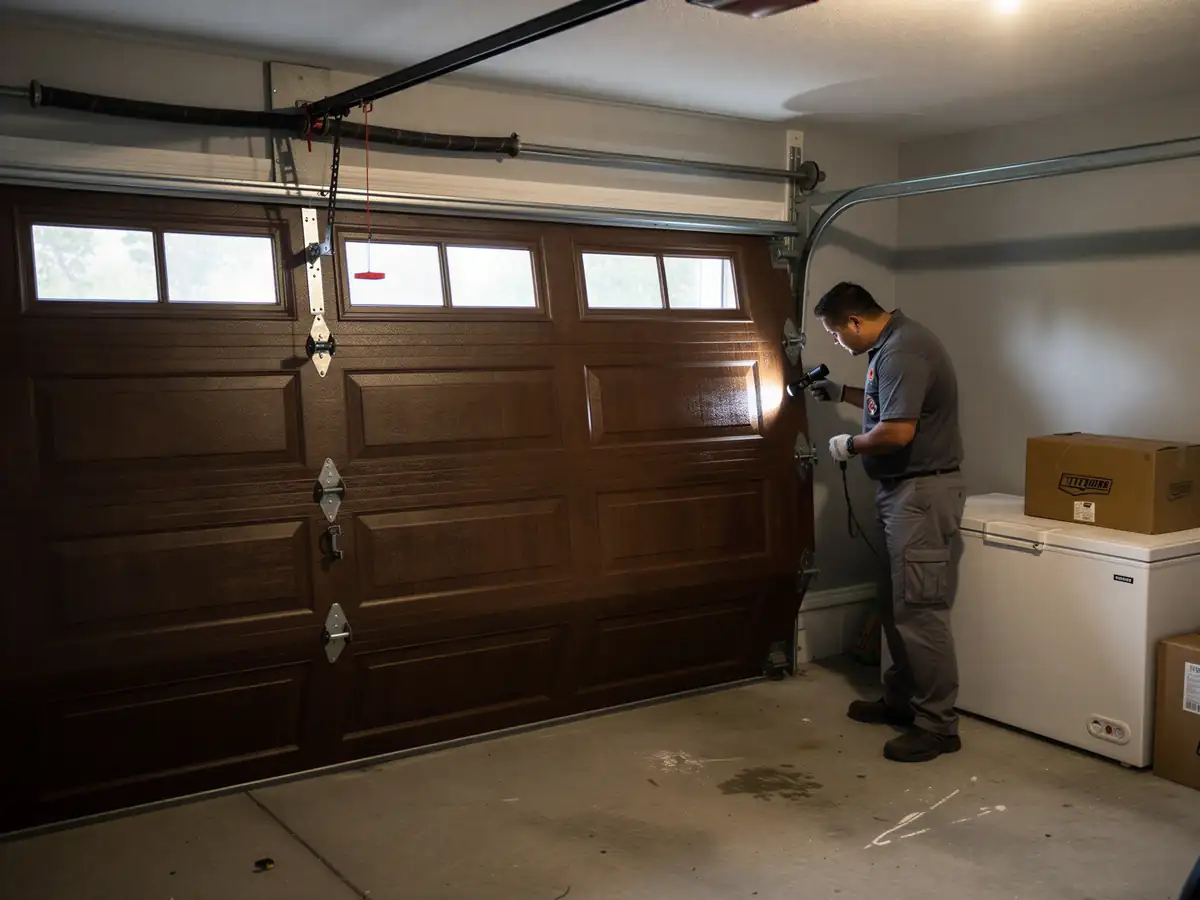
Most calls start the same way: the door stopped a few inches off the ground, hanging crooked, with a visible gap on one side between the panel and the track. Sometimes it's quieter - a grinding or scraping noise for a week or two before the door finally jumps the track on a cold morning when the steel's contracted slightly. Given Locust sits in the same cold-moderate climate band as the rest of the service area, that seasonal stiffening of hardware is a real factor, not a one-off.
Less common, but worth naming: a door that comes off track because the opener kept pulling after the door was already stuck, stripping the gear inside the opener housing. That's a different repair bill than a bent track, so if the door won't budge at all rather than just sitting crooked, say so when you call.
What Causes It Around Here
Across the roughly 1,888 households in Locust, the common thread is age of hardware rather than age of house - 2001 construction means original torsion springs, tracks, and rollers are now well past their rated cycle count on a lot of these doors, even though the siding and roof look recent. Nylon rollers from that era wear flat on one side and start walking out of the track channel, which pulls the whole door off-plumb a little at a time until one hard stop finishes the job.
We don't see much storm-impact damage driving this in Locust specifically - no named weather event in our data points to that - so when a door comes off track here, it's almost always wear plus one bad moment, not a single dramatic cause.
See the general off-track repair page for how this compares across the rest of the Concord coverage area, or check Locust's coverage page for other services in your town.